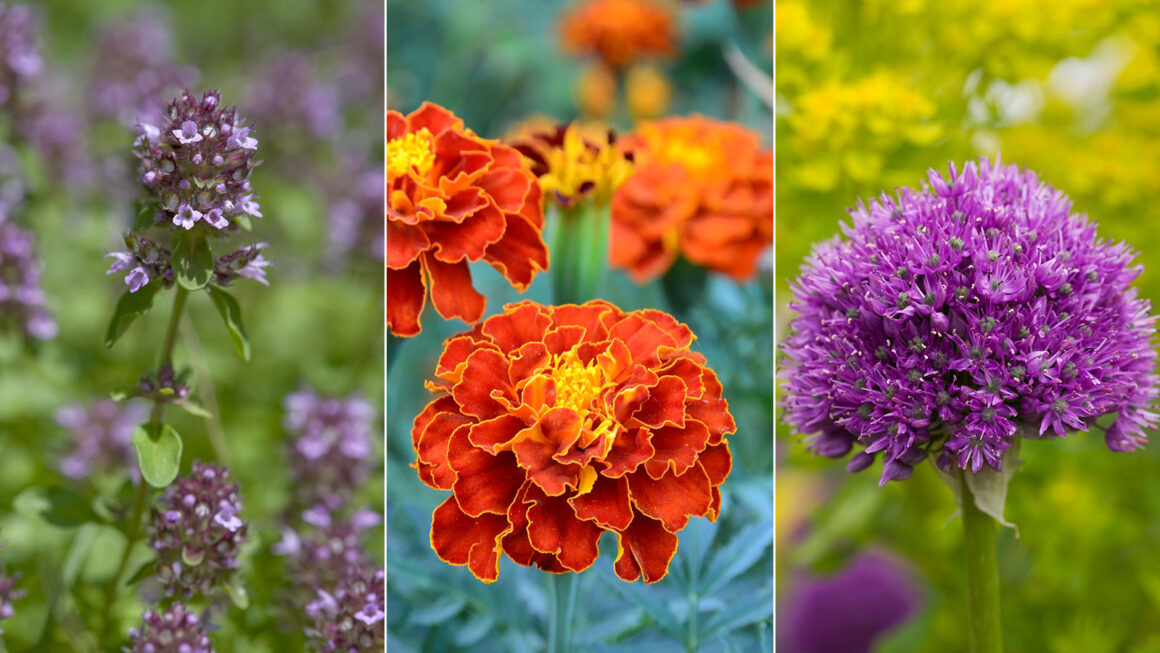
Certain plants are known for their natural repellent properties, helping to keep spiders, ants, flies, and mosquitoes away from your home. Here are nine plants that can serve as natural insect deterrents:
Lavender (Lavandula):
Known for its pleasant fragrance, lavender repels mosquitoes, flies, and moths. Plant it near entryways or windows.
Mint (Mentha):
Mint varieties, such as peppermint and spearmint, are effective at repelling ants and spiders. Plant them in pots to prevent them from spreading uncontrollably.
Basil (Ocimum basilicum):
Basil not only adds flavor to your meals but also repels flies and mosquitoes. Keep potted basil on windowsills or outdoor seating areas.
Citronella (Cymbopogon nardus):
Citronella is a well-known mosquito repellent. Plant citronella grass in pots or in the garden to help keep mosquitoes at bay.
Chrysanthemums (Chrysanthemum spp.):
Chrysanthemums contain a natural insect repellent called pyrethrin. They are effective against flies, mosquitoes, roaches, and ants.
Marigolds (Tagetes):
Marigolds contain pyrethrum, a natural insect repellent. Plant marigolds in your garden to deter mosquitoes and other flying insects.
Rosemary (Rosmarinus officinalis):
Rosemary has a strong scent that repels mosquitoes and flies. It also adds a pleasant aroma to your surroundings.
Lemon Balm (Melissa officinalis):
Lemon balm, with its citrusy scent, is effective against mosquitoes. Plant it in pots or around seating areas.
Catnip (Nepeta cataria):
Catnip contains nepetalactone, a compound that acts as a natural insect repellent. It is particularly effective against mosquitoes.
Tips for Using Insect-Repellent Plants:
Strategic Placement: Plant these repellent plants near entryways, windows, or outdoor seating areas to maximize their effectiveness.
Crushing Leaves: Crushing the leaves of certain plants, like basil or mint, can release more of their natural oils and enhance their insect-repelling properties.
Container Gardening: Planting in pots or containers allows you to move the plants around strategically and prevents them from spreading too much.
While these plants can help deter insects, it’s important to note that no single plant will provide complete protection. Integrated pest management, which may include a combination of plants, natural predators, and proper sanitation practices, is often the most effective approach for pest control.