
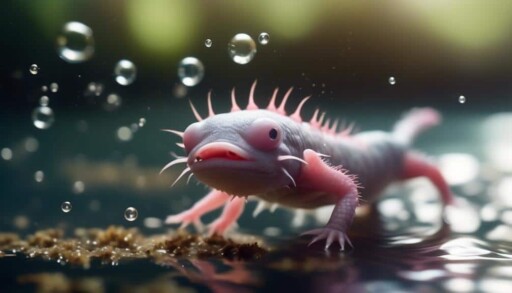
In the depths of the aquatic world, where sunlight barely reaches and oxygen levels are often limited, the axolotl, a unique amphibian, has found a remarkable strategy for survival. This enigmatic creature, native to the Xochimilco lakes in Mexico, possesses the ability to gulp air at the water's surface.
But why do these peculiar creatures resort to such behavior? The answer lies in their remarkable adaptation to low oxygen environments, a fascinating process that not only aids in their respiration but also plays a crucial role in maintaining their buoyancy, facilitating digestion, and even influencing their communication and territorial behavior.
As we delve into the mysteries of the axolotl's air-gulping behavior, we will uncover the hidden secrets that make these creatures truly captivating.
Adaptation to Low Oxygen Environments
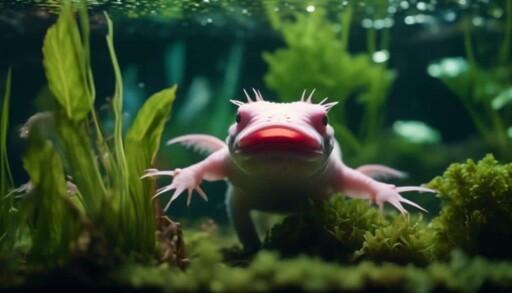
Axolotls have evolved remarkable adaptations to survive in low oxygen environments. One of these adaptations is their unique respiratory system, which provides them with an evolutionary advantage in these challenging conditions.
Unlike most amphibians, axolotls retain their larval gills throughout their lives, allowing them to extract oxygen from water efficiently. Additionally, they possess lungs that enable them to breathe atmospheric air. This dual respiratory adaptation allows axolotls to extract oxygen from both water and air, making them highly versatile in their choice of breathing medium.
When oxygen levels in their aquatic habitat become depleted, axolotls have the ability to rise to the water's surface and gulp air, thereby supplementing their oxygen requirements. This adaptation provides them with a survival advantage in low oxygen environments and contributes to their remarkable ability to thrive in a variety of conditions.
Balancing Oxygen Levels in the Body
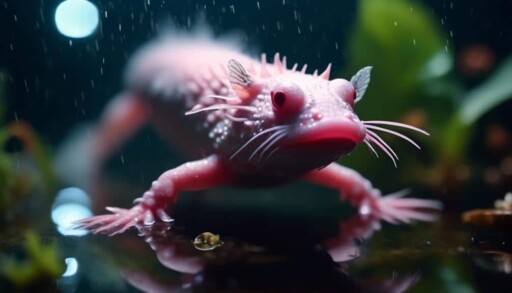
To maintain optimal oxygen levels in their bodies, axolotls employ a sophisticated mechanism for balancing oxygen intake and utilization. These aquatic creatures have developed respiratory adaptations that allow them to efficiently extract oxygen from their environment and distribute it throughout their bodies. The following are key oxygen intake mechanisms and respiratory adaptations utilized by axolotls:
- Gulp air: Axolotls have the ability to gulp air from the water's surface using their specialized lungs. This allows them to extract oxygen from the air when the water's oxygen levels are low.
- Branchial respiration: Axolotls possess gills that enable them to extract oxygen directly from the water through a process called branchial respiration.
- Cutaneous respiration: Axolotls have permeable skin that allows them to absorb oxygen directly from the water, providing an additional means of oxygen intake.
- Metabolic adjustments: Axolotls can adjust their metabolic rate in response to changes in oxygen availability, ensuring efficient oxygen utilization and maintaining equilibrium within their bodies.
Regulating Buoyancy and Maintaining Stability
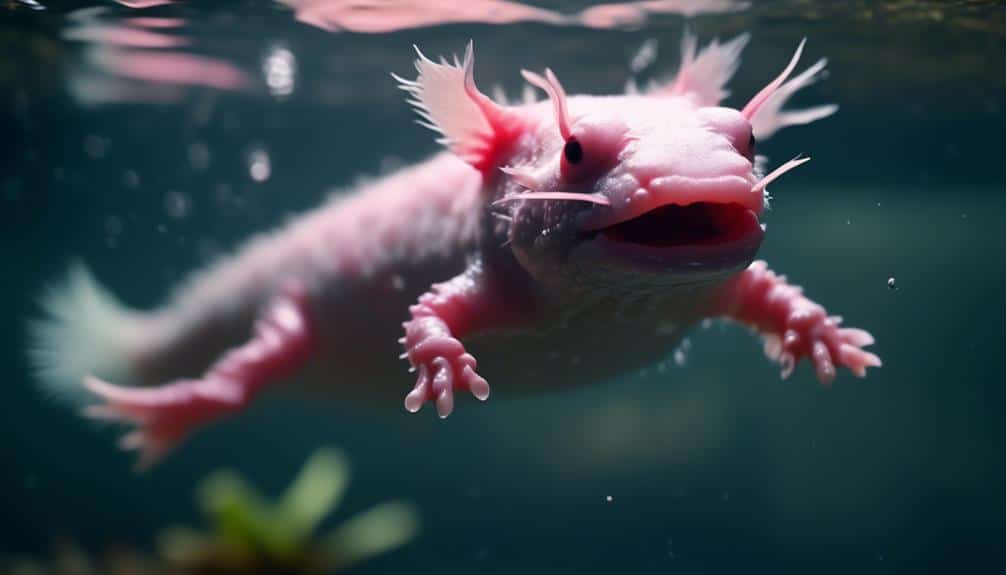
After efficiently extracting oxygen from their environment, axolotls employ additional mechanisms to regulate buoyancy and maintain stability in their aquatic habitat.
One of the key respiratory adaptations that aid in these processes is their ability to gulp air. By gulping air, axolotls are able to increase their lung volume, which helps them control their buoyancy. When they gulp air, the lung volume increases, causing them to become more buoyant and float towards the water's surface. On the other hand, when they release the air, the lung volume decreases, allowing them to sink back down to the desired depth.
This ability to regulate their lung volume and buoyancy is crucial for axolotls to maintain stability and navigate their environment effectively.
In addition to gulping air, axolotls also make use of their gills to extract oxygen from the water, contributing to their respiratory adaptations.
Facilitating Digestion and Nutrient Absorption
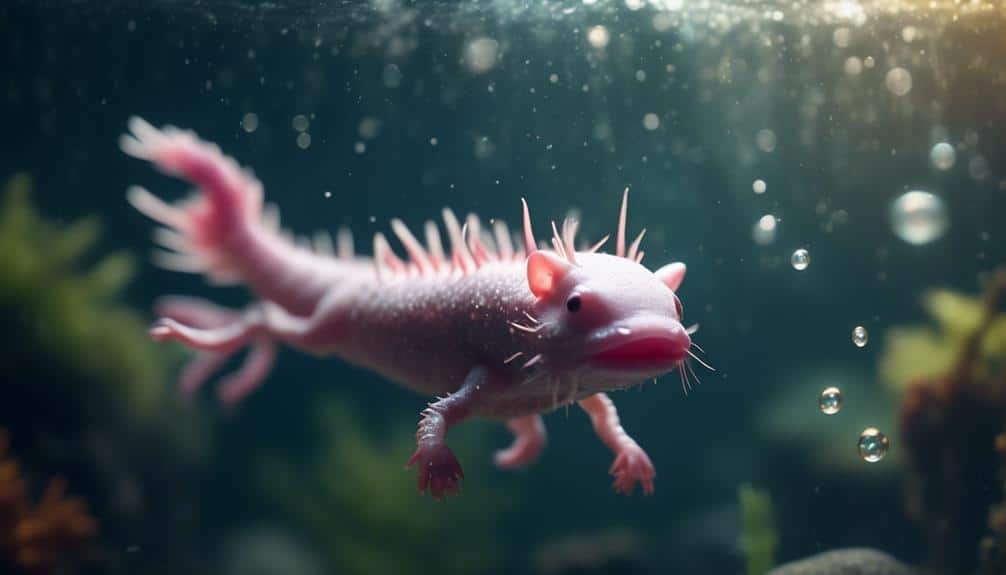
Facilitating digestion and nutrient absorption in axolotls involves a complex series of physiological processes that ensure efficient extraction and utilization of essential nutrients from their diet.
Axolotls possess specialized adaptations that enhance their respiratory efficiency, promoting overall health. These adaptations include:
- Gulping air: Axolotls gulp air at the water's surface, which helps in the digestion process by stimulating the movement of food through their digestive tract.
- Efficient gut structure: Axolotls have a long and convoluted digestive tract, which increases surface area for nutrient absorption.
- Presence of gastric glands: The stomach of axolotls contains gastric glands that secrete digestive enzymes, aiding in the breakdown of food.
- Microbial symbiosis: Axolotls have a symbiotic relationship with microorganisms in their gut, which assist in the digestion and breakdown of complex nutrients.
These mechanisms work together to ensure that axolotls can extract and absorb the necessary nutrients from their diet, promoting their overall health and well-being.
Communication and Territorial Behavior
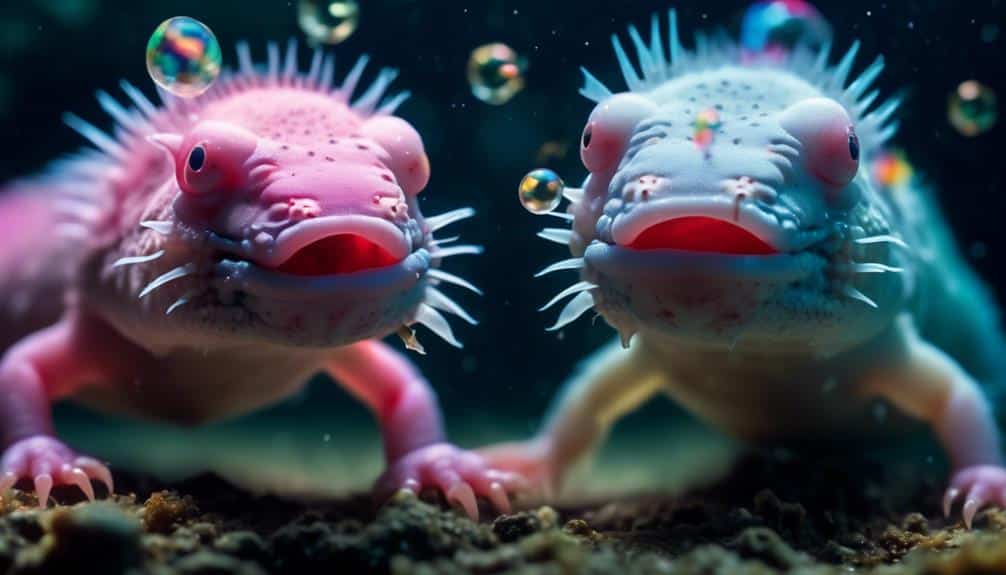
Axolotls, renowned for their unique respiratory adaptations and efficient nutrient absorption, also exhibit fascinating communication and territorial behavior.
Social interactions play a crucial role in their daily lives, allowing them to establish and maintain territories. Axolotls communicate through a combination of visual cues, chemical signals, and tactile interactions.
They display territorial behavior by defending their chosen area from intruders, using aggressive displays and physical combat if necessary. Males engage in elaborate courtship rituals to attract females for mating. These rituals involve displaying their bright colors, performing intricate swimming patterns, and releasing pheromones into the water.
Females select a suitable mate based on these displays and the quality of the male's territory. Understanding axolotls' communication and territorial behavior provides valuable insights into their social dynamics and reproductive strategies.


