
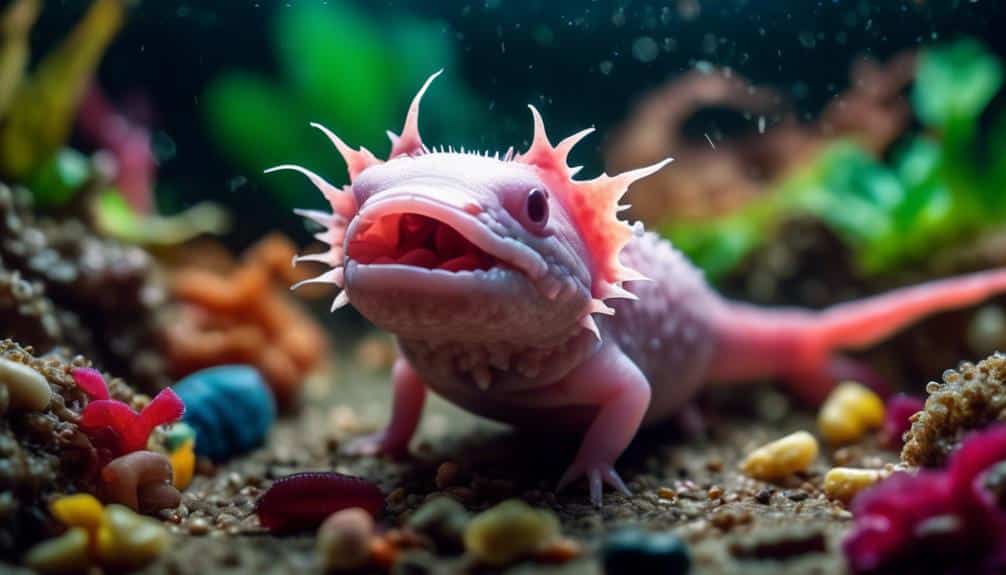
When it comes to caring for axolotls, one of the key considerations is their diet. Axolotls are carnivorous creatures and have specific nutritional needs that must be met to ensure their overall health and well-being.
However, determining the cost of axolotl food can be a bit of a mystery for many prospective or current axolotl owners. In this discussion, we will explore the different types of axolotl food available, including pellet food, frozen options, and live food, and take a closer look at their associated costs.
By gaining a better understanding of the various feeding options and their price points, you will be better equipped to provide your axolotl with a balanced and affordable diet.
Types of Axolotl Food
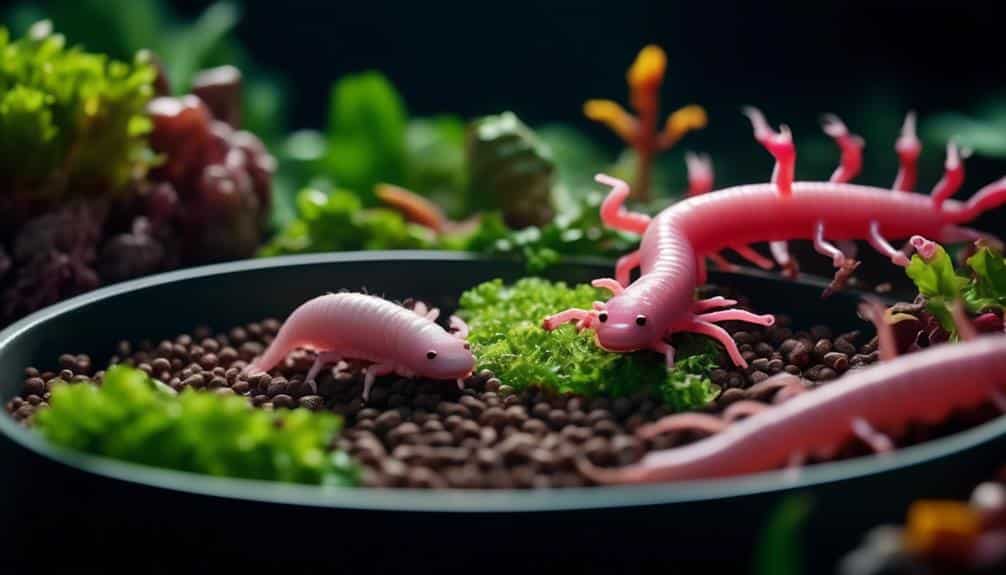
There are several types of axolotl food that are essential for the proper nutrition and health of these unique amphibians. Axolotls are carnivorous creatures, primarily feeding on small aquatic invertebrates and worms in the wild. Therefore, it is crucial to replicate their natural diet in captivity.
The best feeding practices for axolotls include providing a varied diet that meets their nutritional requirements. This can be achieved through a combination of live and frozen foods such as bloodworms, brine shrimp, daphnia, and blackworms. These foods are rich in essential nutrients like protein, vitamins, and minerals, which are necessary for the growth and overall well-being of axolotls.
It is important to note that commercially available axolotl pellets can also be added to their diet, but they should not be the sole source of nutrition. Following these feeding practices will ensure the optimal health and development of axolotls.
Pellet Food Prices
To further explore the nutritional needs of axolotls, it is essential to examine the pricing of pellet food options available for these unique amphibians. Pellet food is a popular choice among axolotl owners due to its convenience and balanced nutritional value.
Here are three factors to consider when looking at pellet food prices:
- Brand: Different brands offer varying quality and pricing options for axolotl pellet food. It is important to research and choose a reputable brand that provides high-quality nutrition for your pet.
- Size and Quantity: Pellet food is often sold in different sizes and quantities. Consider the size of your axolotl and its feeding schedule to determine the appropriate amount of pellet food needed and compare prices accordingly.
- Ingredients: The nutritional content of pellet food can vary depending on the ingredients used. Look for options that contain high levels of protein and essential vitamins and minerals to support the overall health and well-being of your axolotl.
Frozen Food Options and Costs
Frozen food options for axolotls provide a convenient and nutritionally rich alternative to pellet food. These options are not only readily available but also offer a variety of choices that meet the dietary requirements of axolotls.
Frozen foods such as bloodworms, brine shrimp, and daphnia are commonly fed to axolotls due to their high nutritional value. These foods are rich in protein, vitamins, and essential fatty acids, which are crucial for the overall health and development of axolotls.
Additionally, frozen foods can be easily portioned and stored, making them a cost-effective feeding option for axolotl owners. The prices for frozen food options vary depending on the type and quantity purchased, but they generally provide good value for money when considering the nutritional benefits they offer.
Live Food Expenses
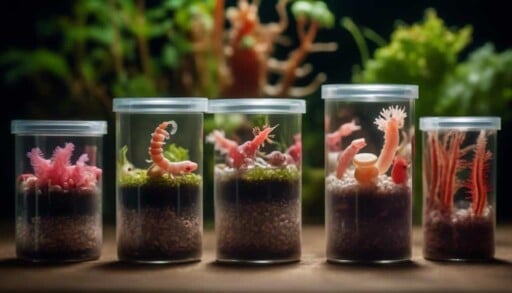
Live food expenses for axolotls can vary depending on the type and quantity of live food purchased, making it important for axolotl owners to consider the cost of feeding their pets with these options. When it comes to live food, axolotls have specific nutritional requirements that need to be met for their optimal health. Here are three key points to consider regarding live food expenses for axolotls:
- Variety of live food: Axolotls require a diverse diet to ensure they receive all the necessary nutrients. Feeding them a variety of live food options such as earthworms, brine shrimp, and blackworms can provide the necessary protein, vitamins, and minerals they need.
- Quantity of live food: The feeding schedule for axolotls depends on their age and size. Younger axolotls need to be fed more frequently, while adult axolotls can be fed less often. It is crucial to provide the right amount of live food to avoid overfeeding or underfeeding.
- Cost considerations: Live food expenses can add up, especially if you choose to purchase them regularly. It is essential to factor in the cost of purchasing live food when budgeting for axolotl care.
Budget-Friendly Feeding Alternatives
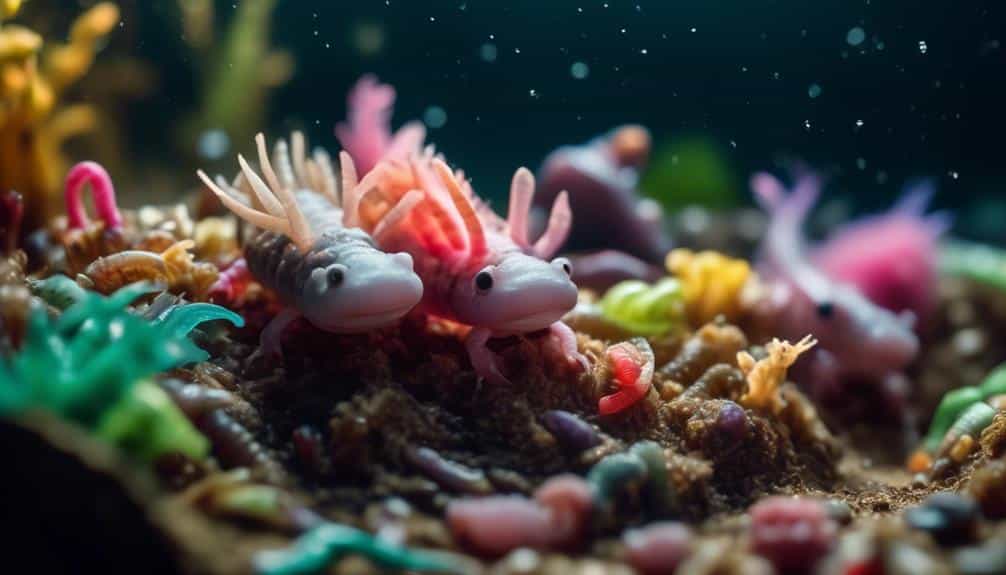
Considering the potential impact of live food expenses on the overall cost of axolotl care, it is worth exploring budget-friendly feeding alternatives that can provide a cost-effective solution without compromising the nutritional needs of these unique amphibians. Homemade food recipes can be a great option for budget-conscious axolotl owners.
By making their own food, owners can control the quality of ingredients, ensuring that their axolotls receive a balanced diet. Some popular homemade food options include gel-based diets made from ground fish or shrimp, as well as earthworms and bloodworms.
Feeding frequency and portion control are also crucial aspects to consider. It is important to strike a balance between providing enough food for growth and avoiding overfeeding, which can lead to obesity and health issues. By carefully monitoring the feeding schedule and portion sizes, axolotls can be fed adequately while minimizing waste and unnecessary expenses.


