
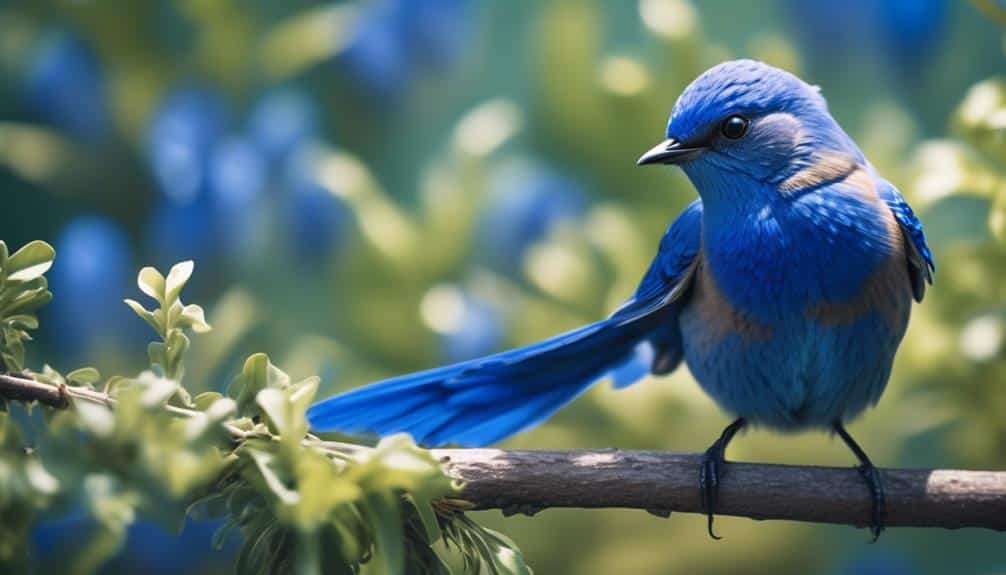
California is home to a diverse array of avian species, each with their own unique characteristics and habits. Among these fascinating creatures, blue birds hold a special allure, their vibrant plumage capturing the attention of bird enthusiasts and casual observers alike.
From the striking Western Bluebird and Mountain Bluebird to the distinctive California Scrub-Jay and Lazuli Bunting, the state is blessed with an abundance of blue-feathered wonders. However, there are even more species to discover, each with its own story to tell.
So, let us embark on a journey through the blue-hued world of California's avian inhabitants, where surprises await at every turn.
Western Bluebird
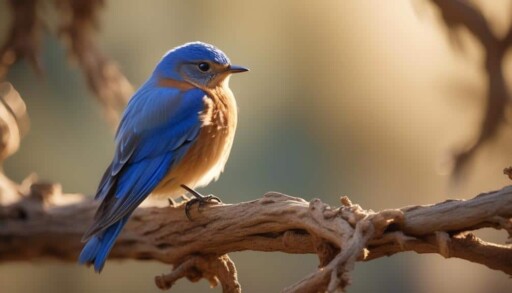
The Western Bluebird (Sialia mexicana) is a species of bird native to California, known for its vibrant blue plumage and melodic song.
This small thrush species measures around 16 to 18 centimeters in length, with males displaying more intense blue coloration on their head, wings, and back, while females have a duller blue-gray color.
To identify Western Bluebirds, look for their distinct blue color, orange-brown breast, and white belly. They also have a thin bill, short tail, and dark eye.
These birds prefer open woodlands, grasslands, and oak savannahs for their habitat, often choosing areas with scattered trees and shrubs for perching and nesting. They can also be found in urban parks and gardens with suitable vegetation.
It is important to note that Western Bluebirds are cavity nesters, using natural tree cavities or nest boxes for breeding.
Mountain Bluebird

With its striking blue plumage and distinctive nesting habits, the Mountain Bluebird (Sialia currucoides) stands out as a captivating species to explore in California's avian landscape. These small thrush-like birds are commonly found in open areas such as meadows, grasslands, and mountainous regions throughout the state. The mountain bluebird's habitat preferences include areas with sparse vegetation and access to insects, which constitute a major portion of their diet. They are cavity nesters and often utilize natural tree cavities or man-made nest boxes for breeding.
Regarding migration patterns, mountain bluebirds are known for their long-distance movements. They breed in the mountainous regions of California during the summer and then undertake extensive migrations to lower elevations in the winter. Some individuals even migrate as far south as Mexico. These seasonal movements are driven by the search for suitable foraging grounds and more hospitable climates.
California Scrub-Jay
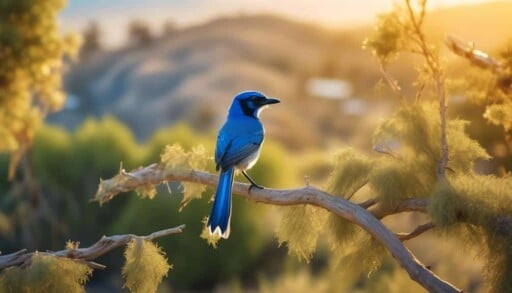
A common inhabitant of the California landscape, the California Scrub-Jay (Aphelocoma californica) is a charismatic and highly adaptive bird species. With its vibrant blue feathers, white underparts, and a long tail, it is a sight to behold.
These birds are known for their intelligent and social behavior. They are often seen in family groups, engaging in cooperative behaviors and communicating through a wide range of calls and vocalizations.
California Scrub-Jays can be found in a variety of habitats, including woodlands, scrublands, and urban areas. They have a diverse diet, consisting of insects, small vertebrates, seeds, fruits, and even carrion.
Unfortunately, habitat loss and fragmentation pose significant threats to their populations. Conservation efforts, such as preserving and restoring their natural habitats, are crucial for the long-term survival of the California Scrub-Jay.
Lazuli Bunting
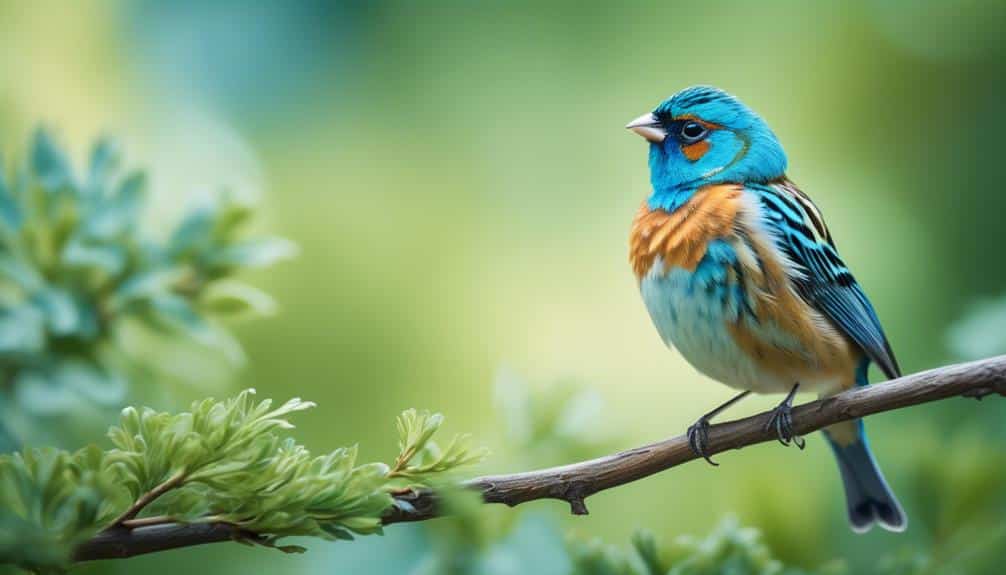
The Lazuli Bunting (Passerina amoena) is a small migratory bird species known for its stunning and vibrant blue plumage. These birds are commonly found in western North America, including California. Lazuli Buntings are known for their long-distance migrations, traveling thousands of miles between their breeding and wintering grounds.
They breed in open woodlands, shrubby areas, and brushy habitats, and can be found nesting in low trees or shrubs. During migration, they move in flocks and utilize stopover sites to rest and refuel.
The breeding season for Lazuli Buntings typically begins in late spring, with males establishing territories and performing courtship displays to attract females. These displays involve singing and fluttering flights to showcase their bright blue feathers. The female builds the nest and lays a clutch of eggs, which she incubates for about two weeks.
Once the eggs hatch, both parents share the responsibility of feeding the chicks until they fledge. Overall, the Lazuli Bunting is a remarkable migratory bird with fascinating breeding habits that contribute to the diversity of avian life in California.
Indigo Bunting

The Indigo Bunting (Passerina cyanea) is a small songbird species renowned for its brilliant blue plumage. These birds are commonly found in open woodlands, brushy areas, and along forest edges throughout the eastern and central parts of North America.
During breeding season, the males display vibrant blue feathers, while the females have a more subdued brown coloration. Indigo buntings are known for their long-distance migrations, traveling from their breeding grounds in North America to their wintering grounds in Central and South America. They undertake this journey twice a year, covering thousands of miles.
Unfortunately, habitat loss and fragmentation pose significant threats to the indigo bunting population. Conservation efforts, such as protecting and restoring their habitats, are crucial to ensure the survival of these beautiful birds.
Steller's Jay
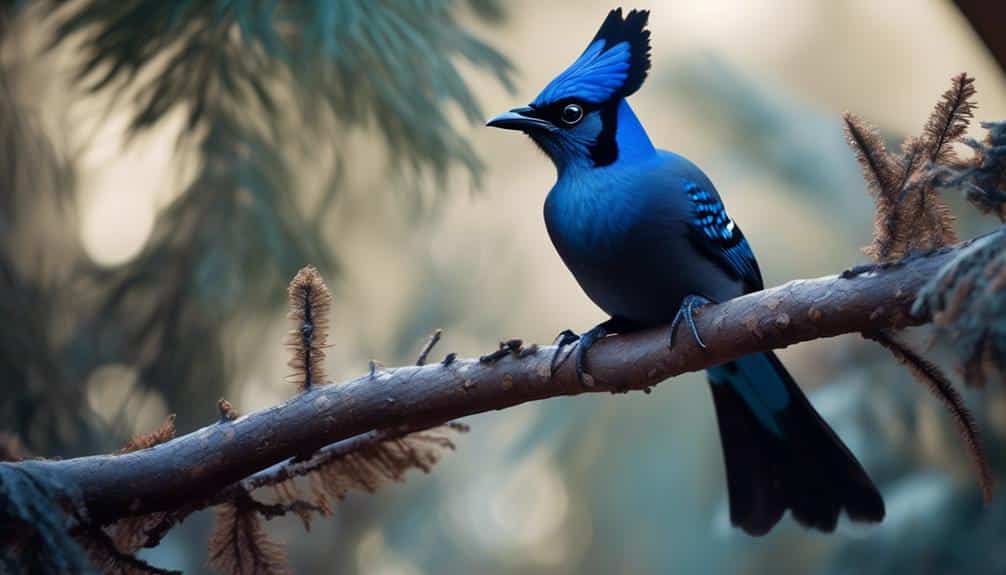
Steller's Jay (Cyanocitta stelleri) is a striking blue bird native to western North America. It is known for its vibrant blue plumage, which contrasts with its black head and crest. This jay species is medium-sized, measuring around 30 centimeters in length. Its wings are broad and rounded, enabling agile flight through dense forest canopies. Steller's Jay is also recognized by its stout bill, long tail, and conspicuous white markings on its forehead and eyebrows.
Behaviorally, these birds are highly intelligent and social, often seen in small groups or family units. They are known for their mimicry, imitating the calls of other birds and animals.
Steller's Jays primarily inhabit coniferous forests, where they build nests in trees and forage for acorns, nuts, seeds, insects, and small vertebrates. Their habitat preference includes montane and subalpine regions, where they find ample cover and resources.
Violet-green Swallow

Native to western North America, the violet-green swallow (Tachycineta thalassina) is a distinct species of bird known for its graceful flight and striking plumage. These small birds are predominantly found in the Pacific coast region, including California. The violet-green swallow is known for its unique migration patterns, nesting habits, and diet.
Migration Patterns:
Violet-green swallows are migratory birds, spending summers in their breeding grounds and winters in more southern regions. They undertake long-distance migrations, traveling from their breeding grounds in western North America to as far south as Central America.
Nesting Habits:
These swallows nest in tree cavities or man-made structures such as birdhouses. They are known to exhibit high fidelity to their nesting sites, often returning to the same location year after year. The nests are constructed from grasses, feathers, and plant fibers, creating a cup-shaped structure.
Diet:
Violet-green swallows primarily feed on insects, including flies, beetles, and ants. They are skilled aerial hunters, catching their prey in mid-air during their swift and agile flight.
| Migration Patterns | Nesting Habits | Diet |
|---|---|---|
| Long-distance migrations | Nest in tree cavities or man-made structures | Primarily feed on insects |
| Breeding grounds in western North America | High fidelity to nesting sites | Catch prey in mid-air |
| Winter in southern regions | Construct nests from grasses, feathers, and plant fibers | Feed on flies, beetles, and ants |
Tree Swallow
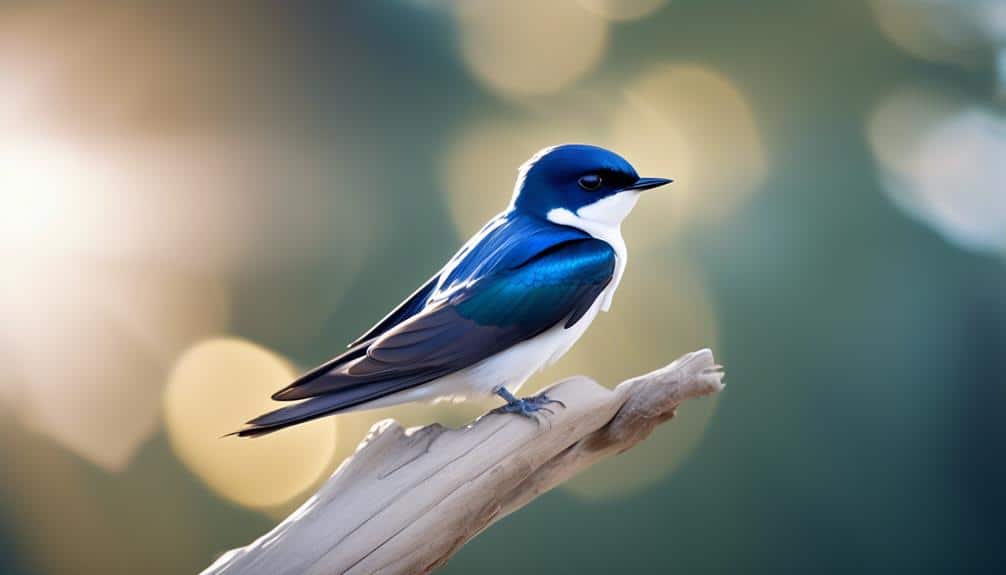
The Tree Swallow (Tachycineta bicolor) is a migratory bird species found throughout North America, including California. These small, slim birds are known for their vibrant blue upperparts and white underparts. Tree swallows are highly migratory, traveling long distances between their breeding grounds in North America and their wintering grounds in the southern United States, Mexico, and Central America.
During the breeding season, tree swallows exhibit interesting nesting habits. They typically build their nests in tree cavities, but they readily accept artificial nest boxes as well. The female constructs the nest using grasses, feathers, and other soft materials. Tree swallow pairs are monogamous and often return to the same nesting site year after year.
The female lays a clutch of 4-7 eggs, which both parents take turns incubating for about two weeks. Once hatched, the parents share the responsibilities of feeding and caring for the young until they fledge and become independent.
Ash-throated Flycatcher
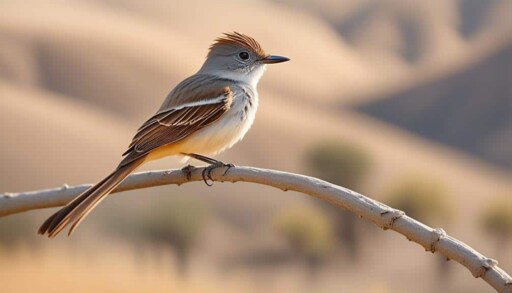
The Ash-throated Flycatcher (Myiarchus cinerascens) is a migratory bird species commonly found in California. This medium-sized bird has a grayish-brown overall plumage, with a pale belly and a distinctive ash-colored throat. It is known for its unique call, a loud 'wheep' or 'whit' sound, often repeated in quick succession.
Ash-throated Flycatchers are highly adaptable and can be found in a variety of habitats, including woodlands, chaparral, and riparian areas. However, they are more commonly seen in open areas with scattered trees, where they perch on branches and fly out to catch insects in midair.
During migration, Ash-throated Flycatchers travel long distances, crossing the border into Mexico and Central America. They typically arrive in California in mid-March and depart in September. This migratory behavior allows them to take advantage of seasonal variations in food availability and breeding opportunities.
Understanding the bird migration patterns of the Ash-throated Flycatcher is crucial for conservation efforts and maintaining healthy populations of these beautiful birds in California.
Barn Swallow

As we shift our focus to the subtopic of Barn Swallows, we observe another migratory bird species that frequents the diverse habitats of California.
The barn swallow (Hirundo rustica) is a medium-sized bird known for its distinctive forked tail and sleek blue plumage. These birds are highly migratory, traveling from their wintering grounds in South America to California during the breeding season.
Barn swallows are skilled flyers and can cover long distances during their migration, often following predictable routes. They prefer open habitats such as meadows, fields, and agricultural areas where they can find an abundant supply of flying insects, their primary food source.
Barn swallows are known for their unique nesting habits, building cup-shaped nests made of mud and grass, often attached to the undersides of structures such as bridges, barns, or eaves. These nests provide shelter and protection for their young, and the birds will often return to the same nesting site year after year.
Black-headed Grosbeak
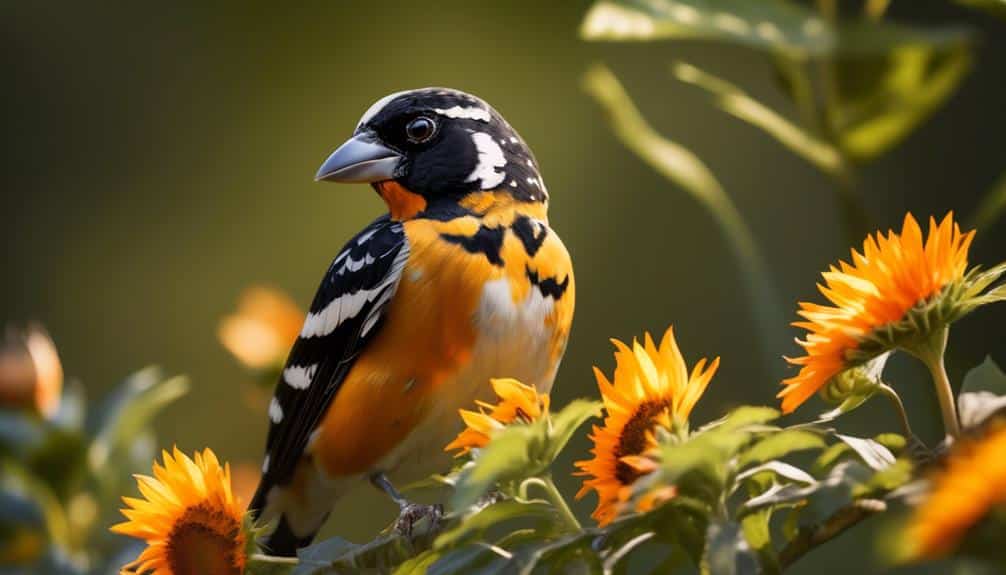
The Black-headed Grosbeak, a striking songbird found in California, showcases a stunning combination of colors and features that distinguish it from other species. With a black head and neck, bright orange breast, and white underparts, it is a visually captivating bird.
This species is known for its unique migration patterns. Black-headed Grosbeaks are neotropical migrants, spending their summers in California and migrating to Mexico, Central America, and as far as South America during the winter months.
During breeding season, males sing melodious songs to attract females and establish territories. They build cup-shaped nests in trees using twigs, grass, and leaves, and the female lays 3-4 pale blue eggs.
The Black-headed Grosbeak is an impressive bird that adds beauty and charm to the avian diversity of California.
Blue Grosbeak

With its vibrant blue plumage and distinctive song, the Blue Grosbeak is a captivating and melodious bird species found in California. This medium-sized bird belongs to the Cardinal family, Cardinalidae. The male Blue Grosbeak exhibits a striking deep blue coloration on its head, back, wings, and tail, while the female is predominantly brown with some blue on its wings and tail.
Blue Grosbeaks can be found in a variety of habitats, including open woodlands, scrublands, and grasslands. They prefer areas with dense shrubs and tall grasses, providing them with adequate cover for nesting and foraging.
In terms of migration patterns, Blue Grosbeaks are considered partially migratory birds. While some individuals remain in California year-round, others migrate to Mexico and Central America during the winter months. Their migration patterns vary depending on factors such as food availability and climatic conditions. During migration, Blue Grosbeaks can be seen in large flocks, making their way to their wintering grounds.
Western Tanager
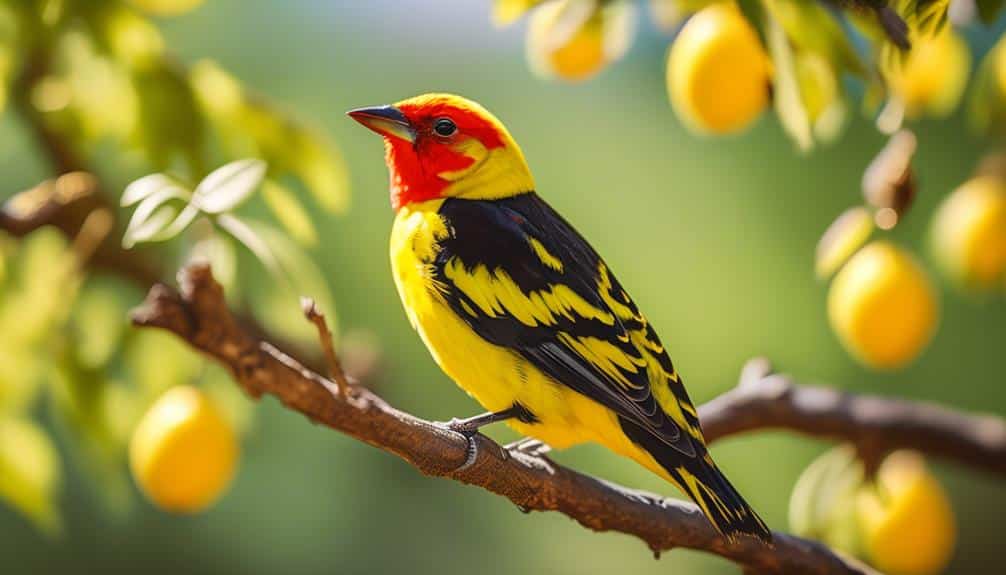
Found in the western regions of North America, the Western Tanager is a striking and brightly colored bird species that captures the attention of birdwatchers and nature enthusiasts. With its vibrant yellow plumage on the head and underparts and contrasting black wings, back, and tail, this tanager is a sight to behold. During the breeding season, the male Western Tanager adds a brilliant red coloring to its face, making it even more visually stunning.
The Western Tanager is known for its bird migration patterns, as it breeds in the western parts of North America and migrates south to Mexico and Central America during the winter months. These migratory movements are remarkable and highlight the importance of protecting their habitats throughout their range.
Bird conservation efforts play a crucial role in ensuring the survival of the Western Tanager and other bird species. Conserving and restoring habitats, implementing measures to reduce threats such as habitat loss, pollution, and climate change, and promoting public awareness about the importance of birds are essential steps in safeguarding the Western Tanager's future.
Blue-gray Gnatcatcher
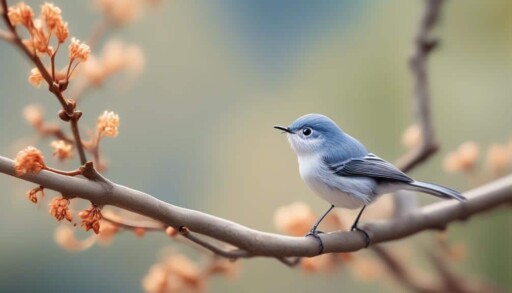
During its migration journeys, the Western Tanager shares the skies with another fascinating bird species known as the Blue-gray Gnatcatcher. The Blue-gray Gnatcatcher (Polioptila caerulea) is a small, insectivorous bird that is predominantly found in the western regions of North America, including California. This species has a distinct bluish-gray plumage, with a long black tail and a white eye-ring, giving it a striking appearance. The Blue-gray Gnatcatcher is known for its agile and acrobatic flight, as it flits through the trees in search of insects.
Habitat preferences for the Blue-gray Gnatcatcher include oak woodlands, riparian areas, and chaparral habitats. They are commonly found in areas with dense vegetation, such as shrubs and trees, which provide ample cover and nesting sites.
In terms of migration patterns, the Blue-gray Gnatcatcher is a neotropical migrant, meaning it migrates to Central America and Mexico during the winter months. In the spring, they return to their breeding grounds in California and other western states to nest and raise their young. Their migration routes typically follow the western coast, making them a common sight in California during the breeding season.
Hermit Thrush

The Hermit Thrush (Catharus guttatus) is a migratory songbird species that can be found in the western regions of North America, including California. This bird is known for its beautiful and melodic bird songs, often described as ethereal and flute-like. The Hermit Thrush has a unique and varied repertoire of songs, ranging from simple whistles to complex trills and warbles. These songs are used for territorial defense, courtship displays, and communication with other birds.
In terms of migration patterns, the Hermit Thrush is known to undertake long-distance migrations, traveling from its breeding grounds in the northern parts of North America to its wintering grounds in the southern regions, including California. During migration, these birds navigate using a combination of celestial cues, landmarks, and magnetic fields. They typically migrate at night, using the cover of darkness to avoid predation and conserve energy.
The Hermit Thrush is a fascinating species that contributes to the rich diversity of birdlife in California, both with its enchanting songs and its remarkable migratory journeys.


