
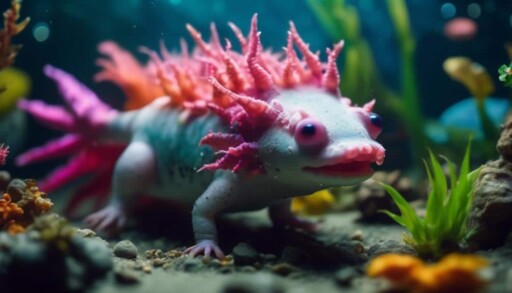
The fascinating aquatic creature known as the axolotl has captivated the interest of scientists and pet enthusiasts alike. With their unique appearance and remarkable regenerative abilities, it is natural to wonder about the inner workings of their minds.
One intriguing question that often arises is whether axolotls experience boredom. While these amphibians may not exhibit emotions in the same way humans do, their behavior patterns and reactions to their environment suggest a possibility.
By exploring the factors that influence axolotl well-being and identifying signs of potential boredom, we can begin to unravel this enigma and uncover strategies to enhance their quality of life.
Axolotl Behavior Patterns
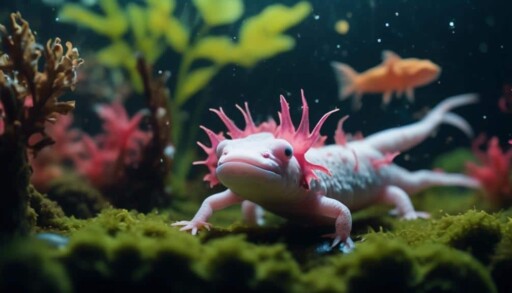
Axolotls exhibit a wide range of behavior patterns that are both fascinating and crucial to understanding their well-being and overall health.
One important aspect of axolotl behavior is socialization. While they are not typically social creatures in the same way as mammals, axolotls do engage in certain social behaviors. They can be seen interacting with each other, especially during feeding or mating.
However, it is important to note that axolotls are known to be territorial animals. They mark their territory by releasing pheromones and displaying aggressive behavior towards intruders. This territorial behavior is a natural instinct for axolotls and is often seen in the wild.
Understanding axolotl socialization and territorial behavior is crucial for their well-being in captivity, as it allows for appropriate tank size and proper monitoring of their interactions.
Environmental Factors Affecting Axolotl Well-Being
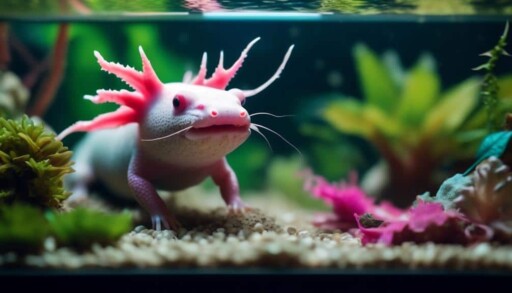
The well-being of axolotls is strongly influenced by various environmental factors. These factors can have a significant impact on their overall health, behavior, and mental stimulation. Here are four key environmental factors that play a crucial role in ensuring the well-being of axolotls:
- Water quality: Axolotls are highly sensitive to water conditions. Poor water quality, including high levels of ammonia or nitrate, can lead to stress, illness, and even death. It is essential to maintain clean, well-filtered water with proper pH levels to ensure the optimal health of these amphibians.
- Tank size: The size of the tank in which axolotls are kept can affect their behavior and mental stimulation. A larger tank provides more space for axolotls to explore, swim, and exhibit natural behaviors. It also allows for the addition of hiding spots, plants, and other enrichment items, which can enhance their overall well-being.
- Temperature and lighting: Axolotls are ectothermic animals, meaning their body temperature is regulated by their environment. It is crucial to maintain suitable water temperatures between 16-18°C (60-64°F) to ensure their well-being. Additionally, providing appropriate lighting, including a light-dark cycle, can help establish a natural day-night rhythm for axolotls.
- Water movement: Axolotls are adapted to still waters and are not strong swimmers. Excessive water movement, such as strong currents or turbulent flow, can cause stress and exhaustion. It is important to provide gentle water circulation in their tank to mimic their natural habitat and prevent any discomfort or harm.
Signs of Potential Boredom in Axolotls
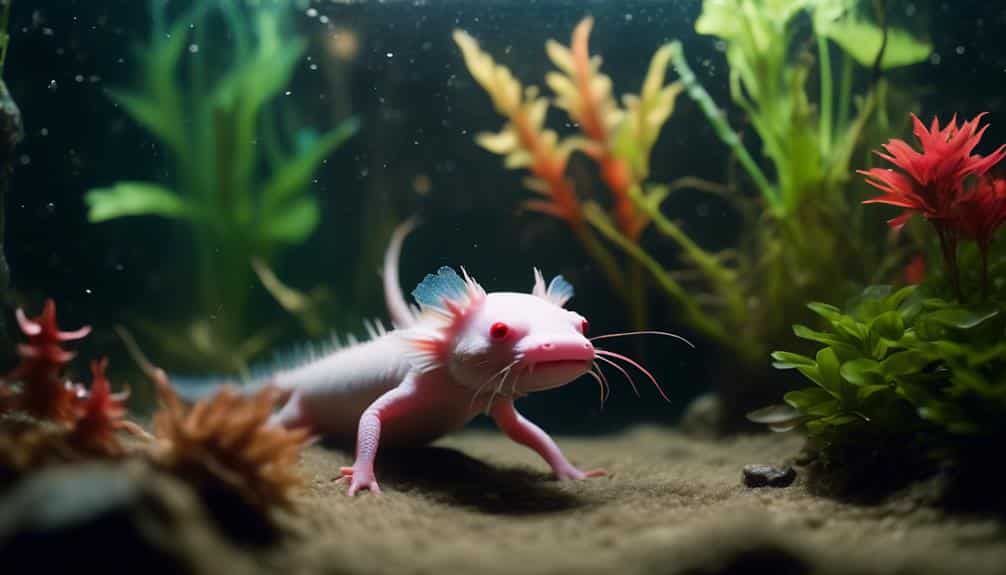
Boredom, a state of mental disengagement and lack of stimulation, can potentially manifest in axolotls through observable behavioral and physiological indicators. Understanding axolotl emotions is crucial in recognizing signs of potential boredom.
One common indicator is decreased activity levels. Bored axolotls may exhibit reduced exploration, swimming, and feeding behaviors. They may also become lethargic and spend more time resting or hiding.
Another sign of potential boredom is abnormal repetitive behaviors, such as pacing or incessantly rubbing against tank objects. These behaviors may serve as a way for axolotls to alleviate their boredom, similar to how humans engage in repetitive actions when feeling restless.
To prevent boredom and promote their well-being, providing mental stimulation is essential for axolotls. This can be achieved by offering a varied environment with hiding spots, objects to investigate, and engaging activities such as obstacle courses or puzzles.
Strategies to Prevent or Alleviate Axolotl Boredom
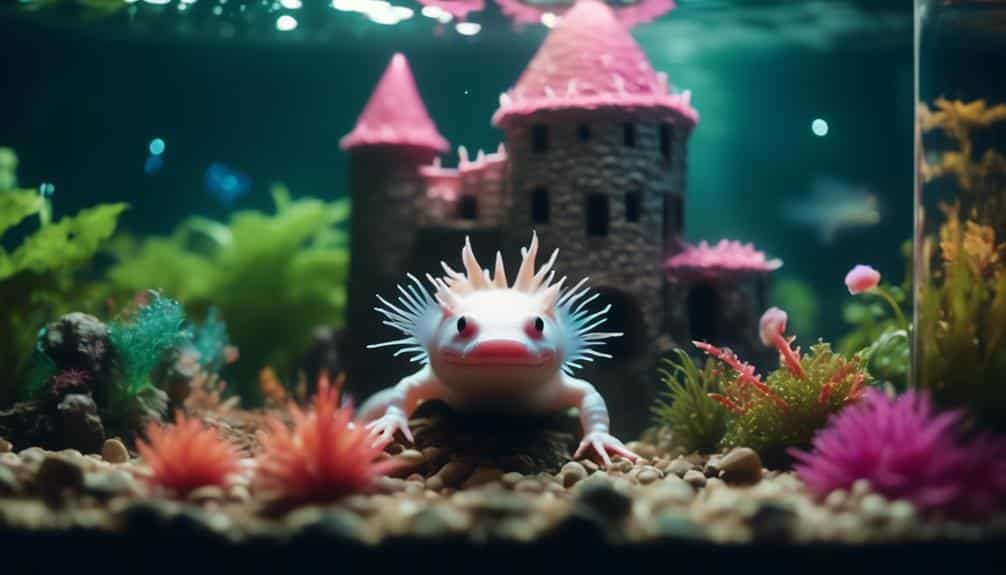
To prevent or alleviate potential boredom in axolotls, implementing various strategies is crucial for ensuring their mental stimulation and overall well-being. Here are four strategies that can help in this regard:
- Provide mental stimulation: Axolotls are curious creatures, so it's important to create an environment that stimulates their minds. This can be done by adding live plants, hiding spots, and changing the layout of their tank occasionally.
- Use interactive toys: Axolotls can benefit from toys that provide mental and physical stimulation. Floating toys, puzzle feeders, and floating mirrors can help keep them engaged and prevent boredom.
- Offer a varied diet: Providing a diverse range of food options can keep axolotls interested and prevent them from becoming bored with their diet. Offer a mix of live and frozen foods to mimic their natural feeding habits.
- Maintain a consistent routine: Establishing a regular feeding and cleaning schedule can help axolotls feel secure and reduce boredom. A routine provides structure and predictability, which is important for their mental well-being.
Enrichment Ideas for Stimulating Axolotl Activity
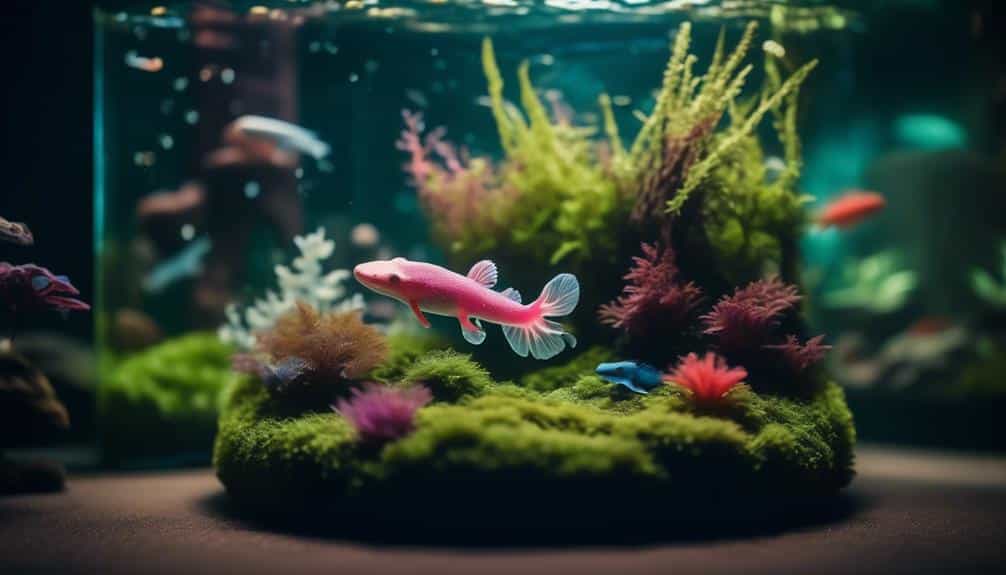
Enrichment activities are essential for promoting a stimulating environment and encouraging active behavior in axolotls. Providing a variety of aquarium decorations can significantly enhance their overall well-being. Natural structures like rocks, driftwood, and live plants not only create hiding spots but also mimic their natural habitat. Axolotls also benefit from the addition of PVC pipes or tunnels, which offer them a sense of security and exploration.
Another way to stimulate axolotl activity is through feeding techniques. Instead of simply dropping food into the tank, try using a feeding stick or tweezers to mimic prey movement. This activates their hunting instincts and encourages them to swim, search, and interact. Additionally, rotating their diet with a variety of live or frozen foods, such as bloodworms or brine shrimp, can provide mental and physical stimulation.


