
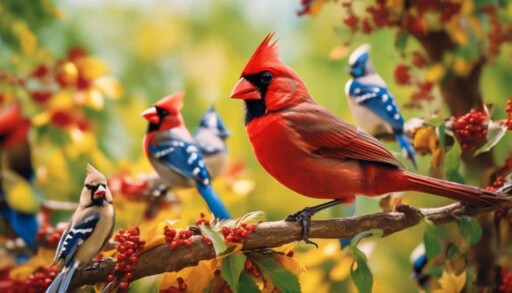
Iowa, nestled in the heartland of the United States, boasts an impressive array of bird species that call it home. From the majestic Bald Eagle soaring through the skies to the vibrant American Goldfinch flitting among the branches, the state's avian diversity is a testament to its rich natural heritage.
But what other fascinating feathered creatures can be found in Iowa's landscapes? Join me as we explore some of the captivating birds that grace this region, their unique characteristics, and the role they play in the delicate balance of Iowa's ecosystem.
Bald Eagle
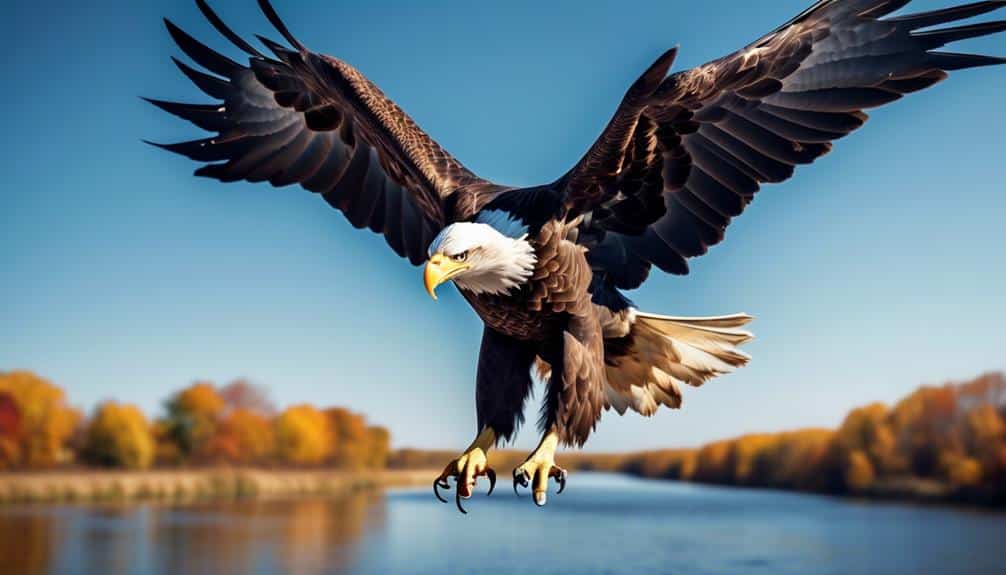
The majestic Bald Eagle, scientifically known as Haliaeetus leucocephalus, is a prominent bird species found in the state of Iowa. Conservation efforts for bald eagles have been crucial in ensuring the survival and recovery of their population.
Once on the brink of extinction due to habitat loss, pollution, and illegal hunting, the bald eagle has made a remarkable comeback. Efforts such as habitat preservation, nest protection, and the banning of harmful pesticides like DDT have played a significant role in their conservation.
Despite these conservation efforts, the bald eagle population still faces threats. Habitat destruction, pollution, and collisions with power lines continue to impact their numbers. Additionally, climate change poses a long-term threat, altering their breeding and foraging habitats.
Continued conservation efforts and public awareness are necessary to protect and preserve the majestic bald eagle for future generations.
American Goldfinch
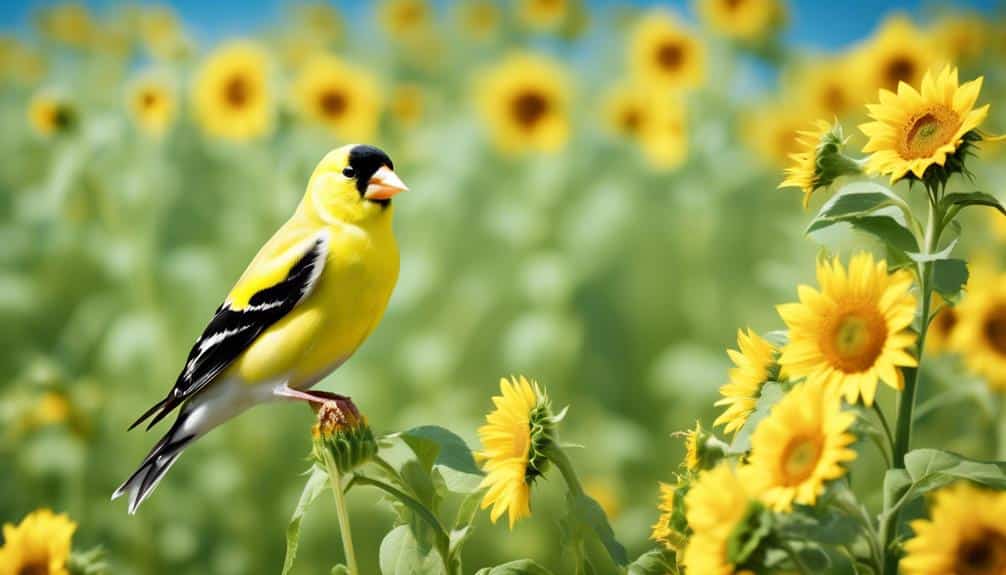
The American Goldfinch, or Spinus tristis, is a striking and distinct bird species commonly found in the state of Iowa. With its vibrant yellow plumage and contrasting black wings, the American Goldfinch is a sight to behold.
This species has specific habitat preferences and can be found in open fields, meadows, and areas with scattered trees and shrubs. They are particularly fond of weedy fields and gardens where they can find an abundance of seeds.
Feeding behaviors of the American Goldfinch primarily revolve around their preference for seeds. They have a specialized bill that allows them to extract seeds from various plants, including thistles and sunflowers. During the breeding season, their diet also includes insects to provide additional protein for their young.
Eastern Bluebird
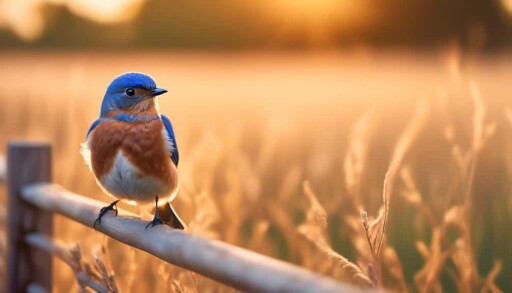
As we shift our focus from the American Goldfinch, a striking bird commonly found in Iowa, we now turn our attention to the Eastern Bluebird, a captivating species that graces the landscape with its vibrant colors and graceful presence.
The Eastern Bluebird is known for its migratory behavior, with populations in Iowa typically migrating south during the colder months. During migration, these birds can travel great distances to find suitable habitats and food sources.
In terms of nesting habits, Eastern Bluebirds prefer open areas with scattered trees and often choose cavities in trees or nest boxes for breeding. They are known to be cooperative breeders, with males and females working together to build nests and raise their young. These nests are typically constructed using grasses, pine needles, and feathers, providing a cozy and safe environment for their offspring.
Understanding the migration patterns and nesting habits of Eastern Bluebirds is essential for conserving and protecting this captivating species in Iowa.
Northern Cardinal
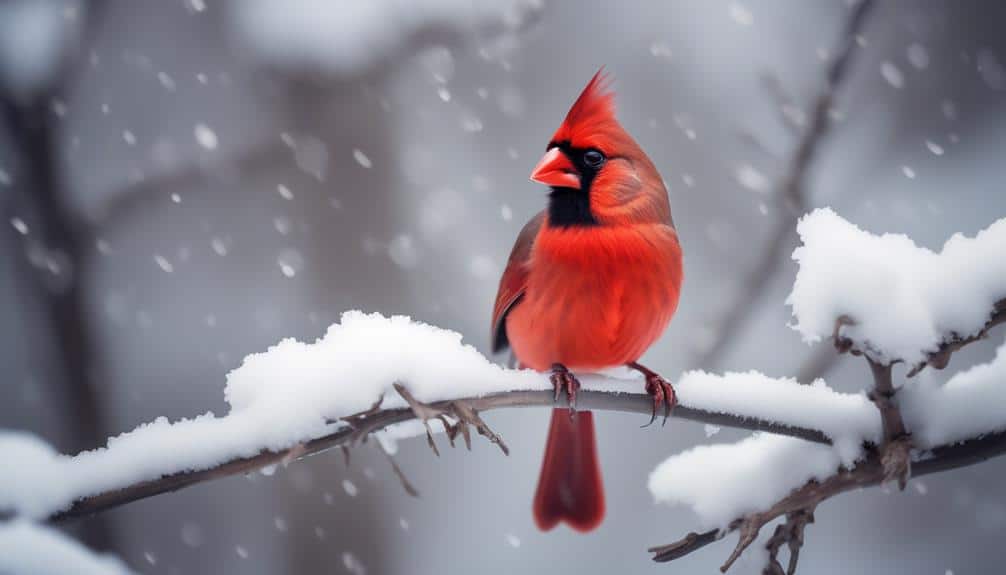
One of the most iconic and visually striking birds found in Iowa is the Northern Cardinal (Cardinalis cardinalis). This medium-sized songbird is known for its vibrant red plumage, crest, and black face mask, making it easily recognizable. The northern cardinal is a year-round resident in Iowa, preferring habitats with dense shrubs and trees, such as woodlands, forest edges, and gardens. It is also commonly found in urban areas, including parks and backyards.
During the mating season, which typically begins in early spring, the male cardinal exhibits courtship behavior by singing melodious songs and displaying its bright red feathers to attract a mate. The female cardinal, with her more muted plumage, plays a crucial role in selecting a suitable mate. Once paired, the male and female cardinals work together to build a cup-shaped nest in a well-hidden location, usually placed in dense vegetation. The female lays a clutch of 3-4 eggs, which she incubates while the male provides food.
The northern cardinal's mating habits and habitat preferences make it a fascinating and important species in the avian community of Iowa.
Red-tailed Hawk
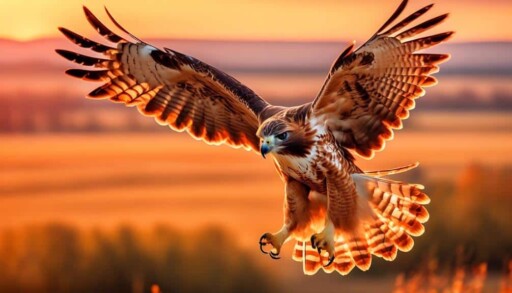
A majestic raptor soaring through the skies of Iowa, the Red-tailed Hawk (Buteo jamaicensis) is a formidable predator known for its striking plumage and impressive hunting skills. These birds can be found in a variety of habitats, including forests, grasslands, and open fields. Red-tailed Hawks typically build their nests in tall trees, using sticks and twigs as a foundation, while lining the nest with softer materials such as leaves and grass. Their nests are often large and sturdy, providing a safe and secure environment for their eggs and young.
In Iowa, conservation efforts for Red-tailed Hawks focus on protecting their habitats and ensuring a healthy prey base. These efforts include preserving and restoring their nesting sites, as well as implementing measures to reduce pesticide use and protect their food sources. Additionally, educational programs and public awareness campaigns aim to promote understanding and appreciation for these magnificent birds, encouraging individuals to play a role in their conservation.
Through these collective efforts, Iowa strives to maintain a sustainable population of Red-tailed Hawks and preserve their presence in the state's diverse avian community.
Ruby-throated Hummingbird
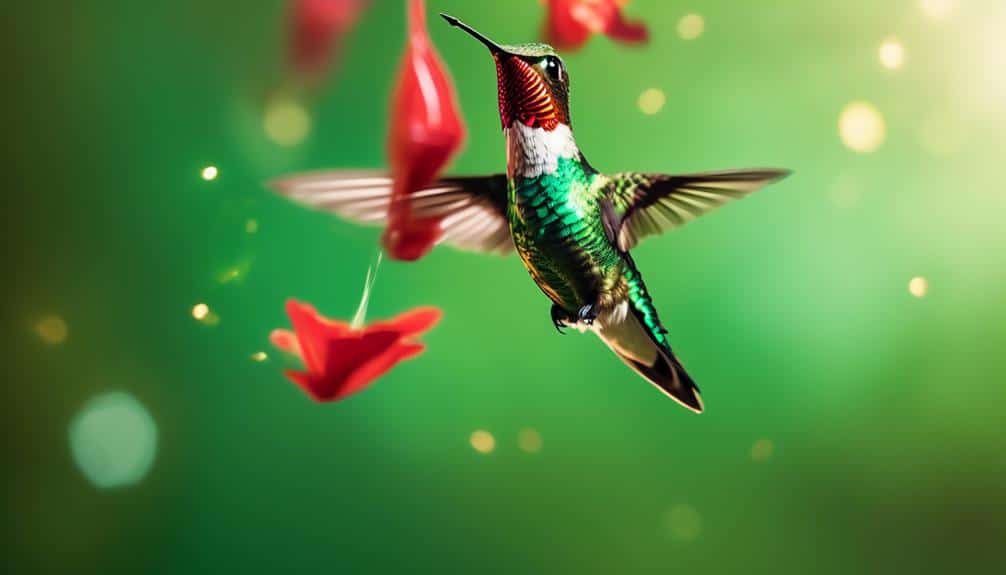
The Ruby-throated Hummingbird (Archilochus colubris) is a small, vibrant bird known for its iridescent green feathers and striking red throat. This species is the only hummingbird that breeds in eastern North America. During the breeding season, the males perform elaborate courtship displays to attract females.
The Ruby-throated Hummingbird has a unique migration pattern, traveling thousands of miles each year. In the spring, they migrate from their wintering grounds in Central America and Mexico to their breeding grounds in the eastern United States and Canada. In the fall, they embark on an incredible journey back to their wintering grounds.
Feeding habits of the Ruby-throated Hummingbird are fascinating. They primarily feed on nectar from flowers, using their long, slender bills to reach deep into the flowers. They also consume insects and spiders for protein, which is essential for their survival and reproduction. During their migration, they rely heavily on nectar-rich flowers and sugar water feeders provided by humans to fuel their energy-intensive journey.
The Ruby-throated Hummingbird's ability to hover and fly in any direction allows them to access nectar sources that other birds cannot reach. Their feeding habits and unique migration pattern make them a remarkable and captivating species to observe.
Eastern Screech Owl
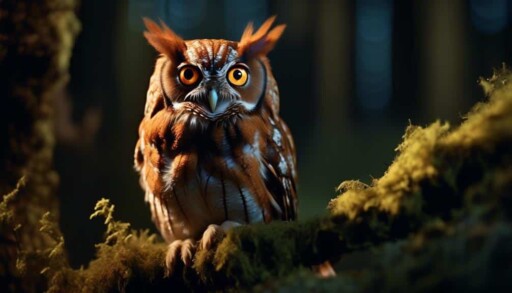
With its distinct plumage and haunting call, the Eastern Screech Owl (Megascops asio) is a nocturnal bird species that can be found throughout Iowa. This small owl measures around 8 to 10 inches in length, and its plumage can vary between reddish-brown and gray, allowing it to blend seamlessly with its surroundings.
In Iowa, Eastern Screech Owls prefer to inhabit woodlands, forests, and suburban areas with mature trees. They are cavity nesters, often utilizing abandoned woodpecker holes or naturally occurring tree hollows as their nesting sites. These owls are also known to adapt well to man-made nest boxes.
Breeding behavior typically occurs from late winter to early spring, with males attracting females through elaborate courtship displays and calls. Once a pair bonds, they will remain monogamous for the breeding season.
Eastern Screech Owls primarily feed on small mammals, birds, and insects, hunting from perches or by swooping down onto their prey.
Great Blue Heron
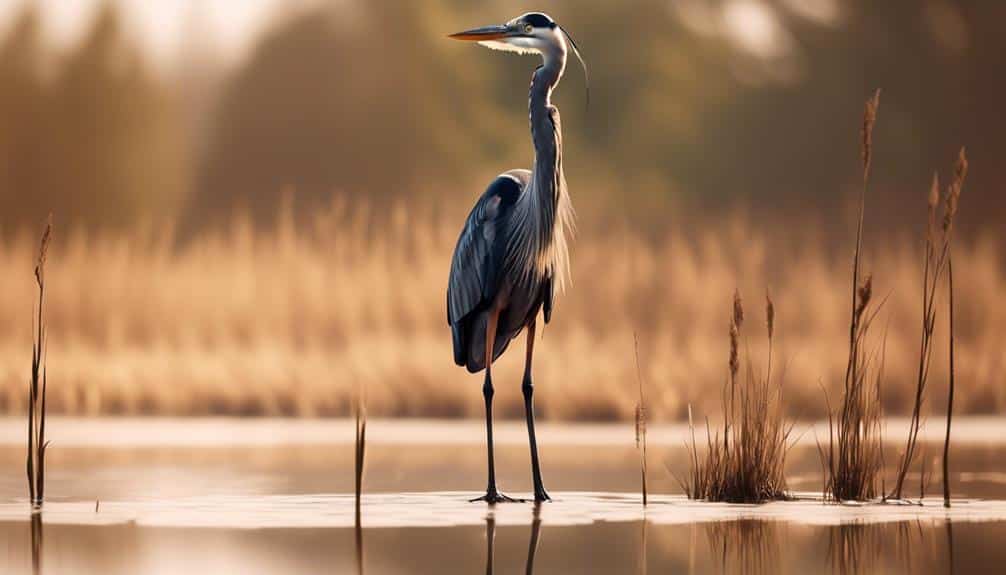
Commonly found in wetland habitats throughout Iowa, the Great Blue Heron (Ardea herodias) stands tall and majestic, showcasing its characteristic blue-gray plumage and impressive wingspan. With a height of up to 4 feet and a wingspan of nearly 7 feet, this magnificent bird is hard to miss.
The Great Blue Heron is a skilled hunter, using its sharp beak to catch a variety of prey, including fish, frogs, and small mammals. Its long, slender neck allows it to strike with lightning speed, capturing its prey in a swift and precise manner. This heron is known for its patient and stealthy hunting technique, often standing motionless in shallow water, waiting for the perfect moment to strike.
Although it is a formidable predator, the Great Blue Heron must also be cautious of other predators, such as the bald eagle, which may attempt to steal its catch. Despite these challenges, the Great Blue Heron remains a resilient and iconic species in Iowa's wetland ecosystems.
American Robin
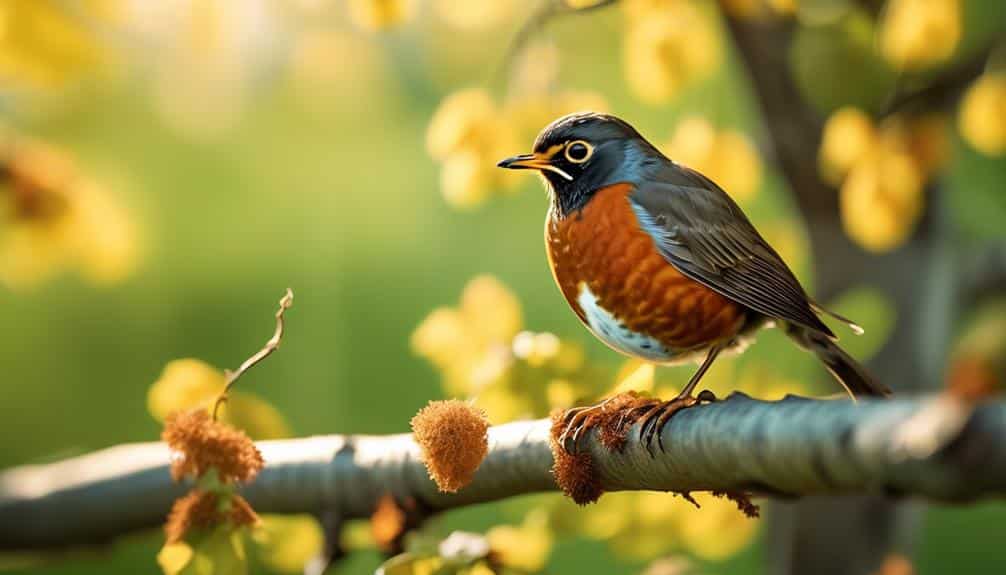
The American Robin (Turdus migratorius) is a widespread bird species commonly found throughout Iowa, known for its vibrant orange breast and melodic songs. American Robins are medium-sized thrushes that exhibit fascinating habits and habitats. They prefer open habitats such as lawns, fields, and gardens, where they can forage for earthworms, insects, and fruits. These adaptable birds can also be found in woodlands and urban areas.
One notable behavior of the American Robin is its migration pattern. During the winter, many robins migrate southward to warmer regions, including parts of the southern United States and Mexico. In Iowa, they typically arrive in early spring, signaling the arrival of warmer weather. The migration patterns of American Robins are triggered by changes in daylight and food availability.
Understanding the habits and habitats, as well as the migration patterns, of the American Robin is crucial for bird enthusiasts and researchers alike. By studying these aspects, we can gain insights into the ecological role and population dynamics of this iconic bird species in Iowa.
Yellow Warbler
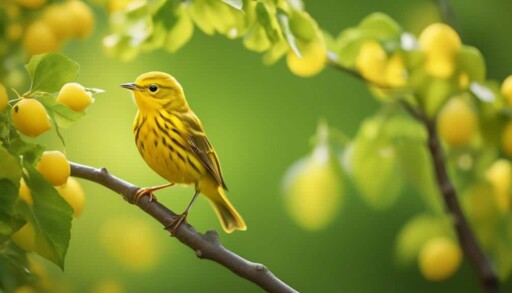
One avian species that coexists with the American Robin in Iowa is the Yellow Warbler (Setophaga petechia), a small migratory songbird renowned for its vibrant yellow plumage and distinct melodic calls. The Yellow Warbler can be found in a variety of habitats across Iowa, including forests, woodlands, and wetlands.
During migration, these birds travel long distances, flying from their wintering grounds in Central and South America to their breeding grounds in North America, including Iowa.
Breeding behavior and nesting habits of the Yellow Warbler are fascinating to observe. They build their nests in shrubs or trees, often near water sources. The female constructs a cup-shaped nest using grass, bark, and other plant materials, lined with fine materials such as feathers and spider silk.
The male Yellow Warbler is known for its territorial behavior, defending its nesting area vigorously against intruders. Once the nest is complete, the female lays a clutch of 3-5 eggs, which she incubates for about 11-12 days. Both parents participate in feeding the young, which fledge after about 9-10 days.
The Yellow Warbler's breeding behavior and nesting habits contribute to the survival and success of this beautiful species in Iowa's diverse ecosystems.
Red-winged Blackbird
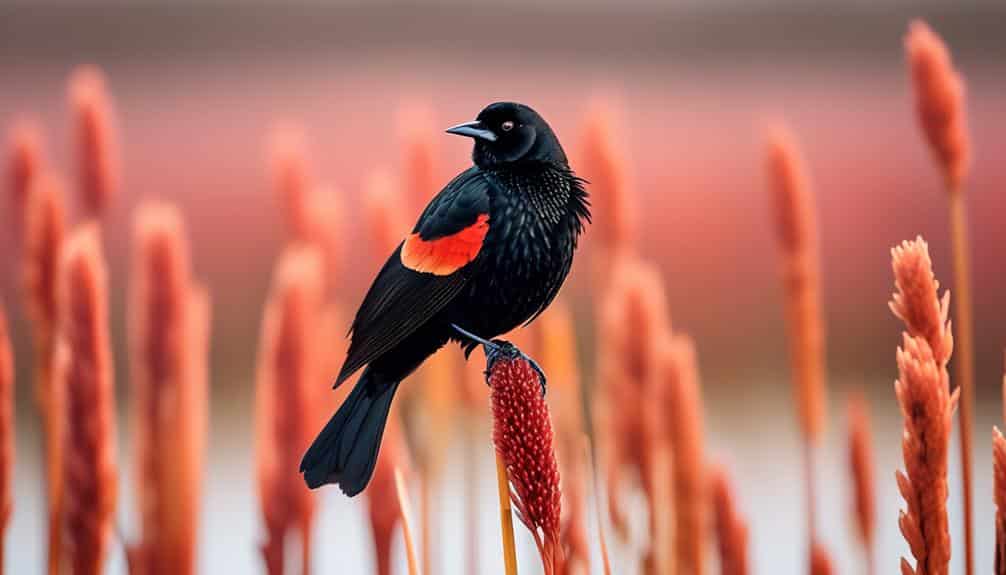
With its striking plumage and distinctive territorial calls, the Red-winged Blackbird (Agelaius phoeniceus) is a prominent avian species found throughout the diverse habitats of Iowa. These birds exhibit fascinating behavioral patterns that make them an intriguing species to observe.
Red-winged Blackbirds are known for their territorial behavior, particularly during the breeding season. Males defend their nesting territories vigorously by displaying their red and yellow shoulder patches and emitting loud, distinctive songs. They often perch prominently on cattails or other tall vegetation, making their presence known to other males and potential mates.
Red-winged Blackbirds are adaptable birds that can be found in a variety of habitats, including marshes, wetlands, and agricultural fields. They have a preference for areas with dense vegetation and water sources, which provide suitable nesting and foraging opportunities. These habitats offer an abundance of insects, seeds, and small invertebrates, which make up the majority of their diet.
Barn Owl
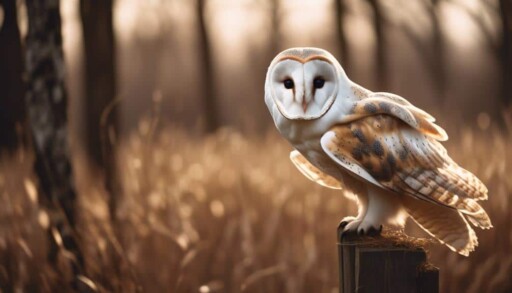
Moving on from the captivating Red-winged Blackbird, another intriguing avian species found in Iowa is the Barn Owl (Tyto alba), known for its distinctive appearance and unique hunting techniques.
The Barn Owl is a medium-sized owl with a heart-shaped face and pale plumage. It prefers open habitats such as grasslands, agricultural fields, and meadows, making Iowa a suitable habitat.
The diet of the Barn Owl mainly consists of small mammals, such as mice, voles, and shrews. It is an efficient hunter, relying on its exceptional hearing and silent flight to locate and capture its prey.
With its specialized adaptations and habitat preferences, the Barn Owl is a fascinating bird to observe in Iowa's diverse natural landscapes.
American Kestrel
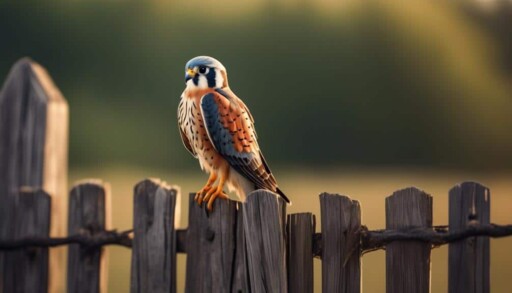
The American Kestrel (Falco sparverius) is a small falcon species commonly found in Iowa. It is known for its vibrant plumage and remarkable hunting abilities. With its striking combination of rusty-red, blue, and white feathers, the American Kestrel is easily identifiable.
This bird possesses a unique hunting style, characterized by its ability to hover in mid-air, rapidly scanning the ground for prey. It preys on a variety of small animals, including insects, small mammals, and birds.
The American Kestrel exhibits an interesting nesting behavior, often utilizing cavities in trees or abandoned bird nests for their breeding sites. They are known to be highly territorial, defending their nesting areas vigorously.
The female American Kestrel lays a clutch of 3 to 7 eggs, which are incubated by both parents. Once hatched, the young kestrels are fed by their parents until they are able to venture out and hunt on their own.
Baltimore Oriole
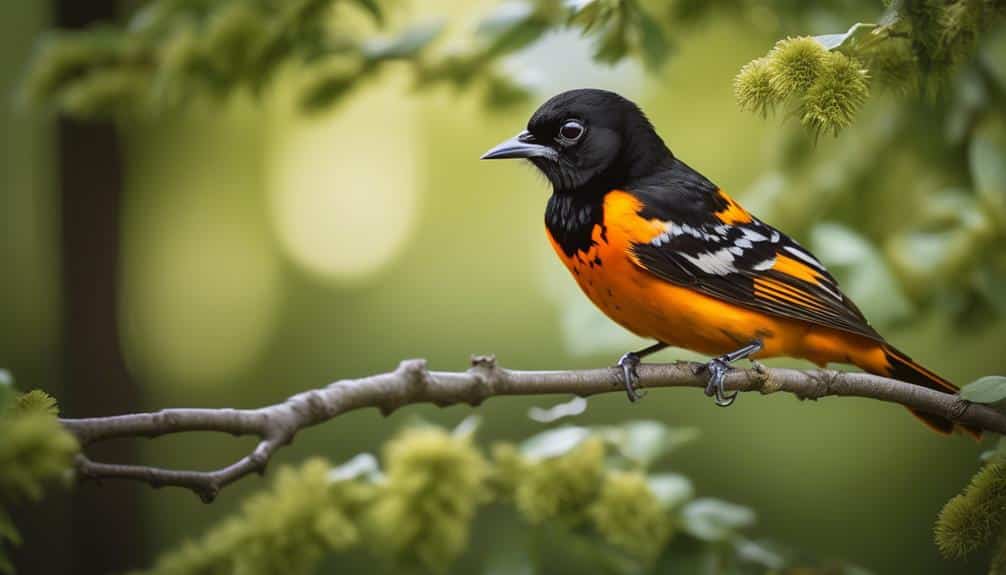
The next bird species of interest in Iowa is the Baltimore Oriole (Icterus galbula), a strikingly colored songbird that marks a notable departure from the vibrant plumage and hunting prowess of the previous American Kestrel.
The Baltimore Oriole is known for its bright orange and black plumage, which makes it a visually striking bird to observe in the wild. In terms of habitat requirements, these birds prefer areas with a mix of open woodlands and tall trees, such as riverbanks and forest edges. They are also commonly found in urban areas with mature trees.
When it comes to nesting behavior, the Baltimore Oriole constructs its hanging nest, often in the shape of a pouch, using various materials such as grass, bark, and plant fibers. The nest is suspended from the outer branches of trees, providing protection for the eggs and young chicks.
Snowy Owl
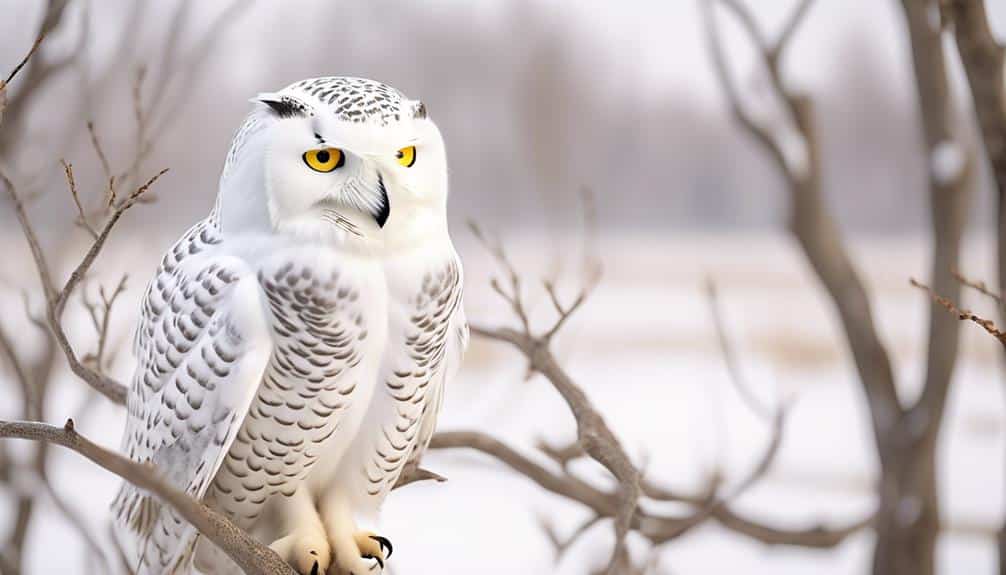
A majestic inhabitant of the Arctic tundra, the Snowy Owl (Bubo scandiacus) captivates with its striking white plumage and piercing yellow eyes. These magnificent birds possess unique behavioral patterns and habitat preferences that allow them to thrive in their harsh environment.
Snowy Owls are known for their solitary nature, often choosing to nest alone in remote areas. They are highly territorial during breeding season, fiercely defending their nesting sites against intruders. Their preferred habitats include open tundra, coastal dunes, and prairies, where their white feathers provide camouflage against the snowy landscape.
Snowy Owls are opportunistic hunters, feeding primarily on lemmings but also taking advantage of other small mammals and birds when available. With their impressive adaptations and distinctive appearance, Snowy Owls are truly remarkable creatures of the Arctic.


