
Imagine walking into a room filled with people, the noise and commotion overwhelming your senses. Seeking solace and respite, you retreat to the comfort of a closet tucked away in the corner. In this confined space, you find tranquility and security, shielded from the chaos of the outside world.
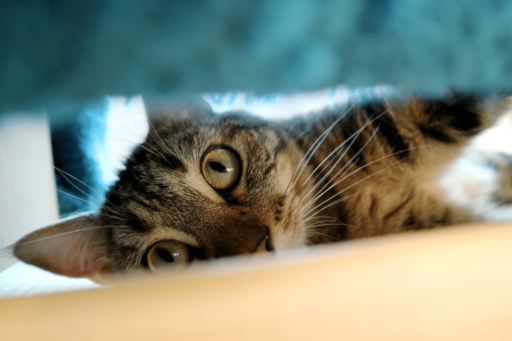
For cats, hiding and sleeping in closets serves a similar purpose. Cats are known for their elusive nature, often seeking secluded areas where they can retreat from external stimuli. The choice to hide and sleep in the closet is not arbitrary; it is a calculated decision based on their instinctual behaviors and need for safety.
As veterinary behaviorists or animal behaviorists would approach this topic analytically, we will explore various factors that influence a cat’s preference for closets. Territorial instincts, anxiety, and the need for a safe haven all play significant roles in shaping this behavior. By relying on evidence-based strategies supported by scientific research, we aim to equip cat owners with knowledge to understand and address their feline companion’s inclination towards seeking refuge in closets.
In this article, we delve deeper into why cats choose to hide and sleep in closets by examining their natural instincts, providing insights into their behavior through scientific evidence, and offering practical recommendations for cat owners seeking to create an environment that promotes both physical and emotional well-being for their furry friends.
Table of Contents


