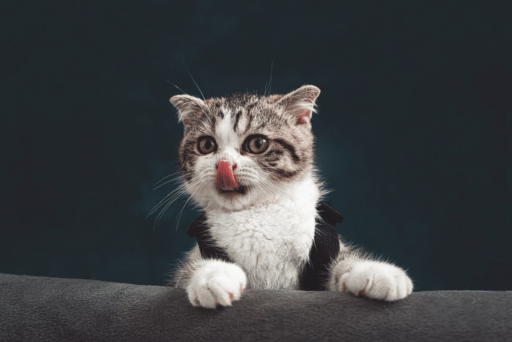
cat licking its lips, remember that it’s just one way they’re preparing for their next meal!
Marking territory through scent
By marking their territory through scent, felines establish a powerful presence that asserts dominance and ownership over their surroundings. Scent marking is a common behavior among cats and serves various purposes, including communication with other cats and establishing boundaries. Cats have scent glands located in different parts of their body, such as the cheeks, chin, paws, and tail base. These glands release pheromones that are specific to each individual cat. When they rub against objects or spray urine on vertical surfaces like walls or furniture, they leave behind these unique scent markers. The table below highlights some key aspects of scent marking behavior:
| Behavior |
Description |
| Rubbing |
Cats rub their faces or bodies against objects to transfer their scent onto them. This marks the object as part of their territory. |
| Spraying |
Cats may spray urine on vertical surfaces to communicate with other cats and mark boundaries within their territory. |
| Scratching |
By scratching objects, cats leave visual marks as well as depositing scent from the sweat glands in their paw pads. |
Understanding these behaviors can help cat owners create an environment that supports natural territorial instincts while also preventing unwanted marking inside the home.
Communication and Social Interaction
Cats use lip licking as a way to communicate and interact socially, with studies showing that they engage in this behavior more frequently when interacting with other cats compared to humans. Lip licking is a part of their complex repertoire of body language cues and vocalizations that they use to express themselves.
When cats lick their lips, it can indicate an array of emotions or intentions. For example, it may signal anxiety or stress during social interactions with other cats, serving as a way to diffuse tension and avoid aggression. Additionally, lip licking can also be a form of submission or appeasement towards dominant individuals in the feline hierarchy.
While lip licking is less commonly observed when interacting with humans, it is still important for cat owners to recognize and understand this behavior as another means of communication from their feline companions.
Potential Health Issues
One potential health issue that can arise is if a feline’s lip licking becomes excessive or compulsive. Excessive lip licking in cats may indicate underlying dental problems or digestive issues.
It’s important to monitor your cat’s behavior and consult with a veterinarian if you notice prolonged or intense lip licking. Excessive lip licking can be a sign of dental problems such as tooth decay, gum disease, or oral infections. These conditions can cause pain and discomfort, leading to increased lip licking as the cat tries to alleviate the discomfort.
Digestive issues can also contribute to excessive lip licking in cats. Gastrointestinal problems like acid reflux, gastritis, or food allergies can cause irritation in the mouth and throat, prompting increased lip smacking or licking.
If you notice your cat excessively licking their lips, it’s crucial to seek veterinary attention promptly. Identifying and addressing any potential underlying health issues will help ensure your furry friend’s well-being and comfort.
When to Be Concerned
If you notice your cat frequently licking their lips, it could be a sign of an underlying health issue. While occasional lip licking is normal for cats, excessive or persistent lip licking should not be ignored. It may indicate a problem that requires attention.
Warning signs to look out for include redness, swelling, sores, or any other abnormalities around the lips or mouth area. These symptoms could be indicative of dental problems, such as gum disease or tooth decay. In some cases, excessive lip licking can also be a symptom of allergies or skin irritations.
If you observe these warning signs in your cat, it’s important to consult with your veterinarian for a proper diagnosis and treatment plan. They’ll be able to determine the underlying cause and provide appropriate guidance.
In the meantime, there are some tips for addressing excessive lip licking in cats. This may involve providing dental care products specifically designed for cats, ensuring proper oral hygiene through regular brushing, and addressing any allergies or skin issues that may be contributing to the behavior.
Post Views: 16