

In an era marked by environmental challenges, the preservation of endangered species has become a pressing concern. Among these species is the axolotl, a unique amphibian native to the ancient waters of Mexico.
The axolotl's striking appearance and remarkable regenerative abilities have captivated the scientific community and the general public alike. However, as their natural habitat faces threats from pollution, habitat destruction, and invasive species, the axolotls' future hangs in the balance.
In this discussion, we will explore the crucial steps that can be taken to save these enigmatic creatures, focusing on understanding their habitat, implementing conservation measures, promoting responsible breeding practices, raising awareness and education, and supporting organizations and research.
By delving into these strategies, we will uncover the key to ensuring the survival of the axolotls and their extraordinary evolutionary legacy.
Understanding the Axolotl's Habitat

In order to effectively save the axolotls, it is crucial to have a comprehensive understanding of their natural habitat. Exploring ecosystems where axolotls reside and studying their natural behavior are essential steps towards conservation efforts.
Axolotls, native to the Xochimilco region of Mexico, primarily inhabit freshwater lakes, canals, and wetland areas. These unique creatures rely on the complex interplay of various ecological factors, such as water quality, temperature, and vegetation cover, for their survival.
By closely observing their behavior in their natural habitat, scientists can gain valuable insights into their specific needs and preferences. This knowledge allows for the development of effective conservation strategies, including habitat restoration, pollution reduction, and the creation of protected areas.
Understanding the axolotl's habitat is a crucial foundation for successfully preserving this endangered species.
Implementing Conservation Measures
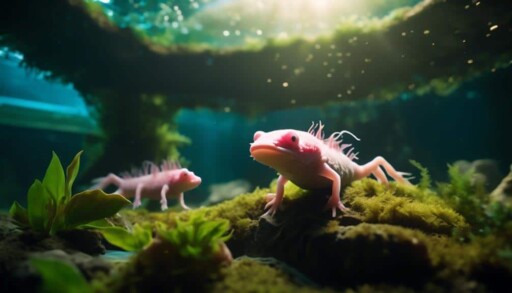
To effectively preserve the axolotl population, it is imperative to implement a range of targeted conservation measures based on scientific research and ecological understanding.
Community engagement is key in this process, as it fosters a sense of responsibility and ownership among local communities. By educating and involving the public, we can raise awareness about the importance of protecting the axolotls and their habitat.
Additionally, policy and legislation play a crucial role in conservation efforts. Governments need to enact and enforce laws that protect the axolotls and their habitats from threats such as pollution, habitat destruction, and illegal trade.
A comprehensive approach that combines community engagement with effective policy and legislation is essential for the long-term survival of the axolotls and other endangered species.
Promoting Responsible Breeding Practices
With the foundation of effective conservation measures in place, the next crucial step is to focus on promoting responsible breeding practices for the axolotls. Ethical breeding is essential to maintain the genetic diversity of this unique species.
To ensure responsible breeding, it is important to prioritize the health and welfare of the axolotls. Breeding pairs should be selected based on their genetic diversity, as this helps to prevent inbreeding and maintain a strong gene pool.
Additionally, breeding should be carefully monitored and controlled to prevent overbreeding and reduce the risk of overcrowding. Breeding programs should aim to maintain a balance between preserving genetic diversity and preventing overpopulation.
Raising Awareness and Education
Raising awareness and educating the public about the importance of conserving axolotls is crucial in ensuring their long-term survival and fostering a sense of responsibility towards their protection. Educational campaigns can play a significant role in achieving these objectives. By providing accurate information about axolotls, their unique characteristics, and their declining population, these campaigns can raise public awareness and encourage individuals to take action.
To effectively engage the audience, a table can be used to present key facts about axolotls. Here is an example:
| Fact | Importance |
|---|---|
| Axolotls are critically endangered | Raises urgency for conservation efforts |
| They possess remarkable regenerative abilities | Highlights their scientific significance |
| Axolotls are only found in Mexico | Emphasizes their cultural and ecological value |
| They serve as indicators of environmental health | Demonstrates the broader impact of their conservation |
Through educational campaigns, people can learn about axolotls and the need to protect their habitat, reduce pollution, and support conservation initiatives. By increasing awareness and knowledge, we can inspire individuals to become actively involved in saving these unique creatures from extinction.
Supporting Organizations and Research

Supporting organizations and research play a vital role in the conservation and preservation of axolotls. These efforts are essential for understanding the unique biology of axolotls and developing effective strategies to protect their population.
Here are four key ways in which organizations and research contribute to the conservation of axolotls:
- Funding initiatives: Organizations raise funds to support research projects focused on axolotl conservation. This financial support enables scientists to conduct fieldwork, analyze data, and develop innovative conservation strategies.
- Scientific advancements: Research efforts provide valuable insights into axolotl biology, behavior, and habitat requirements. These advancements help identify the threats faced by axolotls and inform conservation measures to mitigate these risks effectively.
- Collaborative efforts: Organizations foster collaboration among researchers, conservationists, and government agencies. By working together, these stakeholders can pool their expertise and resources to develop comprehensive conservation plans and implement effective actions.
- Public engagement: Organizations play a crucial role in raising public awareness about the importance of axolotls and their conservation needs. They organize educational campaigns, outreach programs, and public events to engage and mobilize individuals to support conservation efforts.


