

Small white birds are a fascinating group of avian creatures that captivate the attention of both birdwatchers and nature enthusiasts. Their delicate appearance and graceful movements evoke a sense of awe and wonder. From the majestic Snowy Owl with its striking white plumage to the elusive Barn Owl that glides silently through the night, the world of small white birds is diverse and intriguing.
But what other feathered wonders exist in this category? Join us as we embark on a journey to explore the lesser-known members of this enchanting group, where surprises and discoveries await at every turn.
Snowy Owl
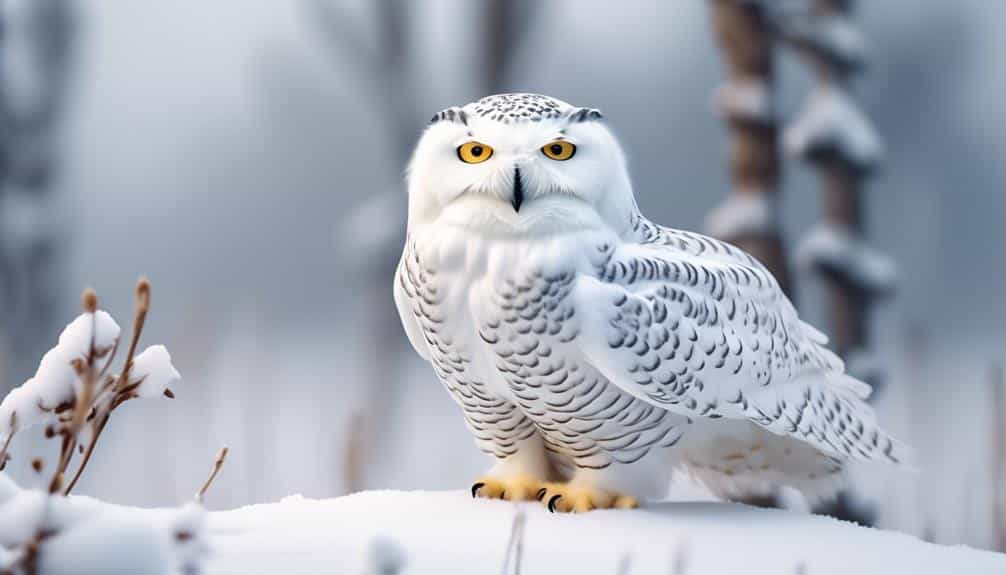
The Snowy Owl (Bubo scandiacus) is a large, white bird of prey native to the Arctic regions of North America and Eurasia. These magnificent birds have evolved unique adaptations to thrive in their harsh Arctic habitat. Their dense plumage, consisting of white feathers with black spots, provides excellent camouflage against the snowy landscape.
Snowy Owls also have feathered feet and legs, acting as insulation to keep them warm in extremely cold temperatures.
In terms of hunting techniques, Snowy Owls display exceptional patience and stealth. They primarily hunt during the daytime, unlike most owls that are nocturnal. Their keen eyesight, combined with their ability to rotate their heads up to 270 degrees, allows them to spot and track prey from a distance.
Snowy Owls are apex predators and primarily feed on small mammals like lemmings, but they are opportunistic hunters and will also prey on birds and fish when available.
Barn Owl
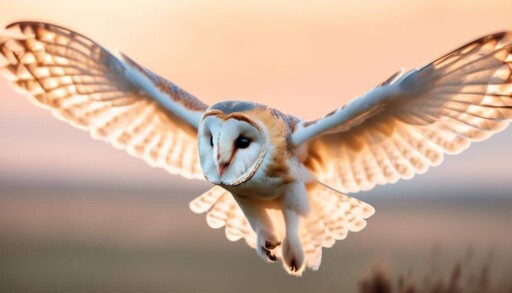
Native to various regions across the globe, the Barn Owl (Tyto alba) is a species of bird that possesses distinct features and hunting capabilities.
Unlike the snowy owl, which is predominantly found in Arctic regions, the barn owl has a more widespread distribution, inhabiting diverse habitats such as grasslands, forests, and agricultural areas.
With a heart-shaped face and pale plumage, the barn owl is known for its exceptional low-light vision and silent flight. This nocturnal hunter primarily feeds on small mammals, such as rodents, and has adapted specialized feathers that enable it to fly silently, allowing for stealthy hunting.
The barn owl's ability to locate prey in complete darkness is enhanced by its acute hearing, which helps it pinpoint the exact location of its target.
Little Egret

Continuing our exploration of avian species, let us now turn our attention to the Little Egret (Egretta garzetta), a distinctive bird that exhibits remarkable characteristics and adaptations.
The Little Egret is a small white bird belonging to the heron family. It is known for its slender body, long neck, and yellow bill. This elegant bird is commonly found in freshwater and coastal habitats across Europe, Asia, and Africa.
The Little Egret is often mistaken for the Snowy Egret (Egretta thula) due to their similar appearance. However, there are a few key differences between the two species. The Little Egret has black legs and a longer neck, while the Snowy Egret has yellow legs and a shorter neck.
These adaptations enable the Little Egret to forage for small fish, amphibians, and invertebrates in shallow waters, while its distinctive plumage allows it to blend into its surroundings, making it a successful predator and a fascinating sight for birdwatchers.
Snowy Egret

A distinct member of the heron family, the Snowy Egret (Egretta thula) is a small white bird known for its elegant appearance and unique foraging techniques. This species has faced significant conservation efforts due to historical hunting for its striking plumes, resulting in a decline in its population. Today, the Snowy Egret is protected under various laws and regulations, ensuring its survival and promoting its recovery.
Snowy Egrets breed in colonies, often in mixed-species groups with other herons and egrets. During the breeding season, males perform elaborate courtship displays to attract females. The female then selects a mate and together they build a nest, typically a platform made of twigs and vegetation. They lay around three to five eggs, which both parents take turns incubating. The eggs hatch after approximately three weeks, and both parents share the responsibility of feeding and caring for the chicks until they fledge.
Understanding the breeding habits of Snowy Egrets is crucial for conservation efforts, as it enables researchers and conservationists to identify and protect important breeding sites, ensuring the long-term survival of this elegant bird.
Great Egret

The Great Egret (Ardea alba) is a majestic and graceful bird that is widely recognized for its impressive stature and brilliant white plumage. As one of the small white birds, the Great Egret stands out with its long neck, sharp beak, and elegant posture. This species can be found in various habitats, including wetlands, marshes, and coastal areas. It is known for its ability to adapt to different environments, making it a versatile hunter. The Great Egret primarily feeds on fish, amphibians, and small mammals, using its sharp bill to catch its prey. It is a solitary bird, often seen calmly standing or walking through shallow water, patiently waiting for its next meal. With its striking appearance and serene demeanor, the Great Egret is truly a remarkable sight in the natural world.
| Scientific Name | Ardea alba | |
| Family | Ardeidae | |
| Type | Bird | |
| Size | 90-105 cm | |
| Weight | 0.9-1.4 kg |
White Ibis

White Ibis, a species known for its distinctive white plumage and long, curved bill, is a highly adaptable and sociable bird that can be found in various wetland habitats. These habitats include marshes, swamps, and coastal areas.
The white ibis is commonly seen in the southeastern United States, as well as in parts of Central and South America. They are also known to inhabit Caribbean islands.
White ibises are often seen foraging in shallow waters, using their long, curved bills to probe the mud for small crustaceans, insects, and other invertebrates. They are highly gregarious birds and are frequently found in large flocks, especially during the breeding season.
Their social behavior extends to nesting, with multiple pairs often building their nests in close proximity to one another, forming colonies.
The white ibis is a fascinating bird that demonstrates remarkable adaptability and sociability in its natural habitat.
Tundra Swan

Tundra swans, scientifically known as Cygnus columbianus, are migratory waterfowl species with a distinct black beak and elegant white plumage. These majestic birds are well-known for their impressive migration patterns and unique breeding habits.
Tundra swans breed in the Arctic tundra regions of North America, including Alaska and northern Canada. During the breeding season, they create nests on elevated mounds or islands near water bodies. The female swan lays 3 to 8 eggs, which are incubated for about 32 days. Once the eggs hatch, the parents care for their young, teaching them to forage and fly.
After the breeding season, tundra swans embark on long-distance migrations, flying to their wintering grounds along the coasts of the United States and Mexico. This remarkable species is a symbol of beauty and resilience in the natural world.
Whooping Crane

The iconic Whooping Crane, scientifically known as Grus americana, is a large, endangered bird species native to North America. With its striking white plumage, black wingtips, and long, slender legs, the Whooping Crane stands out among other bird species. Conservation efforts for Whooping Cranes have been implemented due to their critically low population size. These efforts include habitat protection, captive breeding programs, and monitoring of migratory routes.
| Unique Features of Whooping Cranes | Conservation Efforts for Whooping Cranes |
|---|---|
| – Height of up to 5 feet | – Habitat protection |
| – Wingspan of 7 to 8 feet | – Captive breeding programs |
| – Distinctive red crown on head | – Monitoring of migratory routes |
These unique features and conservation efforts aim to ensure the survival and recovery of this magnificent bird species, contributing to the preservation of biodiversity in North America.
White Pelican
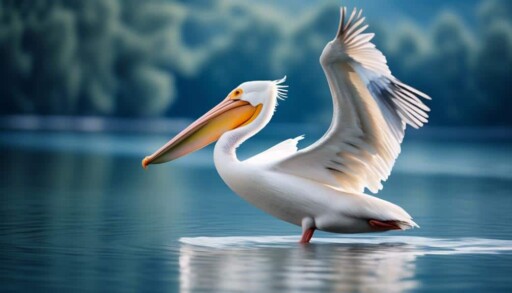
The large aquatic bird species, known as the American white pelican (Pelecanus erythrorhynchos), displays distinct characteristics and behaviors that set it apart from other avian species. With a wingspan reaching up to 9 feet, the white pelican is one of the largest birds in North America. Its plumage is primarily white, with black flight feathers visible during flight.
Unlike the snowy owl, which is a solitary bird, white pelicans are highly social and often seen in large groups, or colonies, during the breeding season. They are excellent swimmers, using their webbed feet to paddle through the water in search of fish, their main food source. White pelicans also engage in cooperative feeding, where they work together to corral fish into shallow water before scooping them up with their large, expandable throat pouches.
This unique feeding behavior is a spectacle to behold and a testament to the adaptability and ingenuity of these remarkable birds.
Arctic Tern

As we shift our focus to the Arctic Tern, we explore another fascinating avian species renowned for its remarkable migratory abilities and unique adaptations. The Arctic Tern (Sterna paradisaea) is a small white bird that is famous for its long-distance migrations. It is known to travel from the Arctic regions to the Antarctic and back, covering a distance of approximately 44,000 miles (70,900 kilometers) each year. This migratory feat is the longest known regular migration of any animal.
Arctic Terns breed in the Arctic tundra during the summer months, where they build nests on the ground or cliffs. They lay one to three eggs and both parents take part in incubating them. After the breeding season, they embark on their incredible journey to their wintering grounds in the Antarctic. The migration patterns of the Arctic Tern are influenced by seasonal changes, availability of food, and favorable winds. These birds rely on their excellent navigation skills, celestial cues, and possibly even magnetic fields to find their way across vast distances.
In order to survive their long migrations, Arctic Terns have evolved several adaptations. They have a streamlined body and long, narrow wings that allow for efficient flight over long distances. Their plumage is white, which helps to camouflage them in the Arctic environment and reflects sunlight to keep them cool during their time in the Antarctic. They also have a strong beak and sharp claws, which they use for catching fish and other small marine organisms along their migration route.
This table provides a summary of the key information about the Arctic Tern:
| Scientific Name | Sterna paradisaea |
|---|---|
| Average Length | 33-39 cm |
| Wingspan | 76-85 cm |
| Habitat | Arctic regions |
| Diet | Fish, invertebrates, and small marine organisms |
| Conservation Status | Least Concern |
Ross's Gull

A small, delicate bird known for its unique appearance and elusive nature, Ross's Gull (Rhodostethia rosea) is a species that captivates the hearts of bird enthusiasts and scientists alike.
This small white bird measures about 30 centimeters in length and has a wingspan of approximately 70 centimeters. It is easily recognized by its pale pink plumage, which turns white during the winter months.
Ross's Gull is primarily found in the Arctic regions, breeding along the coasts of Siberia and Alaska. During the non-breeding season, it undertakes long-distance migrations, often venturing as far south as the Mediterranean Sea and the Great Lakes region of North America. These migrations are remarkable feats of endurance, as Ross's Gulls travel thousands of kilometers to reach their wintering grounds.
Despite their captivating beauty, Ross's Gulls are rarely seen and remain a mysterious and enigmatic species.
Glaucous Gull

With its distinctive pale gray and white plumage, the Glaucous Gull (Larus hyperboreus) is a large, majestic seabird that commands attention in its Arctic habitat. This species is well adapted to the harsh conditions of the Arctic, with its thick plumage and robust build. The Glaucous Gull primarily inhabits coastal areas, including rocky shores, cliffs, and ice floes, where it feeds on a variety of prey such as fish, marine invertebrates, and carrion.
During the breeding season, these gulls migrate to the high Arctic regions, where they nest on cliffs or rocky ledges. They undertake long-distance migrations, with some individuals traveling as far south as the northern parts of the United States during the winter months.
In terms of conservation status, the Glaucous Gull is currently classified as a species of least concern by the International Union for Conservation of Nature (IUCN). However, the species faces several threats, including habitat loss due to climate change and pollution. The melting of Arctic ice, for example, can lead to the destruction of nesting sites, affecting breeding success. Additionally, the accumulation of pollutants in the Arctic ecosystem can have detrimental effects on the health of Glaucous Gulls and other wildlife.
Continued monitoring and conservation efforts are necessary to ensure the long-term survival of this magnificent species.
Iceland Gull
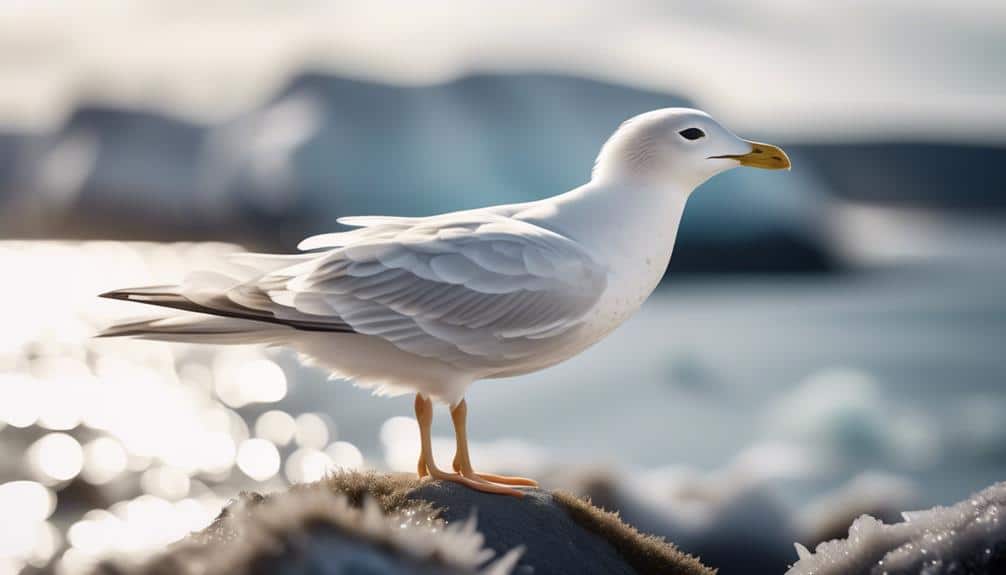
The Iceland Gull (Larus glaucoides) is a medium-sized seabird species known for its striking white plumage and distinctive yellow bill. This gull is native to the Arctic regions of North America and Europe, and it is commonly found in coastal areas and open waters.
The Iceland Gull has interesting migration patterns, with some individuals traveling long distances to reach their breeding grounds. They typically breed in the northern parts of Canada, Greenland, and Iceland, where they build nests on cliffs and rocky ledges.
During the breeding season, the Iceland Gull displays unique behaviors, such as courtship displays and aggressive territorial defense. They lay one to four eggs and both parents take turns incubating them. Once the chicks hatch, they are fed regurgitated food by their parents until they are ready to fledge.
Ivory Gull

The Ivory Gull (Pagophila eburnea) is a small Arctic seabird species characterized by its snowy white plumage and graceful flight. This elusive bird is known for its unique breeding habits and the conservation efforts being made to protect its population.
The Ivory Gull breeds in the high Arctic regions, typically on coastal cliffs or rocky ledges. It constructs nests made of moss, lichens, and feathers, often in colonies.
Conservation efforts for the Ivory Gull are essential due to its vulnerability to climate change and habitat loss. The species relies heavily on sea ice for foraging, and any decline in sea ice can have detrimental effects on their food sources.
Efforts such as monitoring populations, protecting breeding sites, and reducing disturbances are being undertaken to ensure the survival of this magnificent bird.
Little Tern

The Little Tern is a small coastal bird species that demonstrates similar nesting behaviors as the Ivory Gull, constructing nests in sandy or shelly areas near the water's edge. These birds are known for their graceful flight and distinctive black caps on their heads. Little Terns have a widespread distribution, breeding in Europe, Asia, Africa, and Australia. They are migratory birds, spending the winter months in warmer regions.
Conservation efforts have been implemented to protect the Little Tern population due to their vulnerability to habitat loss and disturbance. Breeding habitats are particularly crucial for their survival. Little Terns typically lay their eggs in shallow scrapes on the ground, often in colonies, making them more susceptible to predation and human disturbance. Conservationists work to provide protected nesting sites and raise awareness about the importance of preserving these areas.


