
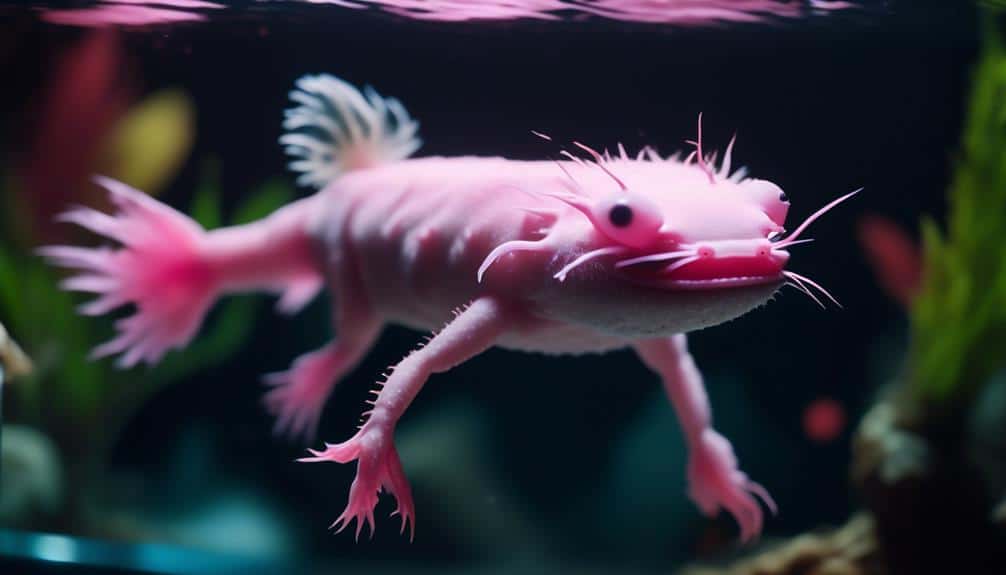
It can be quite concerning to find your axolotl upside down in its tank. This peculiar behavior may leave you wondering what could possibly cause such a peculiar phenomenon. While there can be several reasons behind this unusual posture, it is essential to investigate each possibility thoroughly to ensure the well-being of your amphibian friend.
From water quality and stress to illness and tank conditions, there are various factors that could contribute to this behavior. In this discussion, we will explore these potential causes, providing you with the necessary knowledge to understand why your axolotl may find itself in this peculiar position.
Water Quality
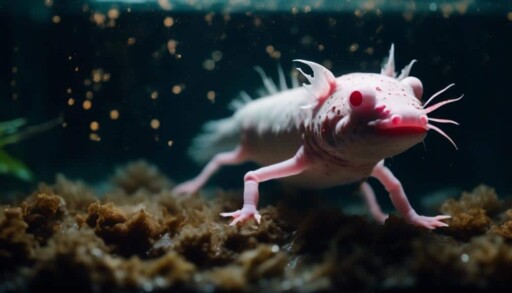
Water quality is a crucial factor to consider when maintaining the optimal habitat for axolotls. These aquatic creatures require clean and well-maintained water for their overall health and well-being. One important aspect of water quality is the filtration system. Axolotls produce waste, and a proper filtration system helps remove these waste materials and maintain water clarity.
A good filtration system should include both mechanical and biological filtration to effectively remove debris and harmful substances from the water. Additionally, water temperature is another key factor. Axolotls are cold-water creatures and prefer temperatures between 16-18 degrees Celsius (60-64 degrees Fahrenheit).
It is important to monitor and maintain the water temperature within this range to ensure the axolotls' physiological processes are not hindered. Regular water testing and maintenance are essential to provide the axolotls with a clean and suitable environment.
Stress or Agitation
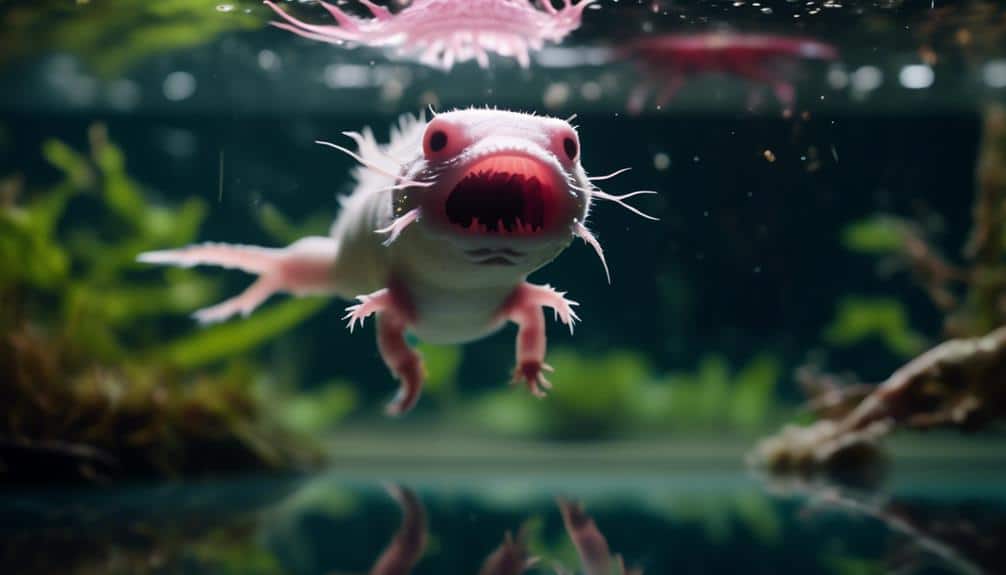
Maintaining an optimal habitat for axolotls involves considering various factors, and one crucial aspect to address is the potential for stress or agitation. Axolotls are sensitive creatures and can easily become stressed, which can lead to behavioral changes and even health issues. Stress management is essential to ensure the well-being of these unique amphibians.
There are several factors that can cause stress or agitation in axolotls. One common source of stress is improper water conditions, such as water temperature fluctuations or poor water quality. Axolotls are also sensitive to changes in their environment, so any sudden changes in lighting, noise levels, or tank setup can cause stress.
To prevent stress and promote a calm environment, it is important to maintain stable water conditions, including temperature and water quality. Regular water testing and proper filtration can help to ensure optimal conditions for axolotls. Additionally, providing hiding spots and minimizing disturbances in their habitat can help to reduce stress.
Monitoring the behavior of axolotls is crucial in identifying any signs of stress or agitation. Behavioral changes, such as excessive hiding, loss of appetite, or abnormal swimming patterns, may indicate that the axolotl is experiencing stress. If any of these signs are observed, it is important to address the underlying cause and make necessary adjustments to the habitat to promote a stress-free environment for the axolotl.
Illness or Disease
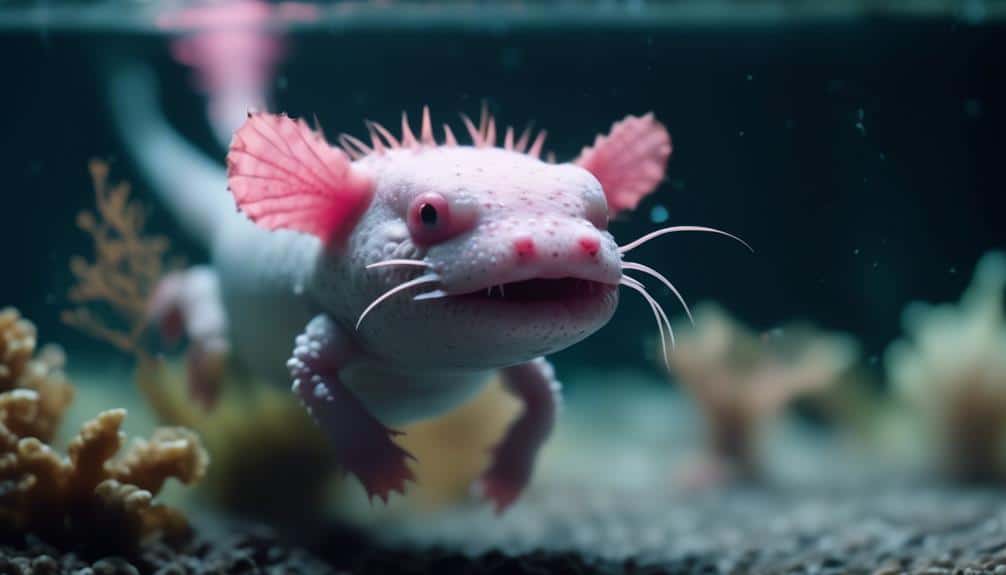
Axolotls are susceptible to a variety of illnesses and diseases that can significantly impact their overall health and well-being. Understanding these potential ailments is crucial for axolotl owners to ensure the well-being of their aquatic pets.
Here are four common illnesses or diseases that axolotls may experience:
- Injury or Trauma: Axolotls can injure themselves by getting caught in tank decorations or by fighting with other axolotls. Injuries can lead to stress, infections, and even limb loss if not treated promptly.
- Genetic Abnormalities: Axolotls bred in captivity may experience genetic abnormalities, such as spinal deformities or missing limbs. These conditions can affect their ability to swim, feed, and survive.
- Fungal Infections: Axolotls are susceptible to fungal infections, especially when their water conditions are not adequately maintained. Symptoms include cotton-like growths on the skin, frayed gills, and lethargy.
- Bacterial Infections: Poor water quality or injuries can lead to bacterial infections in axolotls. Symptoms may include open sores, redness, swelling, and loss of appetite.
Tank Decorations and Substrate
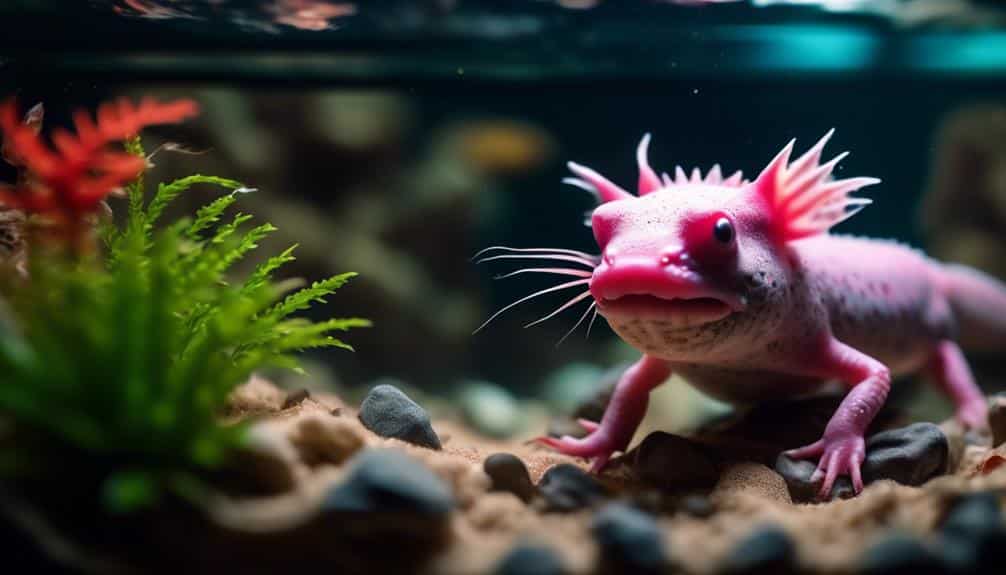
In order to create a safe and suitable environment for axolotls, careful consideration must be given to the selection and placement of tank decorations and substrate. Axolotls are sensitive creatures and can be easily injured by sharp or rough objects in the tank. It is important to choose decorations that are smooth and have no sharp edges.
Additionally, the substrate used in the tank should be soft and non-abrasive to prevent any injuries to the axolotl's delicate skin. Regular aquarium maintenance is also crucial to ensure a healthy environment for the axolotl. This includes regular water changes, monitoring water parameters, and proper lighting.
Adequate lighting is essential for the axolotl's wellbeing, as it helps to regulate their biological processes and maintain their natural behavior. By carefully selecting tank decorations and substrate, and maintaining proper lighting, axolotl owners can create a safe and comfortable habitat for their aquatic pets.
Feeding and Diet
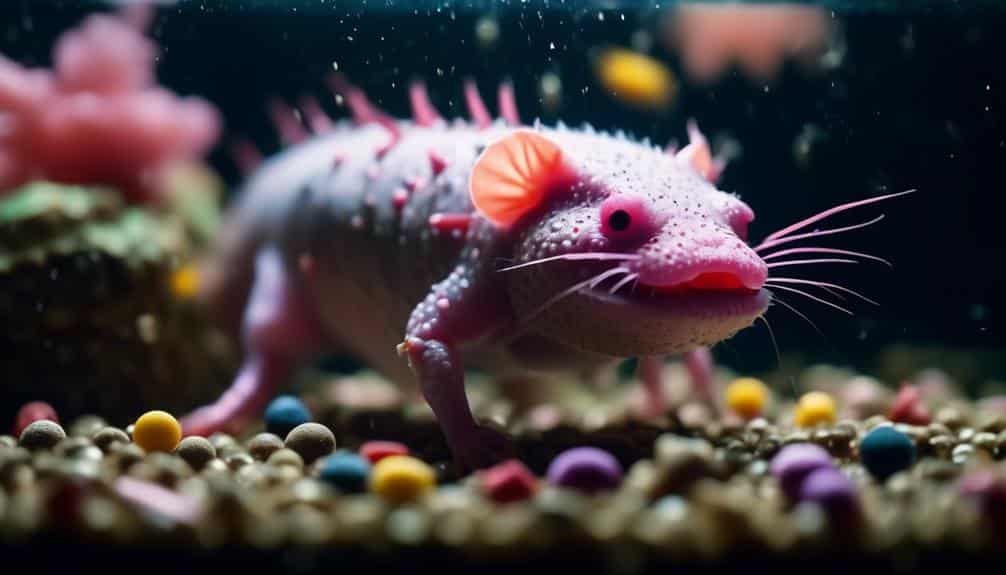
To ensure the health and proper growth of axolotls, a carefully balanced and nutritious diet is essential. Here are four key factors to consider when feeding and maintaining the diet of your axolotl:
- Variety: Axolotls are carnivorous and require a diverse diet. Offer a mixture of live or frozen foods such as bloodworms, brine shrimp, daphnia, and blackworms to provide the necessary nutrients.
- Feeding frequency: Adult axolotls should be fed 2-3 times a week, while younger axolotls may require daily feedings. Avoid overfeeding as it can lead to obesity and other health issues.
- Tank maintenance: It is crucial to maintain clean water conditions. Uneaten food and waste can quickly degrade water quality. Regularly remove any uneaten food and perform water changes to keep the tank environment optimal.
- Monitor behavior: Pay close attention to your axolotl's behavior. If they show a lack of appetite or unusual feeding patterns, it may indicate an underlying health issue that requires attention.


