
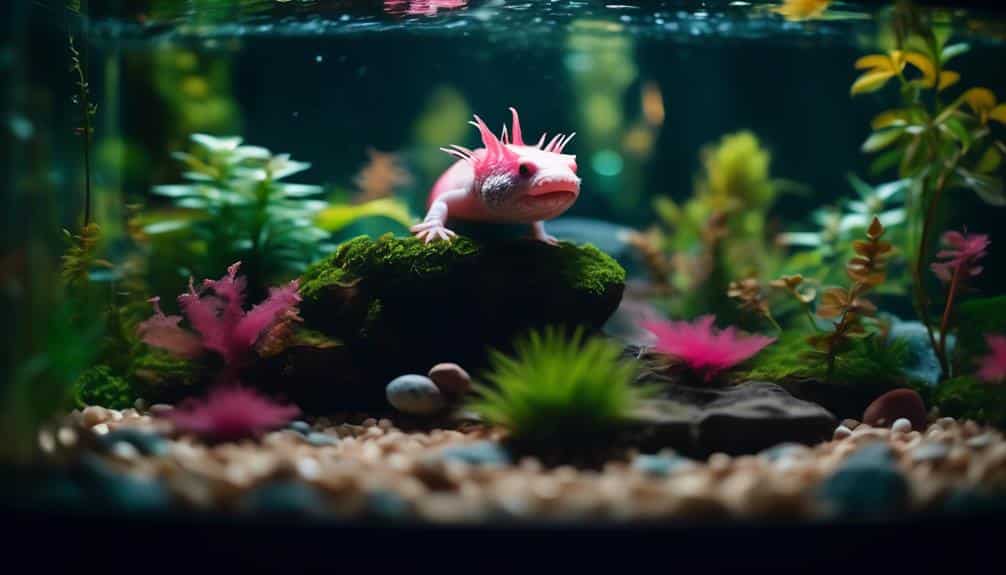
As an owner of an axolotl, it is important to provide them with a suitable and comfortable environment.
From the tank setup to the proper lighting and temperature control, there are several essential items that you need to consider.
Additionally, ensuring a well-functioning water filtration system and providing nutritious food are crucial for the health and well-being of your axolotl.
But what exactly do you need for each of these aspects?
Let's explore the must-haves for an axolotl's habitat and discover how to create an ideal living space for these fascinating creatures.
Tank Setup
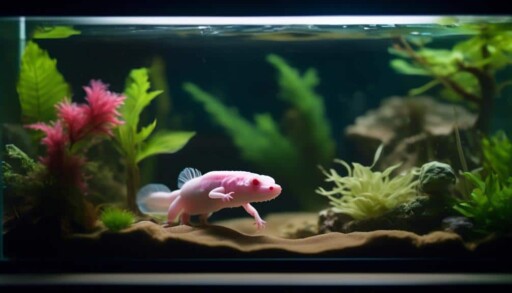
When setting up a tank for an axolotl, it is important to ensure that the environment meets the specific requirements of this unique aquatic creature. To create a suitable habitat, careful consideration must be given to the choice of aquarium decorations and substrate options.
Axolotls are sensitive to sharp edges and rough surfaces, so it is crucial to select decorations that are smooth and free from any potential harm. Additionally, decorations should provide hiding spots and areas for the axolotl to explore.
When it comes to substrate options, axolotls prefer a soft and sandy substrate that allows them to dig and burrow. Avoid using gravel or small pebbles as they can be accidentally ingested, leading to digestive issues. Sand or fine-grain aquarium-safe soil are ideal choices for axolotl tanks, ensuring both the comfort and safety of these fascinating creatures.
Water Filtration System
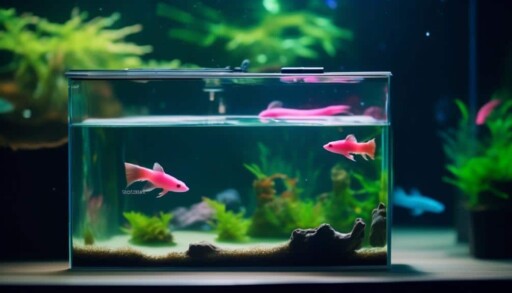
To ensure optimal water quality for axolotls, a reliable water filtration system is essential in maintaining a healthy and thriving aquatic environment. Axolotls are highly sensitive to water chemistry, and maintaining appropriate water parameters is crucial for their well-being.
A water filtration system helps to remove toxins, excess nutrients, and other impurities from the tank, ensuring a clean and safe environment for the axolotl. It also aids in reducing the buildup of harmful ammonia and nitrate levels, which can be detrimental to their health.
Regular tank maintenance, including water changes and filter cleaning, is necessary to keep the water chemistry stable and prevent the accumulation of waste.
Choosing a filtration system that suits the size of the tank and its specific requirements is vital for maintaining the water quality and promoting the overall health of axolotls.
Proper Lighting

A well-designed lighting system is crucial for maintaining the proper light intensity and photoperiod required for the health and natural behavior of axolotls. Axolotls are sensitive to light and require a lighting setup that mimics their natural environment.
Here are three important factors to consider when setting up lighting for your axolotl:
- Light intensity: Axolotls prefer low to moderate light levels. Too much light can cause stress and discomfort. It is recommended to use a low-intensity light source, such as a fluorescent or LED light, to provide a gentle and diffused light.
- Photoperiod: Axolotls need a consistent lighting schedule to mimic their natural day and night cycle. A lighting schedule of 12-14 hours of light followed by 10-12 hours of darkness is suitable for axolotls.
- Light color: Axolotls perceive different colors differently. It is best to provide a light source that emits a cool white or blue light, as this closely resembles the natural lighting conditions they are accustomed to.
Temperature Control
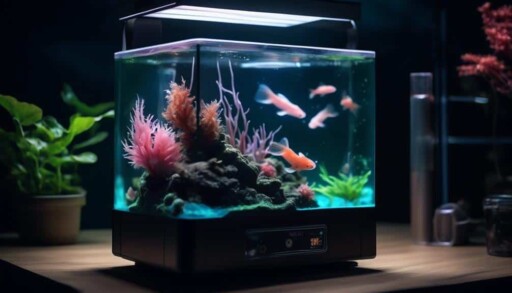
Maintaining the appropriate temperature is crucial for the health and well-being of axolotls, as they are ectothermic animals and rely on their environment to regulate their body temperature. Axolotls require a consistent water temperature between 16-18°C (60-64°F) to thrive. It is important to provide a stable temperature within this range to prevent stress and potential health issues.
To achieve and maintain the ideal temperature for axolotls, there are several heating options available. One commonly used method is the use of aquarium heaters specifically designed for amphibians and reptiles. These heaters are submersible and can be adjusted to maintain the desired temperature.
Another option is the use of heat mats placed underneath the aquarium, providing gentle and even heat distribution.
It is important to regularly monitor the temperature using a reliable thermometer and make adjustments as necessary to ensure the well-being of your axolotl.
Nutritious Axolotl Food

Proper nutrition is essential for the overall health and vitality of axolotls. These aquatic creatures require a diet that is rich in protein and low in fat to support their growth and development. When it comes to feeding axolotls, it is important to establish a feeding schedule that ensures they receive the right amount of food without overfeeding.
Here are some of the best live food options for axolotls:
- Bloodworms: These small, red larvae are a favorite among axolotls. They are high in protein and can be purchased frozen or live.
- Blackworms: Similar to bloodworms, blackworms are another nutritious live food option. They are a good source of protein and can be found in most pet stores.
- Daphnia: These small crustaceans are a great source of protein and can be easily cultured or purchased frozen.


