
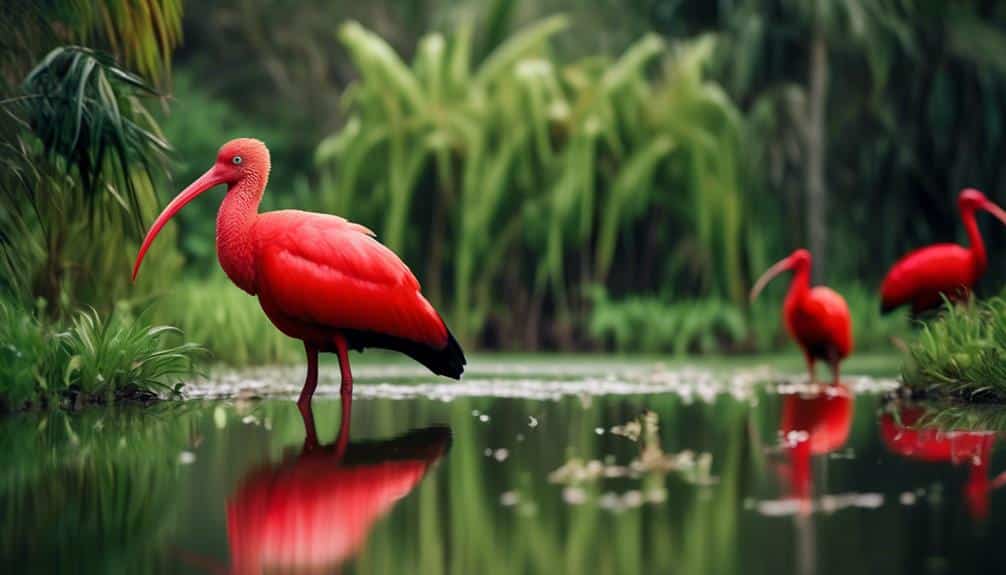
The world of avian diversity is a fascinating one, filled with a multitude of species that captivate both scientists and enthusiasts alike. Amongst these remarkable creatures, ibis birds stand out as a group of avian wonders, each possessing its own unique characteristics and allure.
From the elegant American White Ibis and the vibrant Scarlet Ibis to the sleek and iridescent Glossy Ibis, the diversity within this family is truly astounding.
However, it is not just their physical appearances that make them intriguing; their behaviors and habitats also hold secrets waiting to be unearthed.
So, let us embark on a journey through the realm of ibis birds, where we will discover the captivating tales of the Hadada Ibis, the sacred symbolism of the Sacred Ibis, and the majestic beauty of the Crested Ibis, among others.
American White Ibis
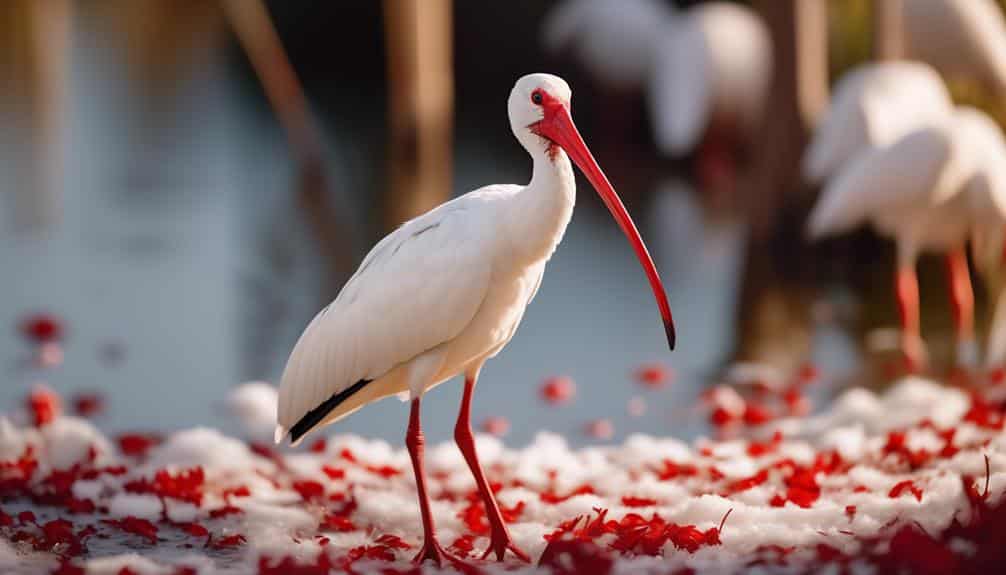
The American White Ibis (Eudocimus albus) is a species of ibis bird found primarily in the southeastern United States and parts of Central and South America. This elegant bird is known for its distinctive white plumage, long curved bill, and long legs.
Conservation efforts have been implemented to protect the American White Ibis and its habitat. These efforts include the establishment of protected areas and the monitoring of nesting sites.
Breeding habits of the American White Ibis are fascinating. They typically breed in large colonies, known as rookeries, where they build nests in trees or shrubs. Males perform elaborate courtship displays to attract females, and both parents take turns incubating the eggs and caring for the hatchlings.
Conservation efforts and a better understanding of their breeding habits are vital to ensuring the survival of this majestic species.
Scarlet Ibis
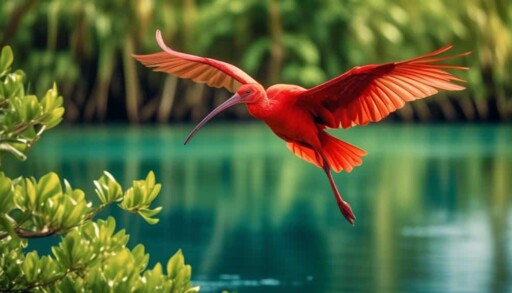
The Scarlet Ibis (Eudocimus ruber), a close relative of the American White Ibis, is a vibrantly-colored species of ibis bird that inhabits various regions of South America and the Caribbean.
When it comes to their breeding habits and mating rituals, Scarlet Ibises are monogamous and form long-term pair bonds. During the breeding season, they engage in elaborate courtship displays, which involve vocalizations, preening, and synchronized movements.
The female builds the nest, typically a platform made of twigs and leaves, while the male brings materials. After mating, the female lays 2-4 eggs, which both parents take turns incubating for about three weeks.
Conservation efforts for the Scarlet Ibis primarily focus on protecting their habitats, as deforestation and habitat destruction pose significant threats to their population. Additionally, pollution and hunting also contribute to their decline.
Conservation organizations work to raise awareness about the importance of preserving their habitats and enforce regulations against illegal hunting. By implementing these measures, it is hoped that the Scarlet Ibis population can be safeguarded for future generations to enjoy.
Glossy Ibis
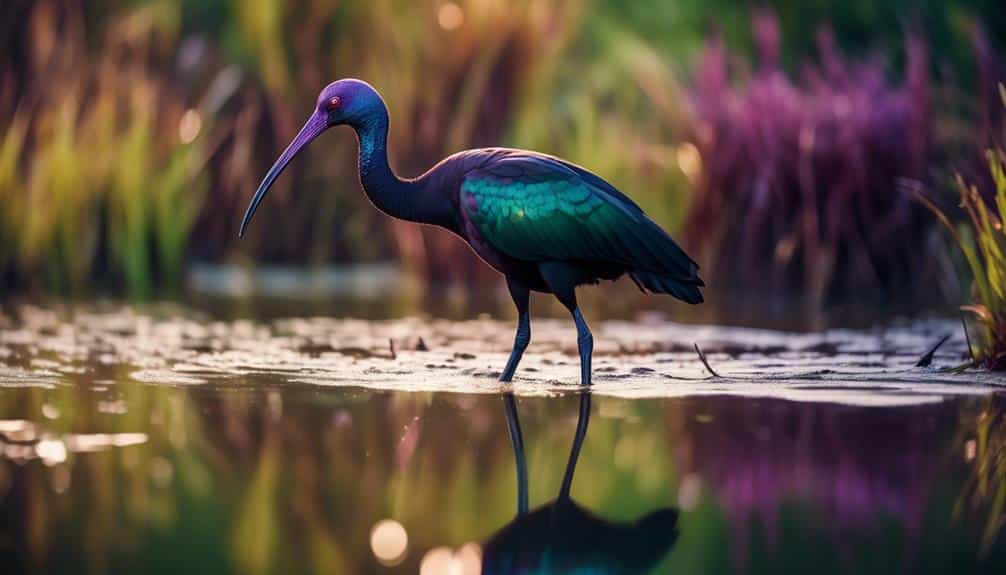
The Glossy Ibis, scientifically known as Plegadis falcinellus, is a species of ibis bird found in various parts of the world, including Europe, Asia, Africa, and Australia. This medium-sized wading bird is known for its distinctive glossy plumage, which ranges from chestnut-brown to dark green. It has a long, curved bill and a slender body, typically measuring around 55-65 cm in length.
The Glossy Ibis prefers wetland habitats such as marshes, swamps, and flooded fields. It feeds on a diet consisting primarily of insects, small fish, and amphibians. During breeding season, it builds nests in trees or reed beds close to water sources.
Conservation efforts for Glossy Ibis populations focus on protecting and restoring their wetland habitats, as well as implementing measures to prevent habitat loss and degradation. International agreements such as the Ramsar Convention on Wetlands play a crucial role in ensuring the conservation of these birds and their habitats. Additionally, research and monitoring programs help track population trends and inform conservation strategies for the Glossy Ibis.
Hadada Ibis
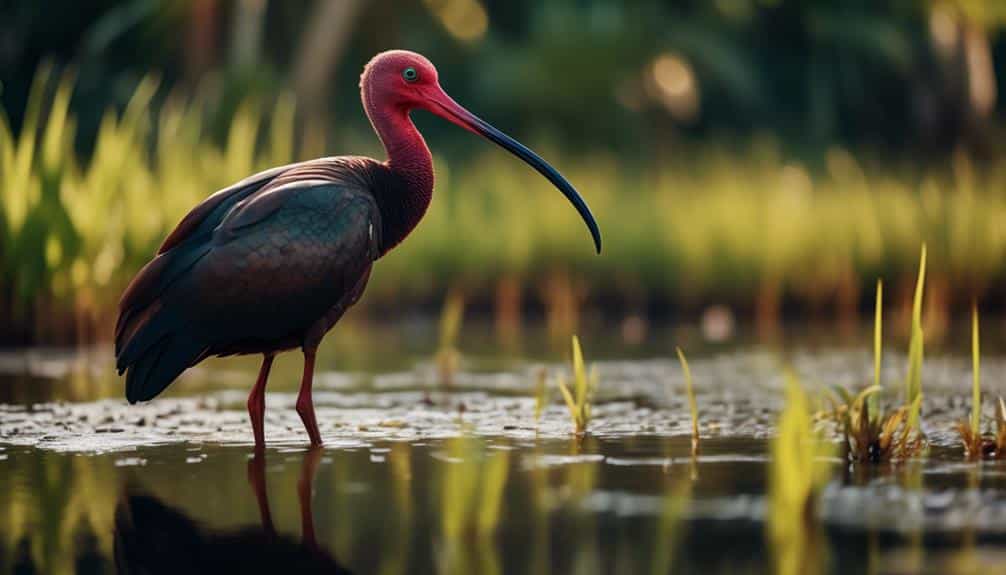
Characterized by its distinctive call and long, curved bill, the Hadada Ibis (Bostrychia hagedash) is a species of ibis bird primarily found in Sub-Saharan Africa. The Hadada Ibis is known for its loud, raucous call, which is often described as a loud 'haa-haa-haa' or 'hadada-hadada'. This call is typically heard at dusk and dawn and is used for communication and territorial defense.
In terms of habitat, the Hadada Ibis prefers to reside near wetlands, rivers, and marshes. It can also be found in urban areas such as parks and gardens. This species of ibis is widely distributed across Sub-Saharan Africa, including countries such as Kenya, Uganda, Tanzania, and South Africa. It is also a resident breeder in these regions, with nesting taking place in trees or reed beds.
Sacred Ibis

Native to Africa, the Sacred Ibis (Threskiornis aethiopicus) is a species of ibis known for its distinctive appearance and significant cultural importance.
In ancient Egyptian culture, the sacred ibis held great significance and was associated with the god Thoth, who was considered the god of wisdom, writing, and knowledge. The Egyptians believed that the ibis was a symbol of Thoth's divine wisdom and often depicted it in their artwork and hieroglyphics.
Conservation efforts for the sacred ibis population have been implemented to ensure the species' survival. Due to habitat loss, pollution, and hunting, the sacred ibis population has declined in recent years. Conservation organizations are working to protect and restore their habitats, regulate hunting, and raise awareness about the importance of preserving this iconic species.
Efforts are also being made to reintroduce captive-bred ibises into the wild to bolster their numbers and genetic diversity.
Straw-necked Ibis
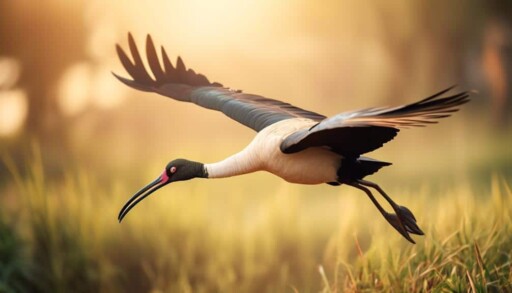
The Straw-necked Ibis (Threskiornis spinicollis) is a species of ibis that is found in various parts of Australia, New Guinea, and Indonesia. Conservation efforts have been put in place to protect this species due to its declining population.
The Straw-necked Ibis prefers wetlands, floodplains, and grasslands as its habitat. It is a large bird, reaching up to 75 cm in length, with a distinctive long, curved bill. Its plumage is mostly white, with a straw-colored neck and head.
This ibis is known for its gregarious nature and can often be seen in large, noisy groups. It feeds on insects, small mammals, and vegetation, using its long bill to probe the ground for food.
The Straw-necked Ibis is an important species in maintaining ecological balance and its conservation is crucial for the overall health of its habitat.
Australian White Ibis
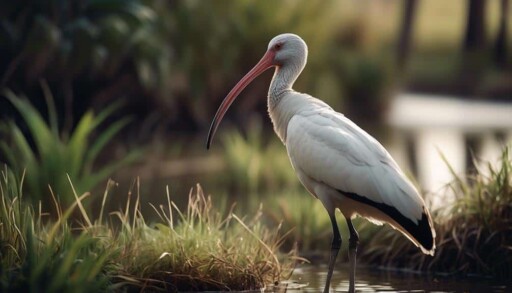
The Australian White Ibis, a species closely related to the Straw-necked Ibis, is another prominent ibis species found in Australia. This bird has a conservation status of least concern, as its population is stable and not currently threatened.
The Australian White Ibis can be found in a variety of habitats, including wetlands, swamps, lakes, and grasslands. It has adapted well to urban environments and can often be seen foraging in parks and gardens. This species has a distinctive white plumage, a long curved beak, and black legs.
Australian White Ibises are known for their social behavior, often gathering in large groups to feed and breed. They primarily feed on insects, small vertebrates, and plant matter. These birds are highly adaptable and have successfully adjusted to changing environments, making them a common sight in many parts of Australia.
Buff-necked Ibis
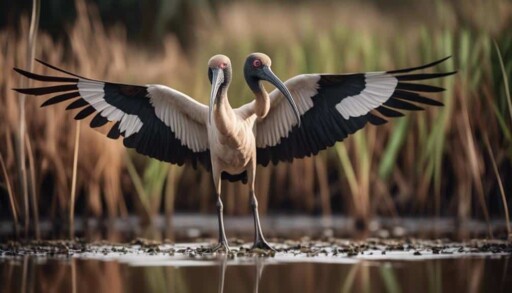
A distinctive member of the ibis family, the Buff-necked Ibis (Theristicus caudatus) is a large wading bird with unique features and a widespread distribution across South America. This species is characterized by its buff-colored neck, contrasting with its dark brown body. It has a long, curved bill that helps it probe the soft mud for food, primarily consisting of insects, small invertebrates, and occasionally small vertebrates.
The Buff-necked Ibis is predominantly found in open grasslands, wetlands, and savannas throughout its range. It is known for its gregarious nature, often forming large flocks during the non-breeding season. During the breeding season, pairs of Buff-necked Ibises build large stick nests on trees near water bodies.
Unfortunately, habitat loss and degradation pose significant threats to the Buff-necked Ibis population. Conversion of grasslands for agriculture and urbanization has resulted in the destruction of its natural habitat. Conservation efforts are focused on protecting key breeding and foraging areas, as well as raising awareness about the importance of preserving these ecosystems for the survival of this unique bird species.
| Scientific Name | Common Name | Conservation Status |
|---|---|---|
| Theristicus caudatus | Buff-necked Ibis | Least Concern |
Green Ibis
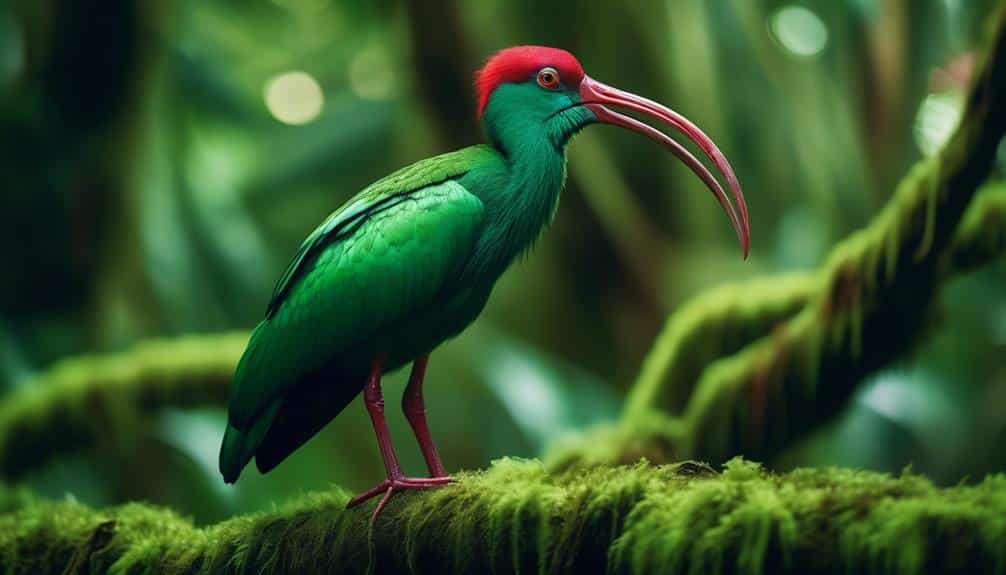
With its vibrant green plumage and slender build, the Green Ibis (Mesembrinibis cayennensis) is a striking avian species found primarily in the wetlands and marshes of Central and South America.
This unique ibis species possesses several distinguishing features that set it apart from other ibis species. Unlike its relatives, the Green Ibis displays a stunning emerald green coloration, making it a sought-after avian companion for those who appreciate its beauty.
However, it is important to note that the Green Ibis, like most ibis species, is primarily a wild bird and may not thrive in captivity. Their specialized diet and habitat requirements make them challenging pets to care for properly.
Therefore, it is crucial to consider the specific needs of the Green Ibis before considering it as a pet.
African Sacred Ibis
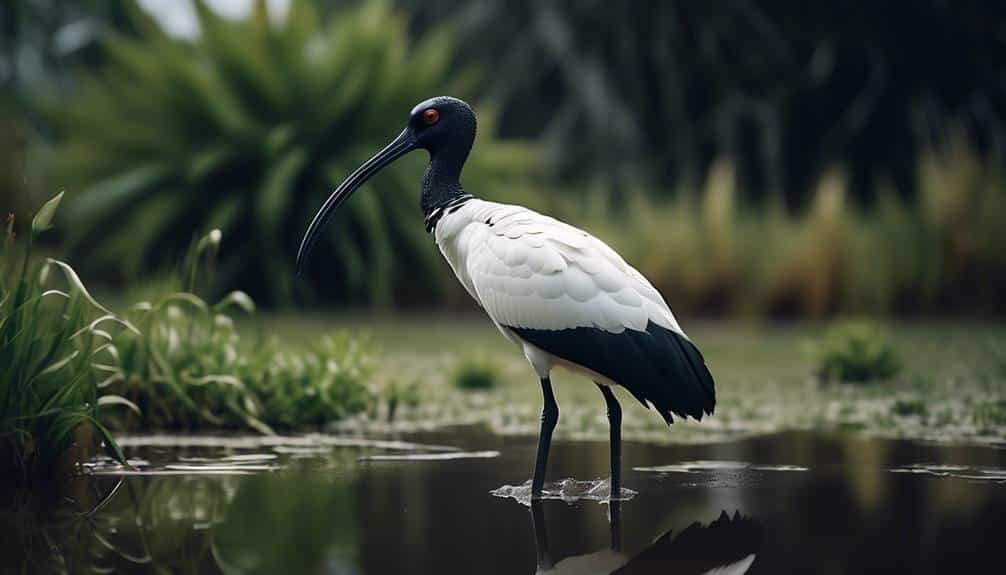
The African Sacred Ibis (Threskiornis aethiopicus) is a prominent species of ibis that is recognized for its distinct appearance and cultural significance.
In ancient Egyptian culture, the African sacred ibis held great importance and was even revered as a symbol of wisdom and fertility. It was often depicted in ancient Egyptian art and was associated with the god Thoth, who was the god of writing, wisdom, and magic.
The African sacred ibis is now considered a threatened species. The main threats to its population include habitat loss, pollution, and hunting. Wetland destruction and urbanization have led to a decline in suitable breeding and foraging habitats for these birds.
Conservation efforts are crucial to ensure the survival of this iconic species and its cultural significance.
Black-headed Ibis
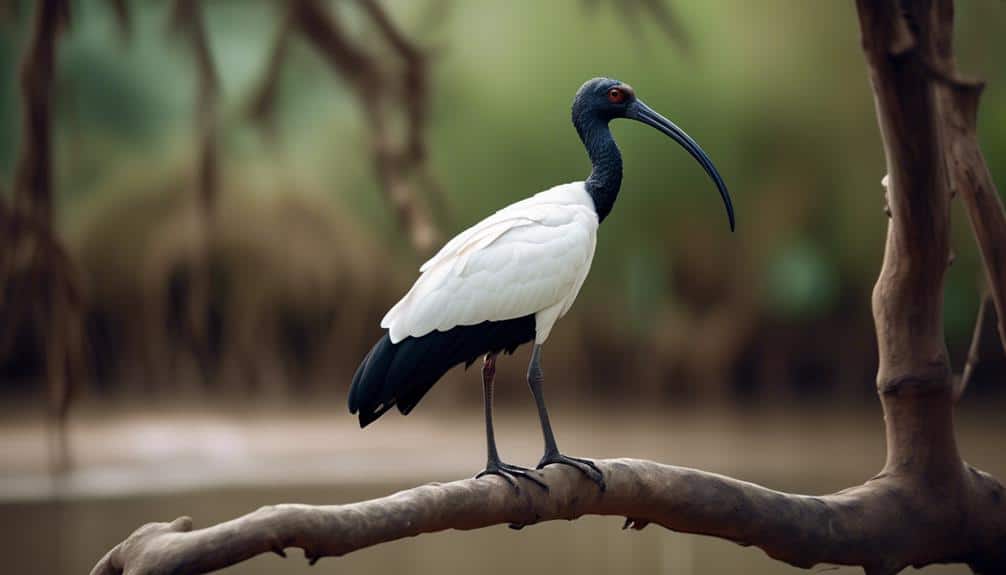
The Black-headed Ibis (Threskiornis melanocephalus) is a species of ibis characterized by its distinctive black head and neck. This medium-sized bird is found in the Indian Subcontinent, Southeast Asia, and parts of China. It inhabits a variety of wetland habitats, including marshes, swamps, and flooded fields.
The Black-headed Ibis primarily feeds on insects, crustaceans, mollusks, and small vertebrates, which it detects by probing its long, curved bill into the muddy substrate.
During the breeding season, these ibises form large colonies and build their nests in trees or bushes near water bodies. The female lays 2-3 eggs, which are incubated by both parents for around 24-26 days.
Once hatched, the chicks are cared for by both parents until they fledge at around 40-45 days of age. The Black-headed Ibis exhibits interesting breeding and nesting behavior, making it a fascinating species to study.
Crested Ibis
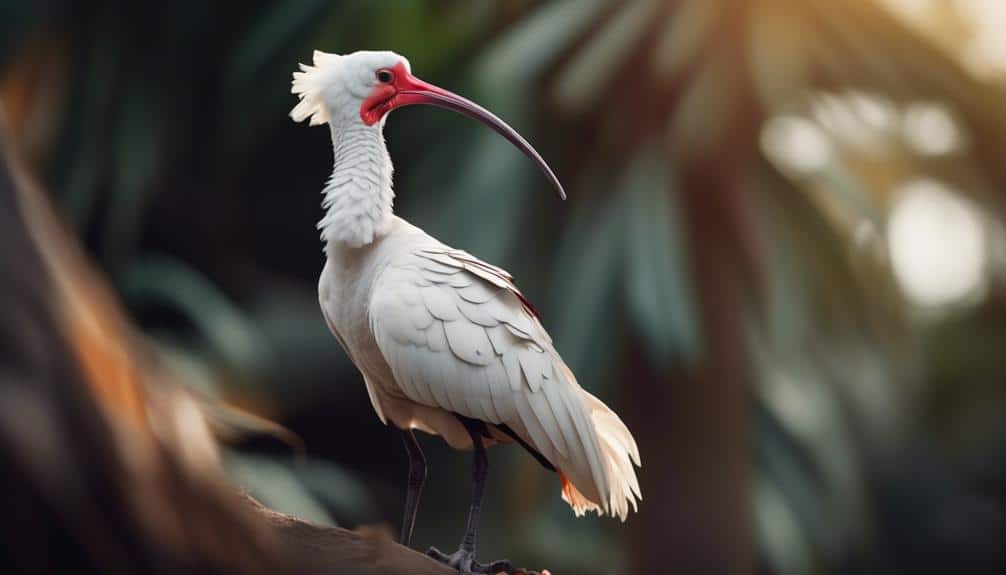
The Crested Ibis (Nipponia nippon) is a critically endangered species of ibis endemic to eastern Asia, particularly Japan and China. It is known for its distinct appearance, with a beautiful crest of feathers on its head.
The habitat of the Crested Ibis includes wetlands, rice fields, and forested areas near water bodies. Unfortunately, due to habitat loss and hunting, the population of Crested Ibis has drastically declined, making it one of the most endangered bird species in the world.
Efforts have been made to conserve this species, including captive breeding programs and habitat restoration projects. The Crested Ibis is known to exhibit monogamous breeding behavior, with pairs building nests on trees or cliffs near water. They lay 2-4 eggs and both parents take turns incubating them.
These dedicated efforts to protect and restore the Crested Ibis population are crucial for its survival.
Eurasian Spoonbill
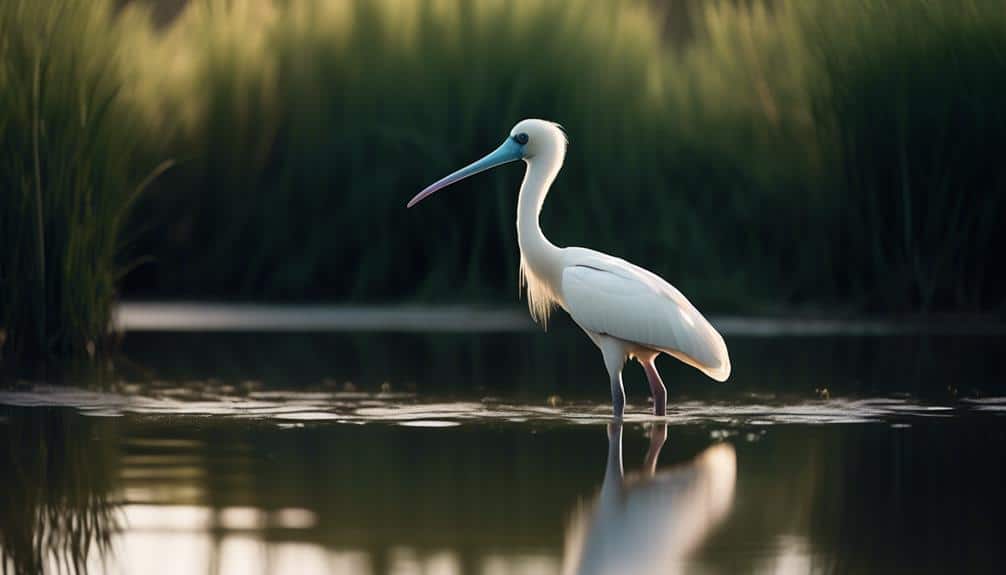
Endemic to Eurasia, the Eurasian Spoonbill (Platalea leucorodia) is a distinctive species of ibis known for its unique bill shape and feeding behavior. This large wading bird inhabits a variety of wetland habitats, including marshes, swamps, and shallow lakes, where it can easily locate its preferred prey.
The Eurasian Spoonbill's diet primarily consists of fish, amphibians, crustaceans, and aquatic insects, which it captures by sweeping its open bill from side to side in shallow water.
During the breeding season, these birds gather in colonies and construct nests in trees or reed beds near water. They display elaborate courtship rituals, with males performing elaborate displays to attract females. Nesting sites are carefully selected to provide protection from predators and easy access to food sources.
The Eurasian Spoonbill's breeding behavior and nesting sites are crucial for the survival and successful reproduction of this unique ibis species.
Puna Ibis
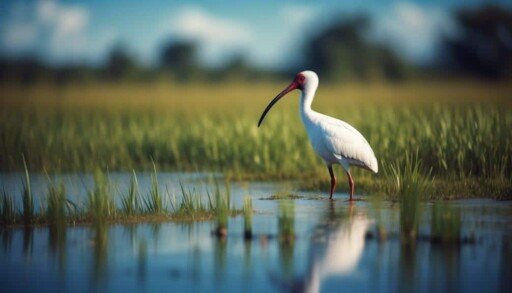
The Puna Ibis (Plegadis ridgwayi) is a species of ibis that is found in the high-altitude regions of the Andes in South America. This species is primarily found in the Puna grasslands, which are characterized by their high elevation, cold temperatures, and sparse vegetation.
The Puna Ibis has adapted to these harsh conditions by developing specialized feeding habits and behaviors. It primarily feeds on insects, small vertebrates, and plant matter found in the wetlands and shallow waters of the Puna region.
Conservation efforts for the Puna Ibis are focused on preserving its fragile habitat and reducing human disturbances. The expansion of agriculture and mining activities in the Puna grasslands has resulted in habitat degradation and loss. To mitigate these threats, protected areas have been established to safeguard the ibis and other species that rely on the Puna ecosystem.
Additionally, conservation organizations are actively monitoring the population and conducting research to better understand the species' ecology and behavior, enabling targeted conservation efforts for the Puna Ibis.
Giant Ibis
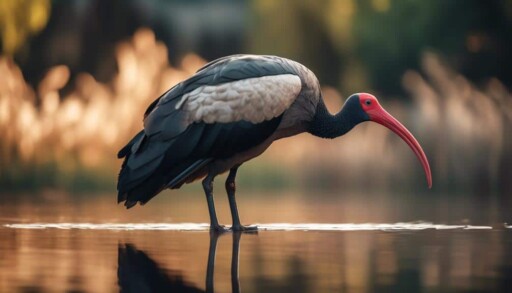
The Giant Ibis (Thaumatibis gigantea) is a critically endangered species of ibis native to Southeast Asia. Its conservation status is of great concern due to its declining population and limited distribution. The Giant Ibis is primarily found in Cambodia, where it inhabits lowland forests and wetlands. It prefers areas with tall trees and open spaces, where it can forage for food and build its nests.
Physically, the Giant Ibis is known for its impressive size, measuring up to 106 centimeters in length. It has a distinctive plumage, with dark brown feathers and a pale blue-gray bill. The long legs and neck of the Giant Ibis allow it to wade in shallow water and capture prey such as fish, frogs, and insects.
In terms of behavior, the Giant Ibis is primarily active during the day, foraging for food and socializing in small groups. It is known for its loud, trumpeting calls, which it uses to communicate with others in its habitat. The Giant Ibis also engages in courtship displays, where it extends its neck and flaps its wings to attract a mate.
Efforts are being made to conserve the Giant Ibis and its habitat, including the establishment of protected areas and initiatives to raise awareness about its plight. However, continued conservation efforts are crucial to ensure the survival of this magnificent species.


