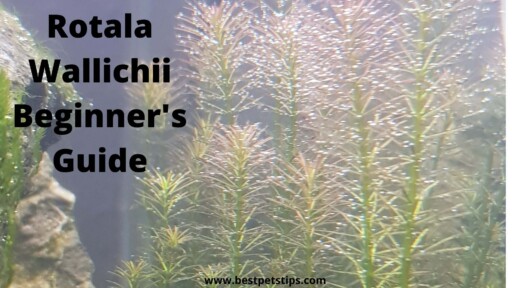
Selecting a gravel substrate is preferable as it has a depth of about 2 inches, thus letting the plant grow appropriately by offering space to spread the roots wide.
If you use fertilizer, you should make use of a proper water supplement. Provision of co2 supplementation is also necessary to make these gorgeous aquatic plants derive adequate nutrition.
Avoid placing the plant too deep into the gravel substrate. Just securing the plant into it will do. Light is the other significant source of nutrition for the Whorly Rotala. These bushy aquatic plants require about 2 Watts per gallon of water.
Always remember that proper exposure to light can make your Wallichii Rotala obtain a bright red or wine color on its shoots and leaves. Therefore, setting up adequate lighting is essential to ensure the plant acquires a beautiful, bright hue of red.
If you own a vast aquarium, selecting the midground for growing the Whorly Rotala is a good idea. Many aquarists are fond of giving their fish tank a bushy look.
You can do that by grouping about 3 to 5 stems of the Whorly Rotala and then growing them together. Make sure to leave adequate space between each branch of the Wallichii. In this way, you will be sure to make the entire plant receive sufficient light and thrive.
Water Requirements/Conditions Of Whorly Rotala
Rotala wallichii prefers soft and a bit acidic water. While taking care of Rotala, you need to ensure that you are very particular about the water hardness and pH levels, as the plant wants everything to be precise.
The water pH level has to be about 5 to 7 for the Whorly Rotala. The water hardness or dKH level has to be maintained somewhere around 12. Make sure that the water temperature falls in the range of 18 to 28 degrees Celsius.
Equip your aquarium with a proper filtration system so that algae growth is regulated to some extent.
Moreover, the filtration system is also beneficial to remove any kind of impurities present in the aquarium water. Make sure that you add co2 to the aquarium as it acts as a very important fertilizer for the growth of this plant with delicate leaves.
What is ironic is that the plant prefers soft water, but this very soft water can affect its leaf health. The water might get clogged and will create dangerous conditions for the plant and the other fishes present in that same tank.
The presence of phosphates, iron, and nitrates in the water is beneficial for this beautiful pink rotala plant. The ideal nitrate level in the water is 1 to 15 mg, and that of the phosphate level is 1 to 2 mg.
It is better to keep a regular check on the appearance of the plant from time to time. In that way, if you spot anything strange with your wallichii, you can look for remedial solutions to the problem.
Tank Size Requirements
A fantastic thing about the Rotala Wachilli is that it can grow well in small and nano tanks. Make sure that the rotala is planted against a proper background in the aquarium if it is small in size.
Larger fish tanks can also be used for growing rotala wallichii, but in such a case, you need to keep it planted at midground. You can also save some other plants with the rotala wallichii to give a more vibrant look to your aquarium.
Growing Rotala Wallichii
Planting, pruning, and propagation are the three main processes involved in growing rotala wallichii. At the time of purchasing, you will probably get a bunch of 5 or 6 stems.
While developing the plant as a group and creating a bushy appearance, spare space of at least 2 to 4 cm in between each plant as algae formation can be prevented then.
This space between the stems also ensures the light reaches the plant’s roots, thus ensuring that the shoots acquire a bright hue.
Pruning has to be done, depending upon how dense the leaves and thick the bush-like plant has become. Keep a good watch over the Wallichii and prune the plant regularly. The best thing to do is trim the upper part of the plant at approximately 5 cm.
You may consider permitting the cuttings and other left-out stalks and stuff to fall on the substrate. As a result, new shoots may grow in the coming days.
Suppose you have cut off a considerable part of the plant; you can replant it again in the substrate with tweezers to make way for new roots sprouting. This is the propagation technique of the Whorly Rotala.
You may also chop off the side shoots and stalks and plant those in the aquarium substrate. You will continue to get new roots, shoot tips, and stalks. Thus a new plant will arise from it.
Is Rotala Wallichii Apt For Your Fish Tank?
Rotala wallichii is a fascinating aquarium plant, and it will enhance the beauty of every fish tank in which it was put. However, its delicate and sensitive nature makes it extremely important for you to take proper care of the plant and meet its requirements.
Note that this plant is not compatible with all the fishes but goes well with only a particular fish species. Avoid keeping fishes such as Goldfish, Silver Dollars, Scats, Mono Fish, and Oscars with this plant.
To conclude, you can keep this fluffy yet spiky plant in the tank if you manage to take proper care of it.
Frequently Asked Questions (FAQ)
Which rotala is easiest to grow?
Dwarf rotala is easiest to grow as it can tolerate a wide range of extreme circumstances and is not demanding.
Can rotala grow without Co2?
Though Rotala can grow without Co2, it is advisable that you provide sufficient co2 to the plant to ensure it grows appropriately, with the proper density.
How do I get rotala red?
By exposing the rotala to extreme lighting conditions, you can make your rotola attain a red color.
Post Views: 17