leopard gecko’s skin shedding process.
Therefore, maintaining a humidity level around the range of 30% to 40% is ideal for the long-term health of your pet leopard gecko.
Using or placing a bowl to soak itself in, in its terrarium along with tools such as hygrometers and automated humidifiers can be extremely helpful in maintaining an ideal humidity level in your pet gecko’s terrarium.
Leopard gecko substrate
Even if the sand is calcium sand, young leopard geckos should not be housed on it. Why? Well, there is the risk of your pet gecko consuming the sand and suffering from intestinal and digestive issues as a result.
If you pick it as your pet leopard gecko’s terrarium bedding, a reptile carpet will need to be spot-cleaned daily. You will also have to pay attention to its wear and tear condition and take steps to maintain or replace it accordingly.
Having said that, these carpets are a good option as your pet gecko’s substrate. An extremely safe and effective alternative to go with is paper. The reason is that paper can absorb things extremely well and is not at all cumbersome to clean or replace.
You should also avoid using wood shavings as the substrate or bedding for your pet leopard gecko’s terrarium since the splinters or sharp edges could end up injuring it.
It would be best if you remember the thumb rule that regardless of what bedding you choose to use for the terrarium, your pet leopard gecko should not be eating it.
Leopard gecko diet
Leopard geckos are insectivorous reptiles. This means that these reptiles eat insects almost exclusively as a part of their regular diet. Therefore, you must make it a point to include insects such as mealworms, crickets, and waxworms into its staple diet.
Every once in a blue moon, you can also treat your pet leopard gecko to a baby mouse. You will also have to take extra care to ensure that your gecko doesn’t eat the bedding of its terrarium while eating its meal.
Typically, feeding them their food in a bedding-free tank or terrarium is a safe option to choose.
As a juvenile reptile, your pet leopard gecko will need to eat large numbers of crickets regularly. However, this trend decreases as your reptile grows older. Once they grow into adults, you will have to feed them once every few days rather than once every few hours.
One way to ensure that your leopard gecko sources high-quality and wholesome nutrition from the insect-based diet that you feed it is to simply provide the insects before you drop them into your pet gecko’s terrarium.
You can also dip them in vitamin D3 and calcium supplement powders to safeguard your pet leopard gecko’s health. You can do that by shaking the insects with the supplement powder in a baggie before you feed your gecko.
Now, bear in mind that adult leopard geckos don’t require you to provide these supplements with every meal but feeding them to juvenile and young leopard geckos is ideal for their overall development.
Further, it would be best if you always kept a small dish of fresh water nearby for your leopard gecko.
The water bowl will assist in keeping the enclosure damp and your pet leopard gecko’s thirst quenched. You might even come across a gecko who is willingly soaking in its water bowl.
Common Health Problems
Considering the fact that leopard geckos are essentially an exotic species of reptiles, they will have to deal with some common health problems that are observed in the species.
Now, before you bring home a pet leopard gecko, you must ensure that you have access to a veterinary practice that specializes in the treatment of exotic species like leopard geckos. This will help you ensure that your pet reptile stays at the top of its health.
Here are some of the most frequently observed health issues that leopard geckos face:
Nutritional deficiencies
Leopard geckos are prone to malnutrition. The reason is that in captivity, leopard geckos are fed a limited diet. While that has its advantages, these diets often lack essential nutrients.
For example, crickets and mealworms that are not accompanied by nutritional supplements will usually result in critical nutritional deficiencies in leopard geckos. It is essential for you to feed your leopard geckos an insect-rich diet that is also accompanied by supplements for calcium and other vitamins and minerals.
One illness that often results due to such deficiencies is hepatic lipidosis. While this illness is treatable, it naturally results in a lot of discomfort for your pet leopard gecko.
Generally, veterinarians prefer a course of treatment that involves feeding the leopard gecko with the held of a long tube inserted into the stomach for a period of roughly six weeks.
Intestinal issues
Geckos kept on sand, fine jagged gravel, or broken walnut shells are prone to chronic or acute forms of intestinal issues.
While you can use smooth gravel as a bedding material for your pet leopard gecko’s terrarium, it would be ideal if you ensured that the size of the gravel is too large for your pet gecko to eat.
To further ensure that your pet leopard gecko does not eat the bedding that you leave in its terrarium, you should avoid using sands that are rich in calcium.
Eating undesired things can result in symptoms like constipation, anorexia, and chronic lethargy. Intestinal blockage can also lead to more severe issues such as colonic prolapse.
Phalangeal dysecdysis
This condition is basically what happens when your leopard gecko hasn’t been able to shed its skin entirely and has retained it on its extremities. Phalangeal dysecdysis is not a particularly common issue in leopard geckos in the wild.
Still, it is quite common in pet leopard geckos. Typically occurring due to poor humidifying practices or simply a lack of appropriate levels of humidity in the leopard gecko’s terrarium, this issue leads to further problems like the development of avascular necrosis as a result of inhibited blood circulation.
By simply providing a moist hide/nest box, you can readily prevent this issue from affecting your pet leopard gecko. In some severe cases, you might have to amputate your pet leopard gecko’s extremities surgically.
Veterinarians prefer treatment options that include easily implementable changes to your pet leopard gecko’s terrarium and administering a course of antibiotics.
Secondary hyperparathyroidism
Regrettably, many leopard geckos are still suffering from secondary hyperparathyroidism even though it can be easily avoided and prevented with a healthy diet.
The most commonly observed symptoms are chronic lethargy, unwillingness toward any physical activity, anorexia, deformed limbs, weakness, softened mandible and maxillae structures in the skulls, and pet leopard gecko depends on a few factors. We have compiled some things that you must consider before you buy a pet leopard gecko for your home!
Type of leopard gecko
Leopard geckos can generally be found in two variants in the pet market. The first type includes leopard geckos that are naturally bred and sold. At the same time, the other concludes geckos that have been specifically bred for some physical characteristics.
Most regular leopard geckos look, more or less, similar to what they would look like in their natural habitats. Still, the other type of leopard geckos might sport some varying pattern on their skin.
As a rule, selectively bred leopard geckos cost more than most regular leopard geckos in the pet market.
Young or old?
Leopard geckos live substantially long lives spanning about 20 years. Therefore, you will also have to choose what age you would like to bring your pet leopard gecko home.
If you want to get home a baby leopard gecko, you need to be sure that you can commit the effort and the time required to care for it.
The obvious advantage of bringing home a baby gecko is that you get to enjoy the maximum amount of time possible caring for it and loving it.
Older geckos mean that you won’t have to dedicate 20 years to caring for it. Therefore, if you are looking for a short-term option, giving a home to an older leopard gecko might just be the right pet option for you.
Space
While the leopard gecko itself doesn’t take up much space, you need to set it up in a large terrarium that is placed away from windows and areas that are commonly disturbed.
Therefore, you will also have to consider the amount of space that you can dedicate to your gecko’s terrarium and the availability of the ideal location for it.
Choose healthy geckos
When buying your leopard gecko at a pet store, you must pay attention to whether the leopard gecko of your choice is healthy or not. Healthy leopard geckos often display alertness, cleanliness, and a thick tail.
If the gecko lacks these signs and shows trouble in breathing, missing digits, loose skin, and poor hygiene, it most likely points to the ill-health of the leopard gecko.
You must also pay attention to the health of the geckos that live in the same terrarium like the one you’ve chosen. If any of them are ill, you should avoid buying a gecko housed with it.
Even though you may not see any symptoms, certain illnesses can flare up at a later point in time.
Conclusion
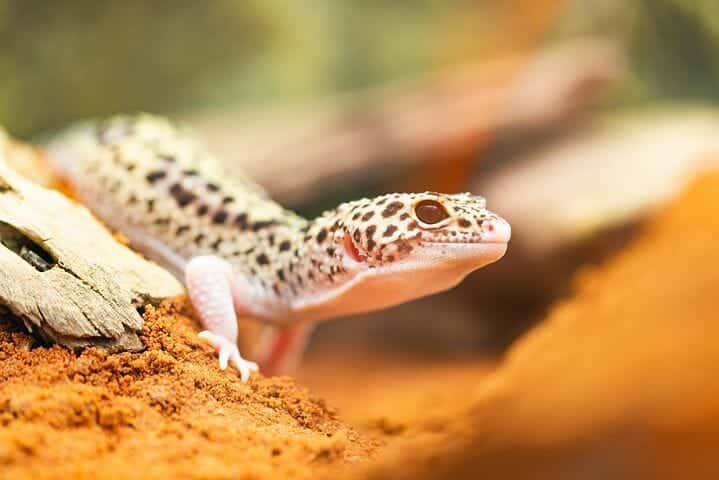
Leopard geckos make for excellent pets if you know how to take care of them. While not exactly low-maintenance pets, you still won’t have to work an excessive amount to keep them comfortable. This article will help you prepare for bringing your new pet leopard gecko home. One thing to remember is that once you’ve bought your gecko, make sure you pay your vet a visit for a thorough full-body checkup of your pet gecko.
FAQs
Is a leopard gecko a lizard?
Yes, a leopard gecko is a type of lizard that can primarily be found on the ground.
What do leopard geckos eat?
Being insectivorous reptiles, leopards eat live insects as a part of their regular diet. Crickets, waxworms, mealworms, and other locusts are common foods to include in your pet leopard gecko’s diet.
How much does a leopard gecko cost?
Depending on whether the leopard gecko is naturally bred or selectively bred for some physical traits, its cost can vary from $15 to $3000.
How often should you feed your leopard gecko?
When your leopard gecko is young, you will have to feed it every few hours, but as your pet reptile grows older, you will have to feed it once every two days. Be sure to discuss the ideal frequency with which you need to feed your pet gecko with your veterinarian.
How big do leopard geckos become?
On average, leopard geckos grow to be roughly 18 cm to 28 cm in length. Male leopard geckos and female leopard geckos are slightly different in size, with the males growing bigger than their female counterparts.
Post Views: 28