
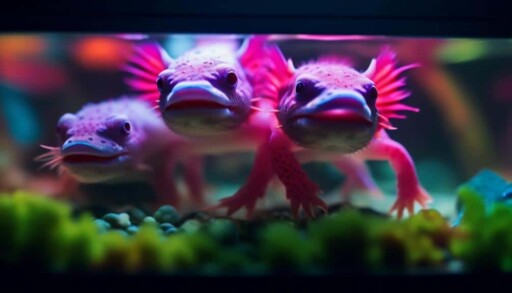
Axolotls, a unique species of salamander native to Mexico, have long fascinated scientists and enthusiasts alike with their remarkable ability to change color. While many animals possess the ability to adapt their hues to blend into their surroundings, the axolotl's color-changing prowess goes beyond mere camouflage.
In this discussion, we will explore the intriguing question: Can axolotls change color? By delving into the natural coloration of these captivating creatures, examining the factors that influence their color change, and uncovering the scientific mechanisms behind this phenomenon, we will uncover the captivating world of axolotl coloration and its significance.
Prepare to be amazed as we uncover the secrets of these enigmatic amphibians.
Axolotl's Natural Coloration

The natural coloration of the axolotl is a subject of great interest and significance within the scientific community due to its unique and intricate patterns. These patterns are believed to be the result of evolutionary adaptations and environmental factors that have shaped the axolotl's appearance over time.
Evolutionary adaptations refer to the changes that occur in a species over generations in response to selective pressures. In the case of the axolotl, its coloration may have evolved as a way to camouflage itself in its natural habitat, such as the murky waters of lakes and canals.
Environmental factors, such as the availability of prey and the presence of predators, may have also influenced the axolotl's coloration. By studying the natural coloration of the axolotl, scientists can gain insights into its ecological niche and its interactions with its environment.
Factors That Influence Color Change
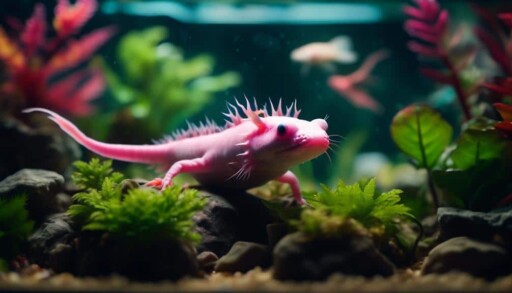
Color change in axolotls is influenced by a variety of factors, including hormonal changes and environmental stimuli.
Hormonal changes play a crucial role in the regulation of coloration in axolotls. The hormone melanocyte-stimulating hormone (MSH) is responsible for the dispersion or concentration of melanin in the skin cells, resulting in color changes.
Environmental influences also play a significant role in color change. Factors such as temperature, light intensity, and water quality can affect the pigmentation and overall coloration of axolotls. For example, axolotls exposed to cooler temperatures tend to exhibit darker coloration, while those in warmer environments may have lighter or more vibrant colors.
Additionally, exposure to different wavelengths of light can influence color perception in axolotls.
Understanding these factors is essential for both researchers studying color change in axolotls and axolotl enthusiasts who wish to create optimal environments for their pets.
The Science Behind Color-Changing Ability

Through a complex physiological process, axolotls possess the remarkable ability to undergo changes in their skin pigmentation. This ability is a result of genetic factors and plays a significant role in their survival and reproduction.
The color-changing ability of axolotls provides them with an evolutionary advantage by allowing them to blend into their surroundings and avoid predation. The process of color change in axolotls involves the activation and deactivation of certain pigment cells called melanophores, xanthophores, and iridophores.
These pigment cells contain pigments such as melanin, pteridines, and guanine crystals, which contribute to the different colors and patterns seen on the axolotl's skin. Genetic factors determine the distribution and density of these pigment cells, allowing the axolotl to adapt its coloration to its environment.
Understanding the underlying mechanisms of axolotl color change can provide insights into the broader field of evolutionary biology and may have implications for other organisms with similar abilities.
Different Color Variations in Axolotls

Axolotls exhibit a wide range of distinct color variations, which are attributed to genetic factors and the distribution of pigment cells on their skin. These color variations can be observed in both wild and captive axolotls, and they play a significant role in their camouflage and communication with other individuals. Genetic mutations are responsible for the majority of color variations in axolotls. These mutations can affect the production of pigments, resulting in different hues and patterns on their skin. Additionally, environmental adaptations can also influence the coloration of axolotls. Factors such as temperature, water quality, and diet can affect the expression of certain pigments, leading to changes in coloration. The table below provides examples of some common color variations observed in axolotls.
| Color Variation | Description | Genetic Mutation |
|---|---|---|
| Wild Type | Dark gray or black with gold speckles | None |
| Leucistic | White or pale pink with pink or blue eyes | Partial or complete loss of melanin production |
| Melanoid | Solid black or dark brown with no gold speckles | Increased melanin production |
| Golden | Light yellow or golden with gold speckles | Increased xanthophore production |
Understanding the different color variations in axolotls allows researchers and enthusiasts to appreciate the beauty and diversity of these fascinating creatures.
Understanding the Significance of Color Change

The ability of axolotls to change their coloration serves a crucial purpose in their survival and communication within their environment. Understanding the behavioral changes associated with color change is key to comprehending its significance.
Studies have shown that axolotls change their color in response to various stimuli, such as changes in light, temperature, and stress levels. These color changes allow them to camouflage themselves and blend into their surroundings, providing them with a form of protection from predators.
Additionally, color change plays a role in communication among axolotls. They can use their vibrant pigments to convey information, such as aggression, mating readiness, or territorial boundaries, to other individuals.


