

As fascinating creatures native to Mexico, axolotls have captivated the curiosity of both scientists and enthusiasts alike. With their unique appearance and remarkable regenerative abilities, these amphibians have become popular pets in recent years.
However, one question that often arises is whether axolotls prefer the company of their own kind or if they are content with solitude. In this discussion, we will explore the intricacies of axolotl behavior, the factors that influence their socialization, and the potential benefits of keeping multiple axolotls.
By delving into this topic, we hope to shed light on the fascinating world of axolotls and provide valuable insights for those considering these captivating creatures as pets.
Axolotls: Social or Solitary?
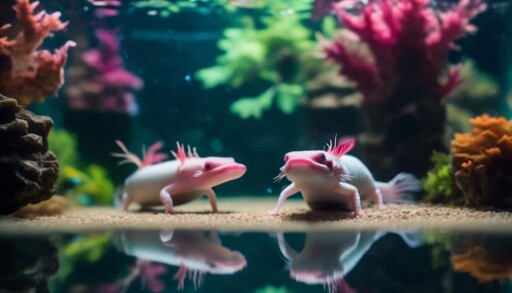
Axolotls exhibit a predominantly solitary behavior in their natural habitats. These fascinating amphibians are known for their ability to regenerate limbs and their unique neotenic features, which make them popular pets among enthusiasts.
However, when it comes to their social behavior, axolotls tend to prefer a more solitary lifestyle. Unlike many other amphibian species that engage in social interactions, axolotls do not form social groups or exhibit complex social behaviors. They are primarily solitary creatures, often found hiding in the vegetation or burrowing in the substrate to avoid interaction with other individuals.
Despite their solitary nature, axolotls can still benefit from some level of socialization. Introducing them to other axolotls or providing environmental enrichment can help stimulate their natural behaviors and promote their overall well-being.
Understanding Axolotl Behavior
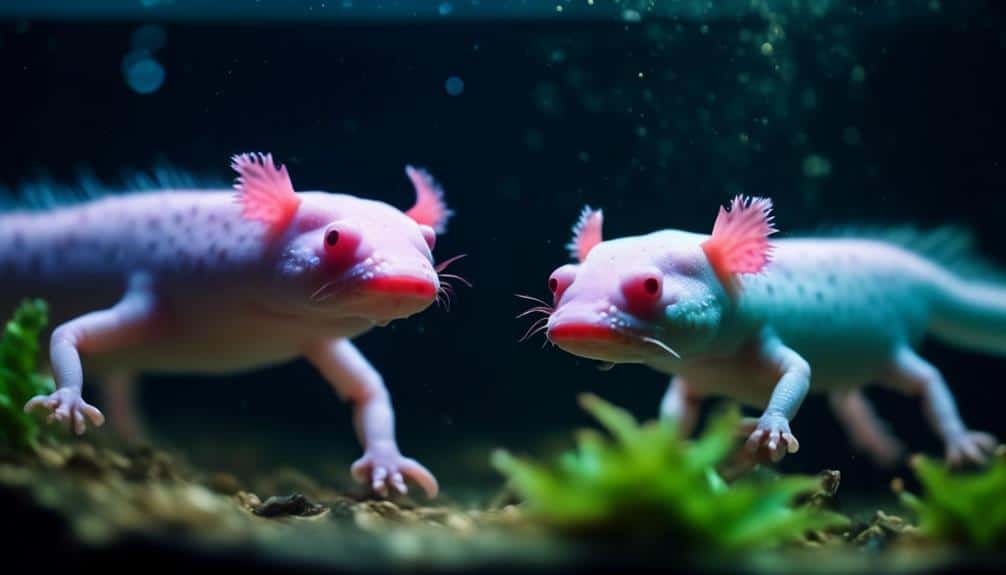
The behavior of axolotls can be better understood through scientific observation and analysis. Researchers have conducted studies to gain insights into their communication and territorial behavior. Axolotls primarily communicate through visual and tactile signals, using body postures, movements, and touch to convey messages. They also release chemical signals called pheromones, which help in attracting mates and marking territories. Territorial behavior in axolotls is exhibited through aggressive displays such as biting and chasing to defend their territory from intruders. Studies have shown that male axolotls are more territorial than females. To emphasize the importance of communication and territorial behavior in axolotls, the following table provides a summary of observed behaviors:
| Behavior | Description | Purpose |
|---|---|---|
| Body Postures | Specific body positions | Communication |
| Biting | Aggressive action of biting | Defense |
| Chasing | Pursuing intruders | Territory protection |
Understanding axolotl behavior is crucial for their welfare and proper care in captivity.
Factors Influencing Axolotl Socialization
Understanding the factors influencing axolotl socialization is essential for comprehending their social dynamics and promoting their well-being in captive environments. Axolotls, often regarded as solitary creatures, can exhibit social behaviors under certain conditions.
Here are some factors that influence their socialization:
- Tank size: Axolotls require ample space to explore and establish territories, which can affect their social interactions.
- Water quality: Clean water with appropriate temperature and pH levels is crucial for axolotls' overall health and social behavior.
- Gender: Male axolotls are known to be more territorial, while females may exhibit more social behaviors.
- Age: Younger axolotls are generally more social and tolerant of conspecifics.
- Environmental enrichment: Providing hiding spots, plants, and other elements in the tank can promote social interactions and reduce stress.
Benefits of Keeping Multiple Axolotls
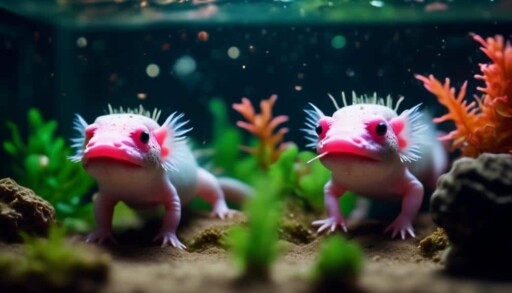
Keeping multiple axolotls can provide several benefits in terms of their social behavior and overall well-being. Axolotls are social creatures by nature, and having companionship can help reduce stress and loneliness. When kept in pairs or small groups, axolotls engage in social interactions such as swimming together, exploring their environment, and even displaying courtship behaviors.
Pairing axolotls can also encourage natural behaviors like feeding and breeding, as they learn from each other's actions. Additionally, the presence of other axolotls can stimulate their appetite and increase their overall activity levels.
To ensure successful pairings, it is important to follow proper axolotl socialization techniques, such as introducing individuals gradually and providing ample space for each axolotl to establish its territory.
Ultimately, keeping multiple axolotls can enhance their well-being and promote a more enriching and naturalistic environment.
Tips for Introducing Axolotls to Each Other

When introducing axolotls to each other, it is crucial to follow specific guidelines to ensure a smooth and successful socialization process. Here are some tips for introducing and socializing axolotls:
- Prepare a suitable environment: Ensure that the tank size is appropriate for multiple axolotls, providing enough space for each individual to establish their own territory.
- Slow and gradual introduction: Start by allowing the axolotls to see each other through a partition for a few days. Then, slowly remove the partition and monitor their behavior closely.
- Avoid aggression triggers: Keep the tank clean, maintain optimal water conditions, and provide hiding places to minimize stress and potential aggression.
- Monitor for signs of distress or aggression: Watch for signs such as biting, chasing, or nipping. If aggression persists, separate the axolotls immediately.
- Provide ample food and feeding spots: Ensure that each axolotl has access to enough food and feeding areas to prevent competition and aggression.
Following these guidelines will increase the chances of a successful introduction and harmonious cohabitation among axolotls.


