crested gecko go hornworm hunting. Finally, you may divide the hornworms between your hands and feed them this way.
Hornworms, unlike other common feeder insects, do not come in a freeze-dried form. You’ll either have to feed them alive (the best choice) or kill them first.
If you feed them live, make sure you don’t leave them in the terrarium for too long (30 minutes or more) because the worm may harm your terrarium plants.
In the wild, crested geckos are omnivores who eat both fruit and insects. Crickets, mealworms, and silkworms are the most popular feeder insects provided to crested geckos in captivity.
Hornworms can be eaten by crested geckos once or twice a month as a special treat. Hornworms have little chitin, a high moisture content, and low-fat content, making them superior to most other feeder insects.
Only feed hornworms that are tiny enough to eat (not bigger than the head of your crested gecko).
Do Leopard Geckos Eat Silkworms?
Leopard geckos may eat silkworms, and they usually love it. Silkworms are also low in fat and high in protein, making them an excellent choice for a feeder.
Do Leopard Geckos Eat Red Worms?
Red worms are safe for geckos to consume if they come from a reliable reptile feeder store. Not all geckos will eat red worms, and some have been known to shun them entirely when given the opportunity.
They are, however, typically low in fat and moderate in protein, making them nutritionally ideal for feeding.
Do Leopard Geckos Eat Waxworms?
Waxworms can be eaten by leopard geckos, but only in small amounts and infrequently. At most, 1-2 worms a week are recommended. Waxworm overeating can lead to a weight increase in your leopard gecko.
Leopard geckos have also been known to have a special fancy to waxworms and develop a predilection for them, refusing to eat anything else. As a result, they just need to be fed once in a while.
Do Leopard Geckos Eat Morio Worms?
Leopard geckos can eat Morio worms if the head is removed before feeding. Otherwise, a leopard gecko inside might be injured if the Morio worm bites it.
It’s also recommended that you only offer gut-loaded, calcium-dusted Morio worms that aren’t too big for the crested gecko to eat safely. Finally, because Morio worms have a high-fat content, they should not be utilized as a staple feeder.
Do Leopard Geckos Eat Grub Worms?
Leopard geckos can consume grub worms as long as the worm isn’t too big. The grub worm should not be bigger than the gecko’s neck, as a general rule.
Do Leopard Geckos Eat Calci Worms?
Leopard geckos may eat Calci worms, but only 2-3 times per week. Calci worms have a lot of calcium, protein, and fat. Thus they don’t need to be fed as often as other worms.
Despite their great nutritional value, not all leopard geckos will eat them and may reject them if offered. They’re also extremely pricey, and finding them might be difficult at times.
Do Leopard Geckos Eat Buffalo Worms?
Leopard geckos can consume Buffalo worms when they are young, but adults should not be given them. This is because buffalo worms are quite tiny.
Do Leopard Geckos Eat Butterworms?
Leopard geckos commonly eat Butterworms. However, they should only do so in little doses. Butterworms have the largest fat content of any worm variety, and if overfed, can quickly result in excessive weight growth.
It’s vital to remember that certain leopard geckos have been known to vomit butter worms. It’s been suggested that this is owing to the fact that they’re acidic, tough to break down due to their powerful mandibles, and difficult to swallow for some leopard geckos.
Butterworms should thus be fed at your own risk.
Can crested geckos eat hornworms?
Hornworms can be eaten by crested geckos once or twice a month as a special treat. Hornworms have little chitin, a high moisture content, and low-fat content, making them superior to most other feeder insects.
But they’re not at all threatening, and they’re one of the greatest feeder insects for your crested gecko.
Can baby leopard geckos eat hornworms?
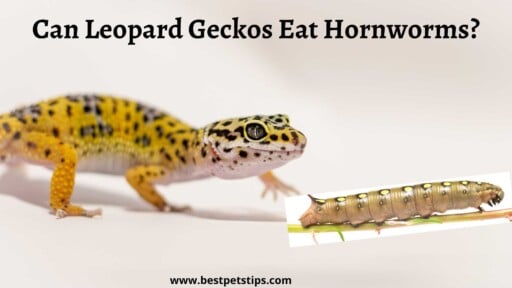
Yes, hornworms may be eaten by baby leopard geckos. Hornworms are an excellent baby leopard gecko treat since they are soft and wet, making them very easy to chew.
Can leopard geckos eat wild hornworms?
It’s not the best idea to feed wild hornworms to your leopard geckos. Wild hornworms eat tomato leaves, insects, and other foliage. Bacteria or parasites may be present on these leaves.
As a result, parasites may collect in your leopard gecko’s stomach after consuming wild hornworms. Finally, these parasites may have an impact on your leopard geckos’ general growth and wellbeing.
Conclusion: Can Leopard Geckos eat hornworms?
You may feed your leopard gecko by using the above-mentioned pattern of two insects cut to one inch in length.
Mealworms might provide critical nutrition to leopard geckos of all ages. Mealworms are a common feeder bug that many gecko owners like providing to their pets.
Each meal should consist of two insects for every inch of your gecko. It’s crucial to keep giving your leopard geckos with a variety of healthy insects in addition to mealworms.
Check out these insects since geckos can consume at least a half-dozen additional bugs as the main feed. Only give your leopard geckos high-fat insects like super worms and hornworms as rewards.
You don’t want your gecko to gain any more pounds. Understanding your geckos’ food routine and mealtimes is critical in general. Your geckos will benefit from a proper dietary plan and receive much-needed nutrients.
FAQs
What can I feed my leopard gecko if I run out of food?
Leopard geckos thrive in captivity on a wide diet of commercially available insects, including crickets, mealworms, super worms, and roaches. Make sure your lizard has had a high-quality diet of fruits, vegetables, and grains for at least 24 hours before offering them any feeder insects.
Can hornworms hurt leopard geckos?
Hornworms are a type of caterpillar that canS be found in many different areas. These insects will often eat the leaves or fruit on plants, but they may also attack leopard geckos. Hornworms may attack geckos if they come into contact with these insects or consume them as a food source.
What kind of fruit can a leopard gecko eat?
Certain fruits are beneficial to geckos, while others are harmful to them. Apples, peaches, cantaloupe, papayas, mangoes, peaches, nectarines, and apricots are good choices because they are high in calcium and low in phosphorus.
Post Views: 30